This paper evaluates what it is we should consider to be authentic and effective expository preaching when the variables of culture are taken into account. Its thesis is that expository preaching is committed to effective understanding and communication of the biblical text with the aim of transformation. What is effective is in significant ways relative to the culture of the hearers and of the expositor. For those committed to expository preaching, the question of culture must be acknowledged in this era of world Christianity and of philosophical awareness of the role culture plays in epistemology and hermeneutics.
PT
PT has an MTh from Edinburgh Theological Seminary and is involved in church planting and leadership development in Southeast Asia. He blogs at medium.com/@Missiology.
Mission Round Table 19:2 (May-Aug 2024): 4-10
To read articles in this edition, visit this post on Mission Round Table 19:2.
Introduction and thesis
At the outset of his historical study on preaching, O. C. Edwards states that “there is no activity more characteristic of the church than preaching… No other major religion gives preaching quite the central role that it has in Christianity.”[1]
Our focus in this paper is the kind of preaching termed expository preaching and the question of its cultural relativity. We are evaluating what it is we should consider to be authentic and effective expository preaching when the variables of culture are taken into account. For those committed to expository preaching, the question of culture must be acknowledged in this era of world Christianity and of philosophical awareness of the role culture plays in epistemology and hermeneutics.[2]
Our thesis is that expository preaching is committed to effective understanding and communication of the biblical text with the aim of transformation. What is effective is in significant ways relative to the culture of the hearers and of the expositor.[3] Therefore, expository preaching must appropriately take into account cultural relativity in order to be true to its own aims of effective understanding and communication of Scripture.
After initial definitions, we will begin by laying foundations regarding learning and cognition in general terms that will be applicable to preaching, followed by a brief exploration of biblical normativity and relativity regarding preaching method. We will then use these foundations to examine (1) expository communication method in an expository sermon and (2) the expository exegetical method in the preparation of an expository sermon. We finish by briefly considering the importance of cultural relativity for expository preaching in relation to social justice followed by some applications for mission in East Asia.
The health of preaching amongst East Asians should be a passionate concern of all in OMF and beyond, even if it is not everyone’s ministry focus. As evangelicals, it is our conviction that the triune God speaks and acts to save and transform through his written word that is proclaimed. Let us explore how to implement this conviction together in cross-cultural mission.
Definitions
Expository preaching receives a range of definitions both from its adherents and detractors, and yet, expository preaching remains discernible. Ezekiel Ajibade surveys a range of descriptions and summarises as key characteristics of expository preaching: central propositions, textual/biblical exposition, text-driven, belief in the relationship of the Word to the Spirit of God, and the aim at life transformation.[4] While we accept Ajibade’s characterization as highly accurate, we would question the necessity of central propositions to expository preaching, though it would be true to say some expository preaching methods prize propositions. Contra Haddon Robinson, “central idea, proposition, theme, thesis statement, main thought” are not all precisely the same.[5] A sermon may be expository by capturing a central idea or main thought without expressing that propositionally.
This clarification exposes a critical issue: what exactly is necessary for a sermon to qualify as expository preaching? For example, must the main thrust of a passage be captured in propositional form or are there other legitimate ways to communicate the main thrust? Because of this challenge, we will operate with a minimalist definition to avoid the importation, deliberate or not, of cultural or cosmetic preferences (such as the equating of “main thought” with “proposition”) and to allow ourselves room for cultural variation within a definition of expository preaching if our study deems that fitting.
Our definition is that expository preaching aims at effectively communicating to the church and the world the message from the biblical text. This definition captures the widely held commitments summarised by Ajibade of exposition of the biblical text (text-driven, main thought, etc.), as opposed to preaching one’s own personal thoughts or a scattering of texts, and the effective communication of that text to the audience of both church and listening world. Space does not permit a thorough defence of this definition. We submit that it reflects expository preaching commitments and serves our exploration of cultural relativity sufficiently.[6] Our definition avoids specificity as to how that exposition and communication is achieved. To that we shall turn in due course.
Robert Allen suggests that confusion in defining expository preaching has arisen over the failure to distinguish whether one is discussing the expository method of preparation or sermon organization, or, using the terms of our thesis, expository exegetical method or expository communication.[7] Allen also rightly highlights the issue of efficacy as paramount. Expository preaching commitments demand that efficacy of communication is important. Following Allen, then, the question of efficacy in both exegetical method and communication will be a central concern, specifically seeking to ascertain how culture impacts efficacy.
1. Foundations
We now turn to consider foundations relating to learning styles, cognition, and biblical normativity.
Learning styles
Craig Ott highlights three dimensions that help us to navigate teaching, learning, and cultures: the universal, cultural, and individual (see Figure 1).[8]
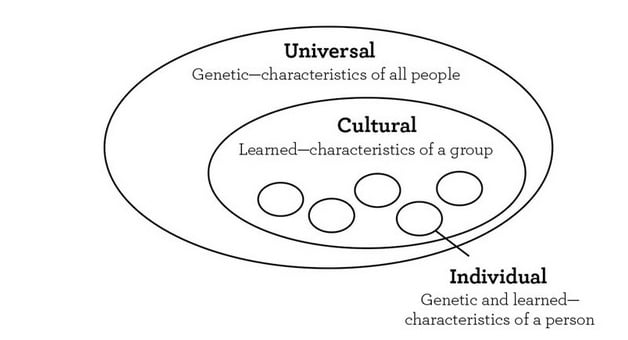
Awareness of these dimensions leads us to expect normativity and relativity in communication activities, including expository preaching.
Ott explains that there is normativity on the level of human characteristics, such as common human needs and experiences, as well as rational capacity. (See more on cognition below.) At the same time, within universal normativity, there is cultural variation of learned characteristics of a group. Included in these cultural characteristics are learning characteristics.
Ott’s discussion of “learning styles” is instructive for expository preaching. Learning styles are generally conceived to be individual learner preferences, personality, and inherent traits or abilities that are innate, fixed, and “predictive of learning performance.”[9] The implication is that teaching is most effective when adapted to these learning styles. Ott notes that, the ubiquity of this concept notwithstanding, “no scholarly consensus has yet emerged about how best to define, categorize, determine, or apply understandings of learning styles.”[10] He collates research that is somewhat devastating to the idea that learning and teaching styles must be matched for effective learning.[11]

However, Ott’s conclusion is that awareness of learning preferences, including on a cultural level, is important to maintain: “Although the jury is still out regarding many aspects of individual learning styles, there is no question that culturally conditioned differences in learning preferences, expectation, and educational traditions have significant impact on the learning experience.”[12] We can, Ott says, “meaningfully speak of culturally preferred teaching styles” while “allowing for individual differences.”[13] One can expect to find, for example, general preferences for reproductive (greater teacher initiative) or productive (greater student initiative) learning styles and different assessments of what constitutes good teaching based upon differing cultural expectations relating to social distance, class participation, and critical thinking.[14]
The implication of these educational foundations is that expository preaching, as a form of communication, should expect and take into account both universal normativity and cultural/individual relativity in terms of how people learn. A belief in preaching as a supernatural communication form doesn’t necessitate the disregard of natural learning realities.
Cognition
We can also expect to find both normativity and cultural variation regarding cognitive processes.
Riccardo Viale explores cognitive universality and relativity as shown in research on infants. This research suggests a basic cognitive endowment: “The human mind is equipped with basic cognitive primitives and possesses cognitive processes that carry out many tasks, such as exemplar-based categorization, deductive reasoning, causal attribution, and so on.”[15] What are we to make, then, of evident cultural variation in cognitive style? According to Viale, “The cultural differences that subsequently emerge in individuals are mainly in response to metaphysical and ontological theories and schemes for representing and interpreting the world.”[16] How are the cultural variations, for example, between analytic and holistic cognitive styles of American and East Asian students, to be understood given universal cognitive endowment?[17] Children adjust their basic hypothesis of how the world works over their time of development in response to the empirical evidence and informative inputs of their local environment. Thus, “different cultural practices can make a given cognitive process, which is universally available in principle, accessible in a differentiated way.”[18]
For expository preaching, then, we should avoid the mistake of categorizing cultures as “rational” or “non-rational”. We should also not insist that people of all cultures must process rationally in the same way. There are different approaches to reasoning (e.g., formal/abstract versus concrete/functional).[19] Awareness of these differences informs expository preaching in relation to the question of effective communication. Effective communication to abstract thinkers may make more ready use of principles abstracted from a biblical narrative since their listeners are adept at accessing reason in a context-independent fashion. For context-dependent reasoners, preaching that trades heavily in propositions abstracted from a narrative literary context will not be effectively communicated to and thus the sermon will have failed its expository commitments.
Biblical normativity
Those committed to expository preaching would want to add to Ott’s schema above the category of “biblical-universal”. Christians committed to the authority of Scripture will want to know if there is biblical-universal prescription for method of communication (the sermon) and method of exegesis (the preparation) that norms cultural relativity. To put it simply: does the Bible tell us what preaching should be like irrespective of culture?
At first recourse, we might be inclined to search for biblical examples of expository preaching. Robert Allen demonstrates the challenge of this—the Old Testament prophets not exegeting inspired Scripture but producing it, and even New Testament “sermons” presenting the challenge of their different time location to the contemporary church in the chronology of inscripturation. Allen concludes: “There appears to be no clear Old Testament example of one who organized a previously written text into discernible parts and commented on those divisions” and “preaching in the New Testament also assumed a great variety of forms.”[20] Furthermore, what sermons we do have in the New Testament are almost certainly summaries.
Is there universal-biblical normativity for expository preaching, then? Biblical normativity comes less in the form of model sermons than of normative ecclesial patterns and injunctions coupled with doctrines that make expository commitments normative for the church.
John Piper demonstrates Paul’s application of euangelizomai and katangellō—ordinarily verbs for proclamation outside of the church—to the act of preaching within the church for the sake of edification.[21] Furthermore, 2 Timothy 3:16–4:4 stands as an injunction to the preaching (here, kēryssō) of the text of Scripture (and therefore, expository) to the church, even if this injunction is not accompanied by a model sermon.[22]
For John Stott, commitment to expository preaching flows from theological doctrines including about the nature of God as the speaking God; the nature of Scripture as both divinely authoritative and human literature; the continued speech of God to the church; and the nature of the church as dependent on God’s words.[23] Stott’s conclusion about the biblical normativity of expository preaching is significant for our question:
All true Christian preaching should be expository. We misuse this word if we think it applies only to a verse-by-verse explanation of a lengthy passage of Scripture. In reality, “expository” refers to the content of the sermon rather than its style. To “expound” Scripture means to bring out what is in the text, to reveal it. The expositor opens what seems to be closed, makes plain what is confusing, unravels what is knotted, and unfolds what is tightly packed.[24]
What Stott concludes is that there is no biblically normative form—i.e., final communication style of sermon. Thus, in relation to culture, expository preaching doesn’t biblically require a certain form for all cultures and places. What may be considered “true Christian preaching”—i.e., normative—is a certain “content”, by which Stott means the fundamental commitment that the biblical text is the exposited and communicated message of the sermon.
There is a further biblical consideration due to the ecclesial setting of preaching as distinguished from general teaching. Piper concludes from his study of New Testament words relating to preaching:
Preaching was not ordinary conversation. Nor was it identical to teaching. Both euangelizomai (“preach good news”) and kēryssō (“preach” or “herald”) have the quality of announcement, and since the specific Christian content of the announcement is the good news of Christ’s saving work … the announcement quality was not disapproval or indifference, but commendation and acclimation.[25]
Therefore, it wouldn’t be true to say that whatever culturally relative communication methods are effective towards these aims are legitimate. Expository preaching is not just another form of teaching. Rather, the nature of its subject and its ecclesial setting demands an announcing, even authoritative quality. Capturing this quality in form will also involve cultural relativity. Nonetheless, an expository sermon form will be biblically normed by the commitment to find a culturally relative way to demonstrate that this communicative event, unlike others, is the hearing of the word of God.[26]
2. Expository communication

With these foundations in place, we turn to consider expository communication method relative to culture.
We will elucidate our claim that effective, culturally relative communication methods are legitimate to expository preaching by exploring the implications of the foundations discussed above, highlighting an historical precedent, and then considering a contemporary example.
Building on foundations
We have seen from Stott that biblical normativity for expository preaching is in its fundamental commitments and not its final form. Given the variations we can reasonably expect due to differing cultural learning preferences and cognitive styles, what form most effectively communicates the thoughts of a portion of Scripture can legitimately vary. In fact, we would go further as to say they should vary. Far from expository preaching requiring uniform style, its commitments should rather require pluriform style. This is not only so because of the variety of genres in Scripture which expository preaching ought to reflect in order to embody in its form the mode of communication of the text itself. Pluriformity of style is also required because of the commitment to communicate the message of the text to the hearers, grasped in such a way that their lives are changed. If, as suggested above, people hear, grasp, and process differently, then expository preaching must take this into account or fail its own aims.
According to Ahmi Lee, some hold the assumption of a normative sermonic form. She describes “thematic preaching” with its origins in the thirteenth and fourteenth centuries which has a “systematic division of points and subpoints that fall under the main theme of the text” which “not only assumes that there is more or less one preferred meaning to the biblical text but also assumes that there is one preferred way to communicate it, which is a deductive approach… As suggested by the well-known moniker ‘three-points-and-a-poem,’ the legacy of thematic sermons is easily observable even today.”[27] This approach would resist cultural relativity regarding expository method of communication and insist on a normative, deductive, and logically structured form. Given the evidence explored, holding to a certain form as a requirement for expository preaching must be questioned as an imposition of cultural preference.
The twentieth century saw the rise of the so-called “New Hermeneutic”, in part as a reaction against such normativity of form. It is not within our scope to explore this movement in depth. Nonetheless, we do well to acknowledge the role it has played in the West, at the very least, in raising questions about sermonic form.[28] However, after examining the deductive versus inductive antithesis that often characterises the New Hermeneutic debate, Ajibade concludes that “those who strongly advocate for the inductive method or the deductive have not been able to prove adequately that one of them is more ‘spiritual’ or biblical than the other.”[29]
Historical precedent
Rhetorical variation for the sake of effective Christian communication has historical precedent in Augustine. Building on Cicero’s three aims of the orator—to teach, to delight, and to move—Augustine states that “of these three … the teaching, which is a matter of necessity, depends on what we say; the other two on the way we say it.”[30] That is, the form of communication matters according to its ability to delight and move the listener to the point of action: “For if a man be not moved [to action] by the force of truth, though it is demonstrated to his own confession, and clothed in beauty of style, nothing remains but to subdue him by the power of eloquence.”[31] According to Augustine, then, attention must be paid to how the listeners hear so that the truth of Scripture may not only be understood, but embraced to the point of transformation: “But as there is a certain analogy between learning and eating, the very food without which it is impossible to live must be flavored to meet the tastes of the majority.”[32] Following Augustine, expository preaching communication should be rhetorically “flavoured” according to the cultural learning and cognitive styles to teach, delight, and move.
A contemporary example
Ezekiel Ajibade provides a robust contemporary example. After a far-reaching analysis of orality in Africa, Ajibade suggests a range of different ways to “flavour” expository sermons to suit audiences of African oral learners.[33] He explains the place of oral communication methods as thoroughly integrated in expository sermon form:
The value of the oral elements of stories, songs, drama, proverbs, and folklore becomes relevant at this point. They are the channels of communication in Africa. None of them is qualified to take the position of a sermon, but the concept of orality does not regard them as mere tools. Therefore, it becomes evident that preachers in Africa might consider a shift from the traditional monologue sermon to a variety of styles that incorporate orality or express content through orality.[34]
Ajibade distinguishes between oral communicative elements playing a supportive or a substantive role: “Supportive roles can be using these oral elements for introducing, illustrating, or concluding a sermon, while the sermon content is pure biblical exposition. Substantive roles are when any of the oral elements become the direct medium through which exposition is done.”[35] It seems to us that “pure biblical exposition” is something of a misnomer, as we have established that all expository preaching takes a form that is culturally shaped. If Ajibade’s approach to orality in expository preaching is right, then a sung exposition that truly meets the aims of expository preaching is no less pure than a monologue.
Ajibade takes into account our biblical foundation of the authoritative, declarative quality of expository preaching and its interaction with orality. For him, use of oral communication methods is not anti-authoritarian: “Orality is simply a mediation of authority through the communication language and experience of the people.”[36]
He goes on to describe many examples of different oral communication methods that could be used, such as song, drama, poetry, folklore, and storytelling. But Ajibade is rigorous in his expository preaching commitments at all times, demonstrating how the cultural relativity of communication methods must be normed by expository commitments: “If a drama will go beyond a supportive role of introducing, illustrating, or concluding a sermon, it must show the character of biblical exposition that can make people see Scripture, hear it explained, and make certain concrete decisions.”[37]

3. Expository exegetical method
Having established the parameters of cultural relativity in expository preaching regarding communication, we now briefly turn to the actual exegetical method of sermon preparation.
We wish to question Robert Allen’s statement that “the method of sermon preparation, grounded in a high view of Scripture and founded on a historical-grammatical exegesis, remains normative for today’s preacher because that is the only method by which we can be sure we will indeed “preach the word.”[38] If the method of expository communication has both normative commitments and relativity due to the culture of the listeners, should it not follow that expository exegetical method also has normative commitments and relativity due to the culture of the preacher?
Normative rules of biblical texts
The biblical text does have a norming effect on exegetical method: “Understanding texts … is a matter of learning these rules to the point of being able to follow them. Writing and reading alike thus involve ‘communicative competence’: the practical know-how that grasps grammatical and generic rules.”[39] Texts have grammar, historical settings, and literary rules by which we must play in order to exegete competently. These rules are a given of the text irrespective of the expositor’s culture. Furthermore, Christian commitments demand that Scripture be read as a unified communicative act of God, and so any individual passage must be competently read as part of the whole with its divine intentions.[40] If “understanding … is a matter of grasping what an author is doing in a text,”[41] then any exegetical method, irrespective of culture, must grasp what the human and divine author are doing in order to fulfil expository preaching aims.
Relative rules of engaging biblical texts
However, how exactly one goes about grasping the meaning of a text is another question. Given our foundations above, we should expect that the preacher too has learning preferences, cognitive styles, and individuality that are not checked at the door in preparation of the sermon.
Once again, we find John Stott to be flexible regarding expository preaching method: “How, then, should we prepare? There is no one answer, for there is no one way to prepare sermons. Every preacher has to work out a method that suits their personality and situation.”[42]
Steffen and Bjoraker distinguish textual hermeneutics and oral hermeneutics. Textual hermeneutics focusses on “grammatical analysis, lexical tools requiring linear, line-by-line, word-by-word studies, definitions. This is then packaged clearly and crisply in systematic categories after hours of often private study and little immediate feedback.”[43] Oral hermeneutics, on the other hand, “champions collectivism, volunteerism, the big picture … and the progressive repetition of repeated themes. It also employs specific schema that assist memory, often enhanced through rhythm, rhyme, echo… the visual, formulaic sayings and structures, group participation, and accumulated meaning, all immediately experienced.”[44] While their analysis is replete with oversimplifications and generalisations, it is useful to prompt us to consider that exegetical method, too, is culturally shaped.
Grant Osborne’s method for grammatical analysis involves a study sheet divided into columns, starting with the text itself, the second with “grammatical identification… and in the third the grammatical-syntactical information… The fourth column should be reserved for lexical study and the fifth for historical-cultural backgrounds. A final column may be used for application.”[45] Now, Osborne does not insist that this is a universal method. But it serves an example of which we can ask: Could the grammar of a text and its significance be encountered by the preacher in ways that are less analytical?
Ott suggests that holistic cognitive styles struggle with this kind of grammatical analysis.[46] Therefore, let us ask how community and immediate experience might be part of the exegetical process. A psalm, for example, may legitimately be exegeted through a flow-diagramming method. But one imagines how a psalm could also be exegeted through repetitive group singing, the constituent parts (e.g., parallelisms, merisms) being observed through a collective/experiential method. A text may be exegeted in a more communal fashion, with community discussion and insights being shared during preparation in contrast to the image of the lone preacher at their desk. Throughout these various approaches, the biblical text is being effectively encountered and experienced culturally, its grammatical and syntactical contours delineated, its content comprehended in order to be preached to the church. We found the literature to be underdeveloped on this point and would welcome further research.
4. Socially just expository preaching
We finish by briefly attending to why our question matters. A parallel discussion to ours considers children’s literacy education and testing. Aukerman and Chambers Schuldt highlight the issue of social justice in literary assessment. Put simply, if infant literary competence criteria favour one culture’s literary competencies, it will be unjust in limiting other children’s future education and opportunities.[47] Parallel to what we have argued regarding expository preaching, they hold that what is considered “good” reading is socially, culturally, and historically influenced. Reading is a cultural practice as well as a cognitive one. Rather than focussing on a narrow band of literary skills that may favour one culture, they advocate aiming towards measuring “textual dexterity [which] represents the full repertoire of capacities readers draw on as they read and engage with others around text.”[48]
If under-appreciation of the range of culturally influenced literary competencies hinders the literary potential of children via the gates of narrow literacy testing, then so too under-appreciation of the full range of culturally influenced competencies that constitute “biblical textual dexterity” will hinder the effective preaching of the word of God in all cultures. The gatekeepers of expository preaching are those who administer training, certify, and ordain preachers. They determine what is “good” preaching. What injustice would result from disqualifying preachers on the basis of culturally narrowed criteria of expository preaching competency, or depriving churches of preachers equipped and permitted to preach in a way that carries the communicative “flavour” most effective for them? For those committed to expository preaching, this is an unthinkable scenario as the very goal of this approach is the unfolding of God’s word to all his people.
5. Applications for mission to East Asians

The question of whether the preaching we’re seeing and nurturing in our ministry is both indigenous and biblical is of paramount importance to the fulfilment of our mission as OMF. We are evangelicals, convinced that God speaks to the world and the church through Scripture preached. Furthermore, ours is a church-centred mission, desiring to see indigenous biblical church movements.
Therefore, church planting that reproduces preaching that is either culturally ineffective or falls short of biblical commitments fails to let East Asians effectively hear God’s voice. What is our mission if it is not for East Asian’s billions to hear him speak life and light to them?
On the other hand, a renewed attention to the nature of preaching in East Asia will surely produce the long-lasting fruit we desire. Here are some questions for our consideration:
- Are we envisioning a new generation of Asian church leaders with the core expository preaching commitments of preaching that aims at effectively communicating to the church and the world the message from the biblical text? Do we and our local partners believe that preaching that unfolds the message of the biblical text is essential to the church hearing her Saviour’s voice?
- Does our preaching training address cultural difference in both communication style and exegesis/preparation style? What varying indigenous practices are there for truly expository exegetical method and delivery that we’ve witnessed or developed that can be shared to equip others?
- Who are the gatekeepers of preaching in our contexts? Are we or our local partners guilty of social injustice because of narrow cultural gates imposed from the outside or within? Are there gifted preachers that East Asia’s church is missing out on because our imaginations have limited what is “good” preaching beyond core biblical commitments?
Conclusion
Expository preaching is a set of biblically grounded commitments towards the effective communication of the message of the Bible to contemporary hearers. Based upon the normativity and cultural relativity in the foundations of learning preferences, cognitive styles, and the biblical data, we have found that expository preaching should embrace cultural variance in both expository communication and exegetical method in order to fulfil its commitment to effective communication of Scripture. Furthermore, approaches to expository preaching that can utilise the full range of biblical textual dexterity available to the world-wide church will contribute to a just situation where the message of Scripture is made available to all.
While preaching is an ancient art, it is in great need of the best of contemporary reflection and practice, not least amongst East Asia’s peoples.
[1] O. C. Edwards, A History of Preaching, Volume 1 (Nashville: Abingdon, 2016), xxviii.
[2] For the former, see Andrew F. Walls, The Missionary Movement in Christian History: Studies in the Transmission of Faith (Maryknoll, NY: Orbis, 1996), 7–8. For the latter, see Elizabeth Yao-Hwa Sung, “Culture and Hermeneutics,” in Dictionary for Theological Interpretation of the Bible, ed. Kevin J. Vanhoozer et al. (London: SPCK and Grand Rapids: Baker Academic, 2005), 150–55.
[3] We would add the nature of the text also impacts expository preaching method, but that study is beyond our scope. For this, see Leland Ryken and Tremper Longman, eds., A Complete Literary Guide to the Bible (Grand Rapids: Zondervan, 1993).
[4] Ezekiel A. Ajibade, Expository Preaching in Africa: Engaging Orality for Effective Proclamation (Carlisle: HippoBooks, 2021), Chapter 1.
[5] Haddon W. Robinson, Biblical Preaching: The Development and Delivery of Expository Messages, 3rd ed. (Grand Rapids: Baker Academic, 2014), Chapter 2.
[6] Our definition would concur, for example, with the fuller description in Sidney Greidanus, The Modern Preacher and the Ancient Text: Interpreting and Preaching Biblical Literature (Grand Rapids: Eerdmans, 1988), Chapter 1, “Expository Preaching”. Also, it is not our concern in this essay to defend expository preaching over and against other forms of preaching. The commitment to expository preaching as a, if not the, legitimate form of preaching must be assumed. For a helpful taxonomy of various kinds of preaching—though surprising for denying John MacArthur and John Piper the label “expository”—see R. T. Johnson Raih, Expository Preaching in a World of Spiritual Nominalism: Exploring the Churches in India’s Northeast (Carlisle: Langham Monographs, 2021), Appendix 1.
[7] Robert A. Allen, “The Expository Sermon – Cultural or Biblical?,” SOR Faculty Publications and Presentations 177 (1998), https://digitalcommons.liberty.edu/sor_fac_pubs/177 (accessed 24 May 2024).
[8] Craig Ott, Teaching and Learning Across Cultures: A Guide to Theory and Practice (Grand Rapids: Baker Academic, 2021), 29–30. Figure 1 from page 30: used by permission, copyright 2021, Baker Academic, a division of Baker Publishing Group, http://www.bakerpublishinggroup.com.
[9] Ott, Teaching and Learning Across Cultures, 48–49.
[10] Ott, Teaching and Learning Across Cultures, 48.
[11] Ott, Teaching and Learning Across Cultures, 51.
[12] Ott, Teaching and Learning Across Cultures, 53.
[13] Ott, Teaching and Learning Across Cultures, 54.
[14] Ott, Teaching and Learning Across Cultures, 57, 177–99.
[15] Riccardo Viale, “Introduction: Local or Universal Principles of Reasoning,” in Biological and Cultural Bases of Human Inference, ed. Daniel Andler, Lawrence Hirschfeld, and Riccardo Viale (Mahwah, NJ: Psychology, 2013), Introduction.
[16] Viale, “Introduction.”
[17] For this distinction, see Ott, Teaching and Learning across Cultures, 113–31.
[18] Viale, “Introduction.”
[19] Ott, Teaching and Learning across Cultures, 79.
[20] Allen, “The Expository Sermon – Cultural or Biblical?” Even Nehemiah 8:8 only demonstrates the principles of expository preaching; we do not know its form.
[21] John Piper, Expository Exultation: Christian Preaching as Worship (Wheaton: Crossway, 2018), 66–69.
[22] For Piper’s careful analysis of this text and its implications for expository preaching, see Piper, Expository Exultation, 70–79.
[23] John R. W. Stott and Greg Scharf, The Challenge of Preaching, abridged and updated (Carlisle: Langham Preaching Resources, 2013), Chapter 2.
[24] Stott and Scharf, The Challenge of Preaching, Chapter 2.
[25] Piper, Expository Exultation, 54–55. See also Low’s description of preaching through the import of these terms. Maggie Low, Preaching That Comes Alive: Delivering a Word from the Lord (Carlisle: Langham Global Library, 2017), Chapter 1.
[26] As captured in the Second Helvetic Confession, Chapter I.
[27] Ahmi Lee, Preaching God’s Grand Drama: A Biblical-Theological Approach (Grand Rapids: Baker Academic, 2019), 19.
[28] For an overview of the origins and characteristics of the New Hermeneutic, see O. Wesley Allen Jr., “Introduction: The Pillars of the New Hermeneutic,” in The Renewed Homiletic, ed. O. Wesley Allen Jr. (Minneapolis: Fortress, 2010).
[29] Ajibade, Expository Preaching in Africa, Chapter 2.
[30] Augustine, On Christian Doctrine, trans. J. F. Shaw (Mineola, NY: Dover, 2009), IV, 12.
[31] Augustine, On Christian Doctrine, IV, 13.
[32] Augustine, On Christian Doctrine, IV, 11.
[33] Ajibade, Expository Preaching in Africa, Chapter 4.
[34] Ajibade, Expository Preaching in Africa, Chapter 4.
[35] Ajibade, Expository Preaching in Africa, Chapter 5.
[36] Ajibade, Expository Preaching in Africa, Chapter 4.
[37] Ajibade, Expository Preaching in Africa, Chapter 5.
[38] Allen, “The Expository Sermon – Cultural or Biblical?”
[39] Kevin J. Vanhoozer, Is There a Meaning in This Text?: The Bible, the Reader, and the Morality of Literary Knowledge (Grand Rapids: Zondervan, 2009), Chapter 6.
[40] Vanhoozer, Is There a Meaning in This Text?, Chapter 6.
[41] Vanhoozer, Is There a Meaning in This Text?, Chapter 6.
[42] Stott and Scharf, The Challenge of Preaching, Chapter 5.
[43] Tom A. Steffen and William Bjoraker, The Return of Oral Hermeneutics: As Good Today as It Was for the Hebrew Bible and First-Century Christianity (Eugene: Wipf and Stock, 2020), Chapter 1.
[44] Steffen and Bjoraker, The Return of Oral Hermeneutics, Chapter 1.
[45] Grant R. Osborne, Hermeneutical Spiral: A Comprehensive Introduction to Biblical Interpretation (Downers Grove: IVP, 2010), Part 1, Chapter 2.
[46] Ott, Teaching and Learning across Cultures, 113.
[47] Maren Aukerman and Lorien Chambers Schuldt, “What Matters Most? Toward a Robust and Socially Just Science of Reading,” Reading Research Quarterly 56, no. S1 (May 2021): 86.
[48] Aukerman and Chambers Schuldt, “What Matters Most?,” 87.