Rafael V. Alfonso
Dr. Rafael “Rafa” Alfonso and his wife, Lou, are among the founders and movers of All Because of Christ Fellowship Spiritual Development Program (SDP) of the company featured in the paper. This SDP has been in existence for over a decade. Rafa started the same SDP ministry in Habitat for Humanity Philippines at Makati City in 2021. He is the head pastor of All Because of Christ Fellowship – Florence at Taguig City, and a pulpit minister in Marikina Faith Bible Church in Marikina City, Christ Jesus Our Lord and Savior Ministry in Pandi, Bulacan, and Hill Crest Family Life Church in Quezon City. Rafa earned his MDiv in Pastoral Studies and DMin at Asia Theological Seminary, where he currently serves as the OIC of the DMin program. He is the President and CEO of The Latria Construction Corporation.
Mission Round Table 20:1 (Jan-Apr 2025): 45-51
To read articles in this edition, visit this post on Mission Round Table 20:1.
Introduction: Context and rationale of the research
The marketplace has been an open mission field among Christians. Not only is it made up of a growing population in need of the gospel, but Christians also spend most of their time in offices giving them more opportunity to share the gospel and make disciples. Unfortunately, some faith communities do not see the marketplace as a place for disciple-making. Some institutional churches erect a divide between the sacred and the secular and overlook marketplace ministry altogether as they focus on the spiritual development of Christians inside the church. Other Christians who ventured into the task found out that applying conventional church discipleship may not work in the marketplace. Marketplace ministry is an entirely different ball game, as they say. The culture, language, and values of the discipleship framework need to fit in the context of the business sector. Many zealous disciples were disheartened due to the lack of preparation and available resources for starting a Filipino marketplace ministry.
Given the said issues, this research proposes a framework that could serve as a guide for discipleship that is intentional, purposeful, and effective in the Filipino marketplace context. Furthermore, this essay illustrates how a discipleship program primarily intended for the marketplace context can produce a church-planting ministry both in urban and rural settings. While this is written primarily in and for the Philippine context, the author recognizes that there are aspects of the research that could resonate with the wider global audience. These include the emphasis on the holistic nature of God’s mission and the value of taking into consideration the cultural situatedness of the life experiences of the target people in any attempt to construct an effective discipleship ministry.
The framework discussed below is informed by relevant insights from the experiences of the leaders of the All Because of Christ Fellowship Spiritual Development Program (SDP), the spiritual formation program for employees institutionalized within the human resources department of a corporation based in Metro Manila. This study aimed to answer the question: How can the experience of All Because of Christ Fellowship SDP help develop a discipleship framework in the Filipino marketplace context? To produce a discipleship framework, a phenomenological research method was employed for this study. This method aims to describe a phenomenon as accurately as possible from the perspectives of the people involved.[1] In addition, this method considers the narratives or life experiences of the respondents as “text” from which new information and meanings can be derived.[2] The experiences of the leaders of All Because of Christ Fellowship SDP are a substantial resource for constructing a discipleship framework suitable for the Filipino marketplace. But before we consider that, allow me to provide some biblical, theological, and cultural insights on which the project of contextualizing a discipleship framework for a Filipino marketplace rest.
Marketplace ministry and Filipino values
Marketplace: A potential space for disciple making
The marketplace is something that should be properly understood by Christians seeking to advance the gospel in all spheres of life. Neil Johnson defines the marketplace as “the forum through which human economic commerce is conducted.”[3] Its focus on economic commerce makes it a critical and comprehensive area of ministry, not merely because of its great potential of becoming a source of funds, but because of it being a melting pot of all sorts of people. Johnson even describes the marketplace as perhaps the only institution that touches, directly or indirectly, virtually every
person on planet Earth. In one way or another, it is a pervasive part of every society, culture and people group. It is found in the midst of every religion and every political system in every historic era.[4]
Being a place where various kinds of people interact with each other almost every day of the week, it is a paramount task for Christian ministers to connect with them where they are. Nevertheless, connecting to the people is only a means to an end: that is, to advance the kingdom of God in the marketplace through making disciples.
Critical to this task of connecting with people is understanding and acknowledging the various cultures that shape the perspectives and ways of life of these people. Since culture is a broad concept that is beyond the scope of this research, it will suffice to deal with one aspect of culture—values. Among other cultural elements, this research chose to focus on values since a good amount of Filipino literature dealing with the interface of culture, marketplace, and faith do so by emphasizing the important role of Filipino values in understanding a people’s context.[5]
Filipino values: Interface among culture, faith, and marketplace
At this juncture, it is helpful to present various definitions of “values”, especially as they (1) undergird and direct the perspectives and behaviors of a certain group of people, particularly as they relate with each other, and (2) determine what is desirable, acceptable, right, and important to them.[6] Writing about values in the context of management, Andres proposed the concept of “Management by Values (M.B.V.)”. This promotes the practice of presenting and clarifying the values of the company to the employees so they can see whether their values are aligned with those of the company. This is an important prerequisite to the implementation of projects and programs in pursuit of the company’s goals, which if sidelined, might cause unnecessary tensions stemming from miscommunication of values.
Along the same line, F. Landa Jocano understands values as “standards against which actions are organized and experiences are interpreted and evaluated.”[7] For Jocano, understanding the values of the people, especially the employees, should be a primary task for managers, since management at its core is about overseeing and mediating people’s interaction within an organization in pursuit of the institutional goals.[8] Being cognizant of the people’s values, the manager should be able to harness the people’s strengths that will lead to harmony within the organization, contribute to the attainment of the organization’s goals, and avoid unnecessary tensions that might arise from differences or conflict of values.
Following the above-mentioned definitions, it is now appropriate to present the salient Filipino values before we proceed to discuss how these values, in the context of the marketplace, interface with faith, particularly in the pursuit of developing a discipleship framework in the Filipino marketplace.
A pertinent piece of literature on Filipino values in an organizational setting is Joel Ortiz’s study on the effects of cultural values on decision-making. He observes that Filipinos put primary importance on values identified with personal relationships. These values are: “smooth interpersonal relationships, makadios, kabuuan, personalism, go between, awa, pakikisama, social mobility, economic security, utang na loob, familism, amor propio, euphemism, authoritarianism and regionalism.”[9]
How do we make sense of these Filipino values, especially if we are considering them in the process of developing a discipleship framework in the context of the Filipino marketplace? Vitaliano Gorospe is insightful in this matter. In analyzing and appreciating Filipino values, he says that it is incorrect to think that these are not shared by other cultures (i.e., not universal); rather, he notes that “the difference lies in the way these elements are ranked, combined, or emphasized.”[10] Concerning this, he argues that it is important to acknowledge that “Filipino values are clustered around core values like social acceptance, economic security, social mobility and are always found in a definite context of a set of circumstances.”[11]
In essence, the implications of Gorospe’s insights to this research’s goal of developing a discipleship framework in the marketplace cognizant of Filipino values are the following: (1) we can be open to ideas and models of discipleship outside our culture, provided that we become critical of the value system that undergirds those ideas and models; and (2) we should become aware of our core values (i.e., deeper motivations and/or ultimate goals) that bring other values together and direct our actions.[12]
An important addition to this is Evelyn Miranda-Feliciano’s comment on the interface between the Christian faith and Filipino values. She says that as Filipino Christians, we have to identify and help make flourish those that could be considered good and beautiful in our culture; and on the other hand, we must liberate ourselves from those “that cannot pass the test of clear biblical mandate.”[13]
 In a nutshell, the marketplace is a sphere of life that should be taken seriously by ministers seeking to advance the gospel of the kingdom of God. A crucial task for these ministers is to understand the values of the people in the marketplace to determine what is fundamental in their lives. For a discipleship framework to be effective, therefore, ministers should be cognizant of the cultural elements in a certain context that need to be cultivated, challenged, and transformed by the gospel.
Discipleship
No one will argue against the idea that discipleship is one of the key elements of church growth. It helps the church to multiply and expand its ministries. In my observation, churches in the Philippines that have strong discipleship programs are really growing in terms of their numbers. However, one can argue that numbers are not the only criteria for assessing whether discipleship is both biblically based and properly focused. But what is biblical discipleship? This is the question that we seek to answer before we can develop a discipleship framework for the Filipino marketplace. Lua’s research on the contextualization of discipleship ministry in the Philippine setting includes a general overview of the development of discipleship from the Old Testament to the New Testament. While the term “discipleship” is a modern invention, we can still glean biblical principles, particularly on what it means to follow Jesus, that could serve as the bedrock upon which a discipleship framework can be built.
In the Old Testament, the teacher-follower system is present in some subgroups within Israel. This gave birth to the later rabbinic master-disciple relationship, which in turn became the basis of the formal educational system for training rabbis.[14] Meanwhile, the term “disciple” in the New Testament is derived from the Greek word mathētēs, which refers to an apprentice of some trade or a student of a mentor.[15] This relationship implies personal attachment.[16] The expected relationship between disciples and teacher is that the disciples were expected to submit to their teacher’s wisdom and become like a servant performing all kinds of menial tasks for his master. However, Jesus flips this model of discipleship. Even though he is master and teacher, he taught his disciples that the way to have the greatest impact was not by exerting power and authority over others, but by laying aside personal aspiration to become their servant. Furthermore, Lua observes discipleship strategies from the example of Jesus and his disciples. These include concentration on small groups, life-to-life transference, the importance of community life, formal teaching, on-the-job training, and holistic approach to learning.[17]
What is the essence of biblical discipleship? Fundamentally, biblical discipleship must be based on the life and teachings of Jesus Christ. N. T. Wright believes that “the true Jesus is summoning us to follow him, to a life of discipleship.”[18] I agree with Wright that Jesus is calling us to a life of discipleship; that discipleship includes the totality of our being. Discipleship is not simply adopting a random assortment of facts and propositions and behavior. It is the process by which a person becomes more like Jesus by observing Jesus’ teachings and following Jesus himself.
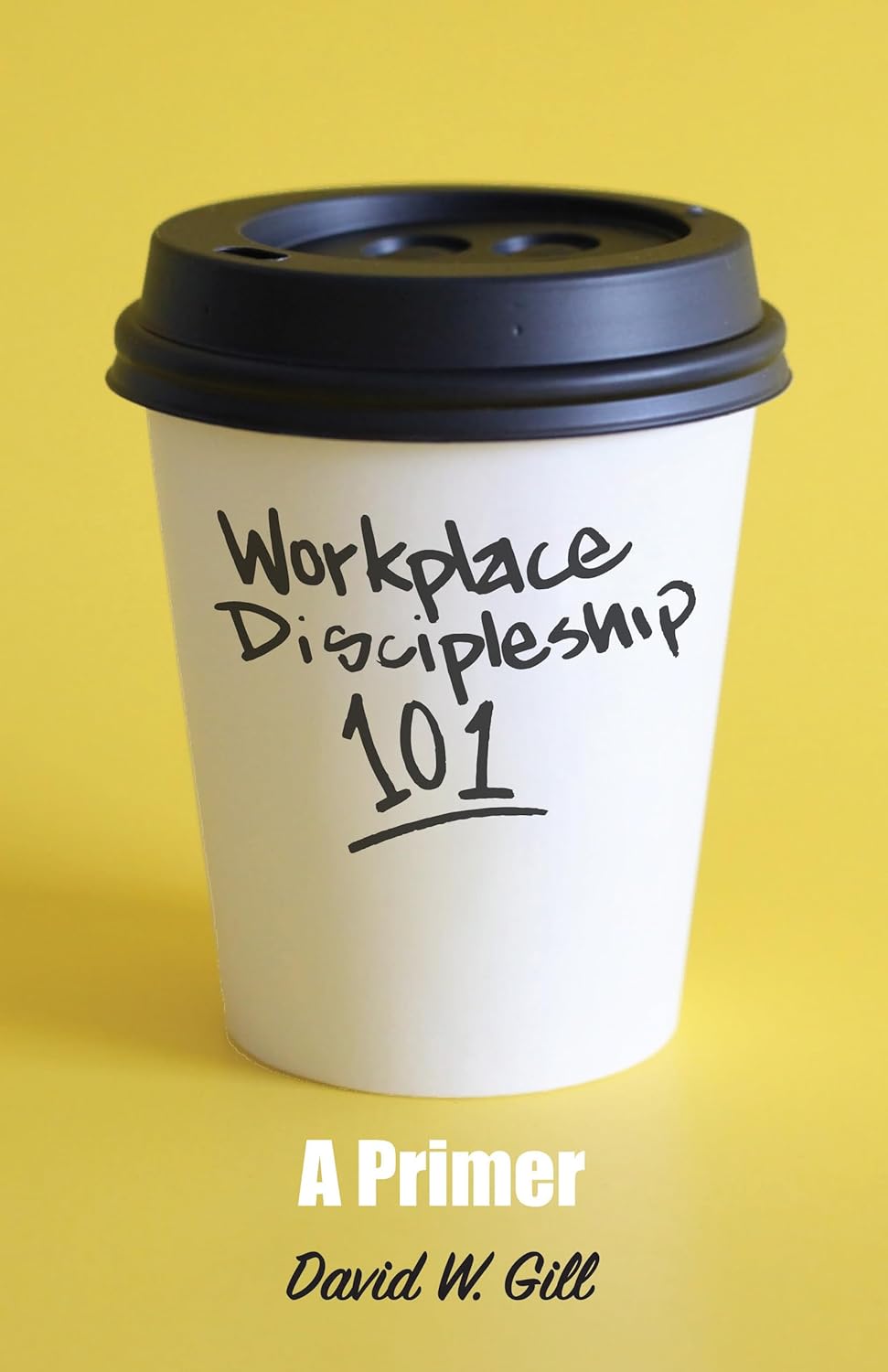
Speaking of discipleship in the marketplace, David Gill’s book, Workplace Discipleship 101, argues that the term “workplace discipleship” is preferable than “faith at work” because the former connotes “active obedience to Jesus Christ as shown in our convictions, decisions, and actions in the workplace.”[19] This does not mean, however, that we should try to reform the organization; rather, the focus is on discipleship of workers.[20] Furthermore, he views workplace discipleship as an alignment of our work to God’s work, which implies bringing the meaning and purposes of God to our work. “It inserts our daily work into the grand cosmic story of God and humanity.”[21] If this is the case, being a disciple of Jesus in the marketplace implies that there will be times when Christian values will clash with the “business as usual” principle, and that our work as Christian employees will be seen as a contribution to advancing God’s kingdom on earth, in particular in our respective companies.[22]
The necessity of a discipleship framework for the Filipino marketplace
In view of the above cited works, knowing some biblical and theological basis for discipleship, while a requirement, still needs a supporting structure and system if we aim to come up with a relevant, actionable, and sustainable discipleship ministry. For this research, there is a need to have a discipleship framework for the Filipino marketplace. As early as 1994, the Christian community had already been challenged to begin developing ministries in the marketplace. According to Dr. Isabelo Magalit, the recognition of the necessity to include the marketplace as a Christian mission was not a theological shift but an acceptance of additional responsibility.[23]
This shows that the Filipino Christian community had recognized the need to reach out to the marketplace and accepted the role to expand their ministries in the business world by the early 1990s. However, the only thing that was clear was the acceptance of the challenge. Of course, there are churches and other groups that have been conducting their respective spiritual activities (e.g., Bible Studies and Prayer Meetings) in the marketplace. Nevertheless, there is an apparent need for a discipleship framework that is contextualized for people in the marketplace. So, the main objective of this paper is to present a discipleship framework that is contextually and intentionally designed for Filipino marketplace discipleship ministry. Hopefully, the ideas presented here will resonate with a wider global audience that is seeking to do the same in other contexts.
The All Because of Christ Fellowship SDP experience: A proposed discipleship framework for the Filipino marketplace
Now that some foundational insights have been provided in the preceding sections, I will respond to the main research question of this essay: How can the experience of All Because of Christ Fellowship Spiritual Development Program (SDP) help develop a discipleship framework in the Filipino marketplace context? I will proceed by presenting the components of the discipleship framework for a Filipino marketplace context based on the experience of SDP. These components include how SDP is implemented, its biblical/theological foundations, the values that shape its convictions, and the behaviors of its members. I will add some proposed lessons on how the distinctives of SDP can serve as a source of guide for other Filipino marketplace ministries.
How is the All Because of Christ Fellowship as a company’s SDP being implemented?
Unlike common Filipino evangelical workplace ministries, SDP’s uniqueness primarily lies in it being a legitimate insider ministry of the company. In other words, it is institutionalized as part of a corporation’s human resource department’s programs to take care of employees’ spiritual well-being. As a legitimate insider ministry, SDP was able to call a worship service fellowship every second and fourth Wednesday of the month and use the first and third Wednesday to run a session to equip the core group. The worship services and the equipping sessions are held after office hours, making it more acceptable in the eyes of the corporation, for SDP does not have to compete, or even take the precious man-hours of the employees so they can attend the fellowship. The worship service on Wednesday starts at 6:00 p.m. and ends at 7:15 p.m. SDP ensures that it honors the time schedule of the fellowship since it is truly difficult to get the employees to commit to attend. An additional mid-week meeting can be challenging to add to a person’s schedule, depending on workload, distance of their home from work, and family constraints.
Knowing that more is involved than simply showing up at every fellowship and sharing the gospel of Jesus, and that discipleship involves sharing of life together, SDP calls on everyone who attends the fellowship to join and participate in a discipleship small group. SDP now has twenty-seven small groups across the company that meet at times that are convenient for their members. So, basically a small group discipleship meeting is scheduled every day inside the corporation, so that members can study and share the word of God, and pray for the company, its leaders, and for each other. Through the small groups, the employees’ faith in God and their relationships with their co-employees inside and outside of SDP grew. This discipleship happens during lunchtime and/or after office hours and even during weekends. Special fellowships like parenting seminars and biblical leadership seminars are among the many other seminar topics that SDP offers. These are open for all the interested employees of the company and are held on a Saturday to avoid conflict with the corporation’s schedule.
With the acknowledgement of the human resource department, SDP was able to extend its pastoral care to the entire company, from praying for the sick and hospital visitation, to dedication of business centers and company showrooms. SDP has been an instrument not only in bringing the word of God to the people in the company but has also been a channel of the blessings and love of God in the company. SDP provided help to the company’s members, addressing the needs brought about by the pandemic or other health issues. It extended its ministry even in mission work outside of the company by supporting pastors, ministry workers, and orphanages with financial assistance and even giving out cash assistance to some of the children of the rank-and-file employees.

How can the theological foundations of All Because of Christ Fellowship inform a discipleship framework for the Filipino marketplace?
Based on the experiences of the selected SDP members, the following are the primary theological foundations that have been instrumental in shaping their perspectives and behavior as disciples in the marketplace: (1) “leave it up to God” mentality, (2) don’t dichotomize between faith and work, and (3) see work as worship. The first one might be interpreted as being similar to the Filipino cultural value Bahala na (Bathala na), which is commonly associated with the Filipino’s powerlessness and fatalism.[24] In one sense, that might be true, especially if we are talking about the sense of powerlessness. However, the experiences of the SDP members could not be interpreted as a form of fatalism. Rather, their “leave it up to God” mentality strengthened their resolve to face the seemingly insurmountable challenges at work, since surrendering their cares to God allowed them to have peace and assurance that he will carry them through.
The second theological foundation is the most pronounced among the three theological foundations, as far as their testimonies are concerned. One respondent described his life as being similar to “living in boxes” prior to learning about the non-dichotomy of faith and work. By this, he meant that he was used to compartmentalizing his perspectives and behaviors, depending on whether he is, for instance, at work or at home. SDP helped him and the other respondents realize that being a Christian or a disciple of Jesus meant that faith is not a private matter; instead, it encompasses the whole of life, especially their life at work where they spend most of their waking hours.
The last foundation is closely related to the previous one. Since they now realized that faith can be integrated into their work, they now viewed their work as a form of their worship of God. In their experience, this does not imply that they have been spiritualizing every aspect of their life at work. Rather, it points to a reorientation of motivations and aspirations. If before they were motivated by personal gains, they are now doing their work with the same or much more zeal and excellence because it is also a way to glorify God and have a good Christian testimony.
In view of all of these, a discipleship ministry in the Filipino marketplace context will do well if the learning opportunities provide space for people to be exposed to these kinds of theological reflections and spiritual practices. The holistic nature of faith must be emphasized, while the dichotomized view of sacred and secular should be challenged. There should be caution, however, against over-spiritualizing things. Bringing faith to work does not imply being lax in terms of fulfilling one’s job responsibilities.
How can the primary values of All Because of Christ Fellowship inform a discipleship framework for the Filipino marketplace?
Going back to the definitions of values by Andres in the context of Filipino management, which emphasize that values guide people’s perspectives and behaviors,[25] here are the prominent values that SDP members mentioned as part of their most significant learning:
- Integrity
- Humility
- Community
- Spiritual Disciplines: Bible Reading and Prayer
Making sense of these values from the lens of Ortiz’s claim about Filipino culture in an organizational setting, which highlights the values that have something to do with personal relationships,[26] I can say that based on SDP’s discipleship experience, these values are vital elements for a Filipino discipleship ministry in the context of the marketplace. Additionally, they are conducive to the nature of Christian discipleship because of the primacy it places on building relationships, forming character, and fostering spirituality.
It is worth mentioning that the values that the members learn from SDP not only benefit them in their personal walk with God, but also impact how they perform their duties as executives, supervisors, and/or rank-and-file employees. Common among their narratives are the experiences of the implications of these values—especially integrity and humility—in their relationship with their co-workers and the company as a whole. On the bright side, these values render them people of good character in the eyes of their coworkers and help them to have a more positive outlook, especially in the midst of challenges at work. At the same time, these values pit some of them against people in the company whose convictions and behaviors are contrary to the SDP members’ Christian convictions.
Meanwhile, in terms of the last two values—community and spirituality—it is worth mentioning that SDP as a community of believers inside a company helped the members to have exemplars in terms of obedience to Christ and inspired them to live out their Christian values—especially integrity and humility—in the midst of some personal and institutional convictions that are at odds with the Christian faith. This conviction of the members is undergirded by one of SDP’s core theological foundations—refusal to make a dichotomy between faith and life. Because of this theological perspective that SDP members have been hearing from services, small groups, and equipping sessions, they have become more intentional in striving to view their life at work as part of their Christian witness, or in the words of some of the respondents, “Our work is also our form of worship.”

Speaking of the value of spirituality, particularly as expressed in Bible reading and prayer, some respondents narrated how SDP managed to inculcate in them the need and desire to seriously study God’s words and include prayer in their lifestyle. At first, as the other respondents stated, these disciplines appeared to be taxing and even unnatural. Later, due to the example of the community and stories shared (like answered prayers and strength to navigate life at work and when facing family trials), they learned to really value personal and communal Bible reading and prayer.
How then can these values help inform a discipleship ministry in a Filipino marketplace context? Referring once again to Johnson’s remark that Christians aiming to form discipleship ministries in the marketplace must be cognizant of the contexts of various people in the marketplace.[27] One window to the people’s context is their values that inform their beliefs, convictions, standards of morality, and behavior.
Based on the experience of SDP, Christians seeking to establish or enhance their discipleship ministry in the Filipino marketplace will do well to ensure that the topics covered in learning sessions—for instance, services and Bible studies—are truly relevant to the needs and issues of the workers. It is also crucial that there is a community present inside the company from which both new and mature believers will see examples in terms of spirituality and character. While there is no problem with inviting outside pastors as guest speakers, employees from within the community who embody the values that a discipleship ministry is trying to inculcate among the people should be allowed to share. A community embedded in the company that nurtures and serves as a conducive space for learning about faith and as a safe space for opening up one’s heart is vital for a discipleship ministry in the context of the Filipino marketplace. The focus on learning in this manner reflects both the relational nature of Christian discipleship and the emphasis Filipino culture puts on learning with and in a community.
Lastly, a discipleship ministry in the marketplace is expected to seriously tackle issues pertaining to integrity and humility. It should be remembered that it is common in the corporate world or marketplace to strive to get ahead of everyone or to climb the ladder as quickly as possible. It is also common among people in the marketplace to feel the pressure to conform to that culture, which might render some Christian convictions—especially integrity and humility—impractical and even detrimental. Churches or pastors ministering to people in the marketplace must ask themselves, “How can we help people to obey Jesus Christ in the way of integrity and humility if it is very tempting to live according to the values of a dog-eat-dog world of the marketplace?”
What can other workplace ministries learn from the distinctives of the All Because of Christ SDP?
SDP as integrated into the corporation’s human resource department programs
To begin with, I want to discuss the integration of SDP with the human resource department of the company. SDP was integrated and acknowledged as a core component of the program of the company through the human resource department to provide spiritual guidance to the employees of the company. Having the approval of the human resource department, the ministry can freely engage the employees in a public setting or in a one-on-one presentation of the gospel. The ministry can similarly tap into the resources and the support of the company as their partner in building and molding enlightened, competent, socially responsible employees of the company.
SDP’s activities are not seen as programs only for the Christians in the company. They are also seen as an important tool for the company to address the spiritual and emotional well-being of their employees. This also helps the corporation address some of the issues their employees face, as the SDP and human resource department have the liberty to design their curriculum in line with the needs of the employees. By integrating SDP with the programs of the company’s human resource department, it has secured its existence and continuity.
SDP as a church-planting ministry
Another distinctive feature of SDP ministry is its expansion. By the grace of the Lord, SDP has grown beyond the marketplace and is now visible in some local communities. The marketplace ministry birthed a worship service held at the Florence Condominium, Venice Mckinley Hill, Taguig City on the first Sunday of each month. This ministry primarily caters to SDP core team members and their families, unit owners, and tenants. This is a milestone for SDP that shows the tangible growth of the ministry. The Lord extends its impact outside of the premises of the company and its ministries reach even the households of SDP members. This only happens through the grace and mercy of the Lord who is able to make a community through the ministry of SDP. Growing from a simple Bible study to a community of faith in the marketplace, SDP has become a family of faith that serves and worships the Lord in church.
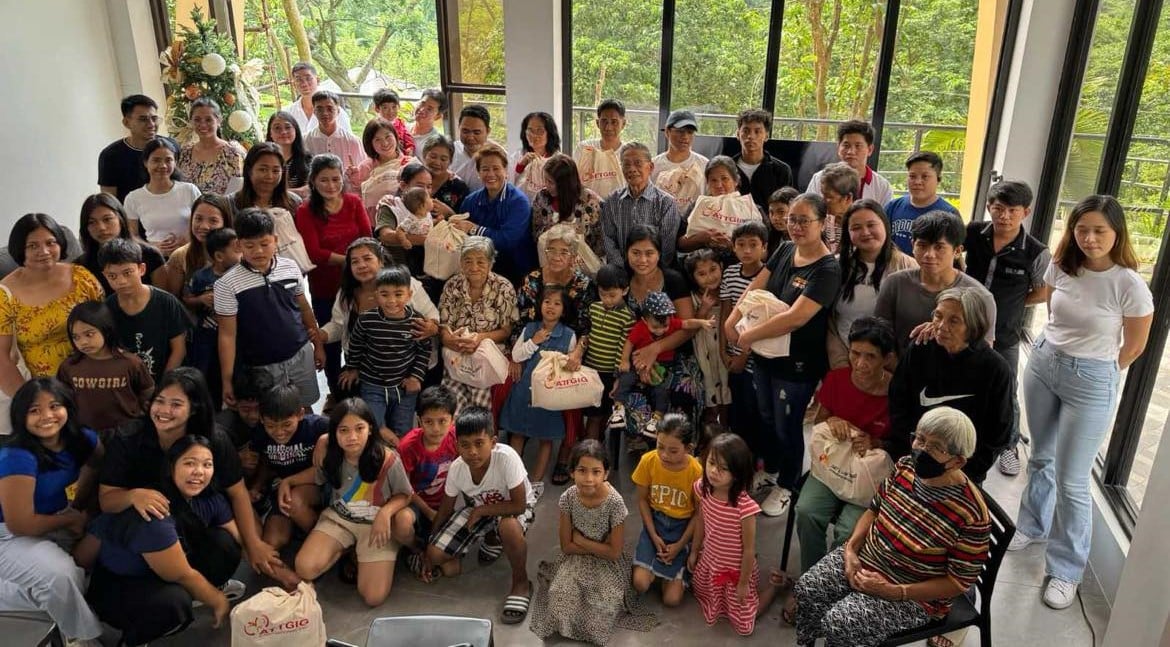
SDP has also expanded into church planting ministry. Two of the churches they have planted are both situated in the South—one in the province of Batangas and the other one in the province of Cavite. Both churches are led by the resident pastors of SDP. The church planting in Batangas started in 2022 and now serves the local community by having a regular Tagalog worship service every Sunday. For nearly two years, the Lord has been faithfully using the SDP core and its community to provide support for the ministry. The ministry in Cavite just started in 2024. The family of one of the members of the SDP works in this ministry. This church planting outreach is an extension of God’s work in the lives of SDP members. This shows the impact of the SDP ministry on their members. They become more mission-oriented and passionate in doing the ministry of the Lord. These ministry expansions are tangible evidence of God’s faithfulness and goodness to SDP.
SDP’s strategy in funding for operational expenses
Lastly, the All Because of Christ SDP is unique in terms of its strategy in funding its operational expenses. Unlike a local church setting—where funds for operational expenses and other expenditures are derived from the regular collection of the members’ tithes and offerings—SDP does not collect offerings as it is not allowed to collect money from the employees for that purpose. The integration of SDP with the human resource department of the company also binds them to follow the corporation’s rules and regulations. But by the grace of the Lord, even with this setup, the needs of the ministry are sustained through the generosity of the SDP core group members. Although SDP does not have regular collections through tithes and offerings, the needs of the ministry are provided through voluntary sponsorships of the SDP core group. The SDP’s pastoral council spearheads the sourcing of funds by first discussing and praying for the needs of the ministry. After that, the council communicates the need to the SDP core group. This does not mean that the SDP council demands the SDP core group members to give towards the needs of the ministry; rather, the needs are just presented to them. Because of the culture of generosity among the core group, they have faithfully contributed to cover necessary expenses. By the grace of the Lord, for ten years now, the needs of the SDP have always been provided through this process.
Conclusion
In closing, I would like to offer an invitation to consider this discipleship framework for the Filipino marketplace as a contribution to the advancement of God’s kingdom:
- Theological foundation. There is no dichotomy between faith and work. This provides a framework for understanding the purpose and significance of work in the context of faith and spirituality.
- Integration of the discipleship ministry with the human resource department. Integrating the ministry with the human resource department is of great help in securing the existence and continuity of the ministry in the corporation.
- Presence of structural support in the form of a pastoral council and core group. The marketplace is too big for a single pastor to handle! These two groups will play vital roles in the function and success of the ministry by praying, providing guidance, support, and leadership to ensure the spiritual well-being of the flock. The pastoral council and the core group are essential for the smooth and fast operation of the SDP ministry, making sure that the ministry operates within the boundaries of company policy.
- Learning opportunities: Equipping sessions, small groups, and worship services. Equipping sessions are for deeper and more comprehensive learning opportunities for spiritual formation, character building, and ministry skills development of the core group. Small groups are for life-to-life sharing and for accountability. Worship services are designed for larger audiences, regardless of their faith commitments.
- Emphasis on values of integrity, humility, community, and spirituality. The experience of SDP showed that a discipleship ministry for the Filipino marketplace must include teaching, embodying, and modelling the values of integrity, humility, community, and spirituality (particularly, as expressed in Bible reading and prayer).
As mentioned at the onset, I hope that this discipleship framework will also provide insights into non-Filipino contexts. While we hold on to our core belief that we have one God and one mission, it is also true that we have the duty to seriously think about and work on how we can effectively contextualize God’s message to the place he has placed us.
[1] Thomas Groenewald, “A Phenomenological Research Design Illustrated,” International Journal of Qualitative Methods 3, no. 1 (1 March 2004): 44, https://doi.org/10.1177/160940690400300104.
[2] Art Sloan and Brian Bowe, “Phenomenology and Hermeneutic Phenomenology: The Philosophy, the Methodologies, and Using Hermeneutic Phenomenology to Investigate Lecturers’ Experiences of Curriculum Design,” Quality and Quantity: International Journal of Methodology 48, no. 3 (2014): 1291–1303, https://doi.org/10.1007/s11135-013-9835-3.
[3] C. Neil Johnson, “Transformation to, within, and through the Marketplace,” in Transformation: A Unifying Vision of the Church’s Mission, ed. Luis K. Bush (Thailand: Forum for World Evangelization, 2004), 63–4 and n. 46, 145–6, quoted in Lausanne Movement, “Marketplace Ministry,” Occasional Paper produced by the Issue Group at the 2004 Forum hosted by the Lausanne Committee for World Evangelization in Pattaya, Thailand, 29 September to 5 October 2004, https://lausanne.org/content/lop/marketplace-ministry-lop-40 (accessed 11 March 2025).
[4] Lausanne Movement, “Marketplace Ministry.”
[5] For Filipino values interfacing with the marketplace, particularly in terms of human resource management, see Tomas Andres, Understanding Filipino Values: A Management Approach (Quezon City: New Day, 1981) and F. Landa Jocano, Toward Developing a Filipino Corporate Culture: Uses of Filipino Traditional Structures and Values in Modern Management, rev. ed. (Metro Manila: PUNLAD Research House, 1999). For Filipino values interfacing with the Christian faith, see Vitaliano Gorospe, Filipino Values Revisited (Metro Manila: National Bookstore, 1988) and Evelyn Miranda-Feliciano, Filipino Values and Our Christian Faith (Mandaluyong: OMF Literature, 1990).
[6] Andres, Understanding Filipino Values, 34.
[7] Jocano, Toward Developing a Filipino Corporate Culture, 107.
[8] Jocano, Toward Developing a Filipino Corporate Culture, 5.
[9] Joel Ortiz, “Transformational Leadership: The Need of Our Times,” in Directions in Theological Education, ed. Wanak Lee (Manila: Philippine Association of Bible and Theological Schools, 1994), 32.
[10] Gorospe, Filipino Values Revisited, 105.
[11] Gorospe, Filipino Values Revisited, 106.
[12] “Frank Lynch identifies social acceptance, economic security, and social mobility as the three basic aims that predominantly motivate and control the behavior of the Filipino. Of the three, he considers social acceptance as the most important.” Andres, Understanding Filipino Values, 16.
[13] Miranda-Feliciano, Filipino Values and Our Christian Faith, Introduction.
[14] Theresa Lua, “Developing a Holistic and Contextualized Discipleship Ministry among Filipino Urban Poor Adults in Metro Manila” (PhD dissertation, Asia Graduate School of Theology, 1998), 13.
[15] David Watson, Discipleship (London: Hodder and Stoughton, 1983), 19.
[16] Lua, “Developing a Holistic and Contextualized Discipleship Ministry,” 15.
[17] Lua, “Developing a Holistic and Contextualized Discipleship Ministry,” 27–29.
[18] N. T. Wright, Following Jesus: Biblical Reflections on Discipleship (Grand Rapids: Eerdmans, 2014), 11.
[19] David Gill, Workplace Discipleship 101: A Primer (Peabody, MA: Hendrickson, 2020), 11.
[20] Gill, Workplace Discipleship 101, 12.
[21] Gill, Workplace Discipleship 101, 21.
[22] Gill, Workplace Discipleship 101, 22.
[23] Isabelo Magalit, “The Mission of Asian Theological Seminary,” Phronesis 1, no. 1 (August 1994).
[24] Yohan Hong, “Powerlessness and a Social Imaginary in the Philippines: A Case Study on Bahala na,” The Asbury Theological Journal 75, no. 1 (2020): 127–50, https://place.asburyseminary.edu/asburyjournal/vol75/iss1/9/ (accessed 11 March 2025).
[25] Andres, Understanding Filipino Values, 11.
[26] Ortiz, “Transformational Leadership,” 32.
[27] Lausanne Movement, “Marketplace Ministry.”