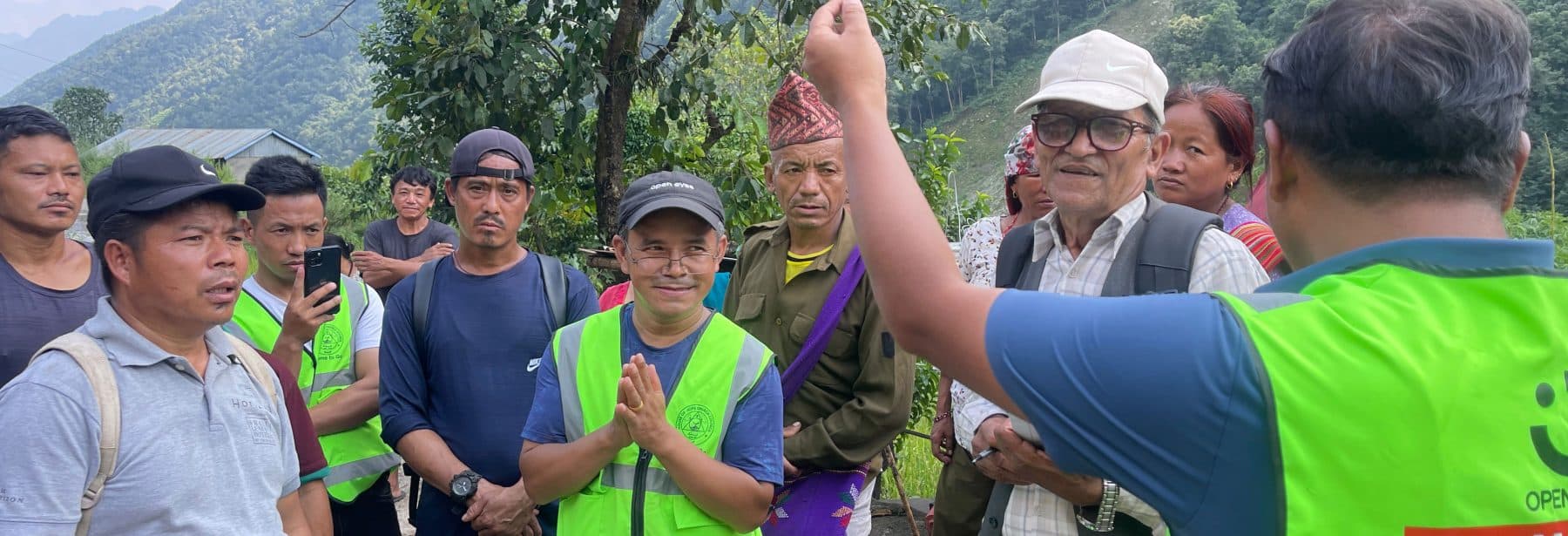
The article looks at Project Ezra, OMF’s program to train members to become better preachers. Its goal is to impart the skills that the OT saint Ezra exhibited—to equip and encourage people to be devoted to understanding, obeying, and teaching the Scriptures to others. Although the focus of Project Ezra is on “preaching”, the methods taught are not just applicable for those who give sermons in a formal church setting. They are useful to anyone who has a teaching ministry.
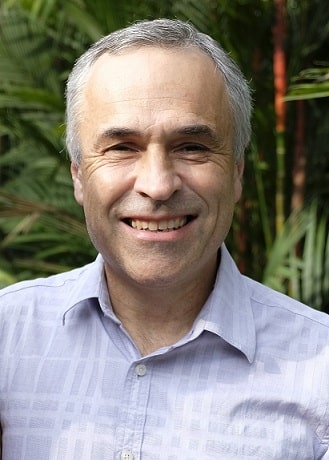 Phil Nicholson
 is from Australia and has been working with OMF in Taiwan since 1992. Previously he worked with university students and then as the Field Director for Taiwan. Since 2016 he has been seconded to serve with Langham Preaching as the East Asia Regional Coordinator. This involves organising and facilitating preaching training activities for Asian church leaders across the region and equipping local leaders to pass on what they have learned.
Mission Round Table 19:2 (May-Aug 2024): 18-19
To read articles in this edition, visit this post on Mission Round Table 19:2.
Who was Ezra? He was a priest sent back to Jerusalem from Babylon to support the rebuilding of the temple by teaching God’s word to the returnees. He was described as someone who devoted his life to: (1) studying the Law of Moses; (2) obeying the Law; and (3) teaching the Law (Ezra 7:10).
Project Ezra is named after this Old Testament saint as this training course has similar aims for those who attend. We want to equip and encourage people to be devoted to understanding, obeying, and teaching the Scriptures to others. Project Ezra is one of the Training and Development Courses offered to OMF International members and friends.
But why is Project Ezra necessary? Doesn’t this teach basic ministry skills that we learn before joining the fellowship?
OMF members come from many different backgrounds and with a range of different skills and prior training. Some will already be experienced and competent in teaching God’s word. Others will lack confidence or skills.
Project Ezra aims to do three things:
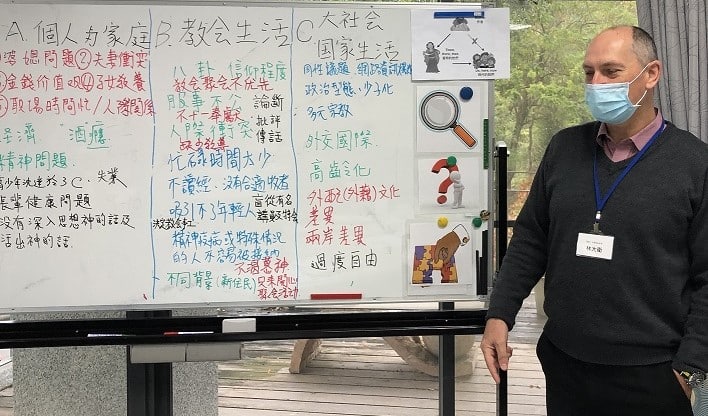
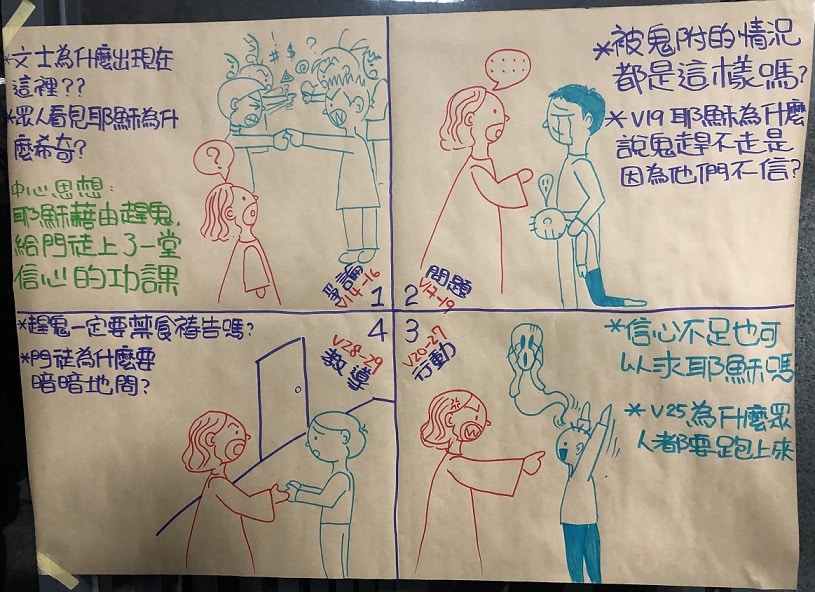
- It teaches simple, practical methods for studying the Bible and planning a Bible talk or discussion materials based on the biblical text. It follows a step-by-step approach that is easy to use for those without much previous training.
- It challenges and reminds those who already have received training to maintain good Bible study habits. We can all become lazy or careless over time. For such people, Project Ezra can be a refresher course taking us back to basics. One recent attendee shared they just enjoyed spending time studying and discussing different Bible texts with colleagues each day. This is something many of us do not have opportunity to do regularly.
- It provides a method that can easily be taught to others. The aim is that attendees are not only strengthened in their own preaching skills, but are also equipped to share these same steps with local believers and church leaders so that they can equip them in turn. This is something we encourage participants to do, and many attendees have worked through the training materials with local colleagues after attending.
Although the focus of Project Ezra is on “preaching”, the methods taught are not just applicable for those who give sermons in a formal church setting. They are useful to anyone who has a teaching ministry, whether they give short talks in smaller fellowship groups, share from the Bible on Home Assignment, or lead Bible study discussions.
Is Project Ezra applicable in the East Asian Context? Is there a danger that what is taught imports Western methods of thinking, teaching, and preaching?
Of course this is a danger for any form of training. However, the methods used in Project Ezra have been borrowed from Langham Preaching which has actively trained preachers across Asia for over ten years. These methods have been adopted and adapted with great enthusiasm by Asian church leaders in most of the countries where OMF is serving. And within the Project Ezra Course, we spend time discussing issues of contextualisation and how to be relevant in our different contexts.
The training provided by Project Ezra is not something new, but it is simply a way to make this accessible to our members in languages we are comfortable using. Currently, Project Ezra is offered in English and Mandarin, but it could be adapted for other languages if there is sufficient interest.
How does Project Ezra work? What does the training look like?
Currently, Project Ezra is run as a four- to five-day in-person course. The mornings primarily provide input from the facilitators who teach the steps of moving from studying God’s word to preparing teaching material based on what is learned. Each afternoon covers five steps:
(1) Personal study of an assigned text;
(2) Small group discussion of the text, planning the message, and sermon outline;
(3) Groups share their work and critique one another;
(4) One of the facilitators presents a sermon based on this same text, seeking to model what has been taught;
(5) Feedback on the sermon from the learners.

The emphasis is on practice and repetition so that one grows in understanding and confidence in the methods taught. During the week, each participant will also prepare a short message, preach this on the final day, and receive feedback.
Project Ezra can be taken as a standalone one-week course, but it can also be offered as Project Ezra 2 and 3. These will use the same format but will focus on how to teach different genres across the Bible and will build on some of the other basic skills taught in the foundational course, such as developing effective applications, developing presentation skills, overcoming challenges preachers face, etc.
The next Project Ezra courses will be offered in English and Chinese in 2025. Dates have not yet been set, but will be posted on the EA Learning website, or you can find details from your centre’s Training & Development Coordinator.