This article situates preaching in the context of the book of Acts and history and introduces Langham’s work in training preachers that is designed to raise the level of biblical preaching across the world. Understanding preaching is not just relevant for those who are preachers, but for everyone involved in the work of establishing indigenous biblical church movements as it impacts the type of training we provide for leaders, gives us guidelines for evaluating the health of the church, and informs decisions about when to hand ministry over to indigenous leadership.
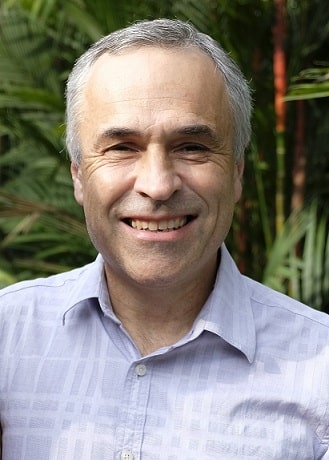
Phil Nicholson
Phil Nicholson is from Australia and has been working with OMF in Taiwan since 1992. Previously he worked with university students and then as the Field Director for Taiwan. Since 2016 he has been seconded to serve with Langham Preaching as the East Asia Regional Coordinator. This involves organising and facilitating preaching training activities for Asian church leaders across the region and equipping local leaders to pass on what they have learned.
Mission Round Table 19:2 (May-Aug 2024): 11-17
To read articles in this edition, visit this post on Mission Round Table 19:2.
Churches live, grow and flourish by the Word of God, and they languish and die without it…. whenever the Word of God is faithfully expounded and applied, congregations grow in both size and depth. ~ John Stott[1]
What place does biblical preaching have in the work of world mission? It is foundational for all mission endeavors. And for OMF International, it must be a central component of our strategy to establish healthy growing churches amongst East Asia’s peoples.
Understanding preaching is not just relevant for those of us who are preachers, but for everyone involved in the work of establishing indigenous biblical church movements. It impacts the type of training we provide for leaders, gives us guidelines for evaluating the health of the church, and informs decisions about when to hand ministry over to indigenous leadership.
This essay explores the importance of biblical preaching in the growth of the early church as described in the New Testament and discusses how this should impact the churches of East Asia today. A particular focus will be the work of Langham Preaching that is designed to raise the level of biblical preaching across the world.
But what is “biblical preaching”? It is preaching based on the exposition and application of God’s word in the Scriptures. It is commonly described as “expository preaching”. But since this terminology is often misunderstood as referring to a particular style of preaching, particularly a Western, analytical approach to the Bible, the more neutral term “biblical preaching” will be used here. In biblical preaching, the content and form of the message is drawn from the biblical text (usually one primary text), rather than starting from a topic or idea chosen by the preacher.
Preaching and mission in the book of Acts
In the book of Acts, the preaching of God’s word is presented as one key factor in the growth of the church throughout the Roman world.
Acts includes a number of summary statements showing how the gospel spreads and bears fruit regardless of the challenges and obstacles it faces.[2] Notice the focus in these summary statements below.
“So the word of God spread. The number of disciples in Jerusalem increased rapidly, and a large number of priests became obedient to the faith.” (Acts 6:7 NIV)
“Then the church throughout Judea, Galilee and Samaria enjoyed a time of peace and was strengthened. Living in the fear of the Lord and encouraged by the Holy Spirit, it increased in numbers.” (Acts 9:31)
“But the word of God continued to spread and flourish.” (Acts 12:24)
“The word of the Lord spread through the whole region.” (Acts 13:49)
“So the churches were strengthened in the faith and grew daily in numbers.” (Acts 16:5)
“In this way the word of the Lord spread widely and grew in power.” (Acts 19:20)
“In Rome Paul proclaimed the kingdom of God and taught about the Lord Jesus Christ—with all boldness and without hindrance!” (Acts 28:31)
Acts records a movement of the word of God. The markers of growth focus on the word. The triumph of this word is seen through increasing numbers of believers and churches being established and strengthened. The concern of the writer of Acts is to show that all this is a result of the proclamation of God’s word through the power of the Holy Spirit.
Apart from these key summary statements, Acts includes the contents of a number of sermons. These reveal that the message preached was centred on the risen Lord Jesus who has come in fulfilment of Old Testament hopes. Acts also shows the churches as listening to, examining, and obeying God’s word. And the apostles describe their priority as “prayer and the ministry of the word” (Acts 6:4).
The ministry of the word in Acts is not identical to biblical preaching today. The type of preaching presented in Acts is mostly evangelistic in nature, and there were no New Testament Scriptures at that time. So, the “word” in this context primarily refers to the gospel of Jesus Christ along with explanations of Old Testament texts that point to and affirm this gospel message. But despite these differences, it is clear that the proclamation of God’s revealed word is the foundation of the church.
This is confirmed by a number of statements found in the New Testament Epistles. Paul describes his ministry as preaching the word of God, the gospel of Christ (1 Cor 1:17, 2 Cor 4:5, 1 Thess 2:13). And he describes this word as powerful to change lives and bear fruit wherever it is proclaimed (Col 1:6).
In Paul’s Epistles to Timothy, the proclamation of the word is not just the role of the apostles or for the sake of evangelism. It is also central to ministry within the church. And when Paul commands Timothy to preach the word (2 Tim 4:2), the context of 2 Timothy 3:15–17 indicates that this means explaining and applying the Old Testament Scriptures, not just proclaiming the gospel. Timothy is to prioritise the reading, teaching, and applying of the Scriptures (1 Tim 4:13–16, 2 Tim 3:16–4:4), and he is to train others to do the same (2 Tim 2:2). The instructions given to Timothy describe the biblical context that is closest to us today.
Looking back into the Old Testament, we see the ministry of the priest Ezra is an excellent example of this. He was used to renew the people of God after the exile. God did this through his preaching which explained and applied the law of Moses to the lives of the returnees (Neh 8:1–18). He was described as having “devoted himself to the study and observance of the Law of the Lord, and to teaching its decrees and laws in Israel” (Ezra 7:10). His life’s focus was to know, to obey, and to teach God’s word to God’s people. These three commitments are repeated in Paul’s instructions to Timothy as well (e.g., 1 Tim 4:13–16).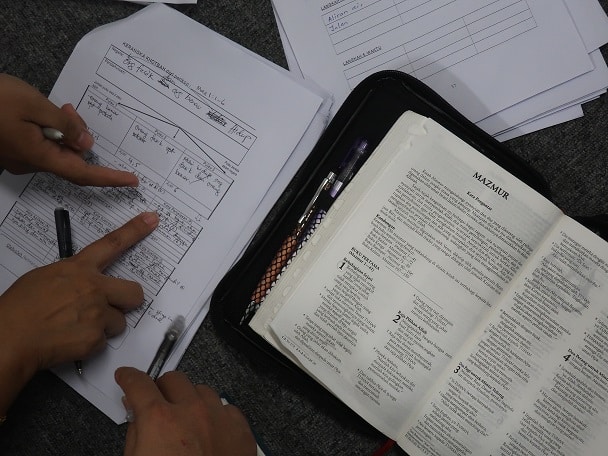
This brief biblical overview provides a foundation to understand preaching today. The preaching and teaching ministry in the church is to be based on what God has revealed through his Son Jesus Christ and recorded in his written word. Today, it is through the inspired Scriptures that we have access to know the person of Jesus and the gospel message. And so for us, “preaching the word” is preaching from the Scriptures. It is preaching that is concerned to explain this word and to apply it to the lives of the hearers.
Preaching and mission in history
Tracing the place of preaching across the history of the church and mission is beyond the scope of this article. But one clear example is the importance of biblical preaching during the Reformation. The reformers were committed to the translation and proclamation of God’s word as the foundation of the church. They sought a revival of the word that had been replaced by ritual and mysticism in much of the church of their time.
Martin Luther said that “a Christian congregation should never gather together without the preaching of God’s Word and prayer… Therefore, when God’s Word is not preached, one had better neither sing nor read, or even come together.”[3] It is estimated that he preached over 4,000 sermons during his lifetime, and the other reformers had a similar focus. The start of the Reformation in Switzerland at the beginning of 1519 was marked by Ulrich Zwingli preaching from Matthew 1 and expounding the New Testament systematically week by week.
C. Dargan writes:
The great events and achievements of that mighty revolution were largely the work of preachers and preaching; for it was by the Word of God, through the ministry of earnest men who believed, loved and taught it, that the best and most enduring work of the Reformation was done.[4]
This is what we would recognise today as expository preaching.
A similar pattern was seen during the Great Awakening that spread across the English-speaking world in the eighteenth century. The leaders of that movement, George Whitefield and John Wesley, were estimated to have each preached tens of thousands of sermons.
And the roots of the modern mission movement can be traced back to these periods of reformation and renewal. Our mission forefathers, such as William Carey and Hudson Taylor, were the fruit of this emphasis on preaching and hearing the word of God.
Preaching and mission today
So, what is the place of preaching in mission today?
The role of preaching is rarely emphasised in mission circles today. In some cases, it may simply be assumed rather than actively promoted or taught. Even so, at times it is also actively sidelined in favour of other ministry methods and strategies. This can be due to a number of factors. Most seriously, some may question or deny the authority, relevance, or sufficiency of the Bible itself. So, ministry becomes focused on other activities that are seen as more effective or urgent. The loss of confidence in the Scriptures seen in many sending countries is reflected in the beliefs and priorities of those who are sent.
And while evangelicals uphold the importance of the Bible, the busyness and demands of ministry may cause the study and teaching of the Scriptures to be neglected. The apostles dealt with this pressure when they ensured the feeding of the widows was addressed while at the same time affirming their priority was prayer and ministry of the word (Acts 6:1–7). Ministries today do not always avoid the danger of neglecting the word while dealing with other good and urgent matters.
Furthermore, even when the importance of the Scriptures is affirmed, the need for preaching is sometimes questioned. A desire to contextualise communication methods to cultures that are more influenced by multimedia, images, or storytelling may lead to questioning the effectiveness of preaching. Others downplay the role of a qualified teacher/preacher to help explain the meaning of the text, preferring to focus on discussion and dialogue when teaching the Scriptures.
None of these communication methods are in themselves opposed to biblical preaching. Biblical preaching is not primarily a methodology but an ethos. Its concern is that God’s word is proclaimed, heard, understood, and applied. This can be done using many methods appropriate to the different genres and forms in the Scriptures. For example, Bible storytelling can be one effective way of “preaching” narrative texts when it performs the function of revealing and applying God’s word to the lives of the hearers.
The problem is when ministry strategies are built around a particular method of communication rather than the broader biblical categories of preaching and teaching.[5] The result is that preaching may be removed from its principal place within the church to become optional or of secondary importance.
What is important is that the starting point for ministry is the word of God, and that we allow this word to shape both the content and form of our preaching. Biblical preaching is based on a conviction that it is God’s word, not our methods, that will lead to changed lives and healthy growing churches.
The goal of preaching is to open the Bible so that believers can understand it. On the one hand, it seeks to avoid spoon-feeding the preacher’s ideas and opinions as is often done with topical preaching. On the other hand, it does not rely on people understanding the Scriptures by themselves without help from trained teachers (as is often the case in Bible study discussions). The goal is that biblically equipped preachers will help believers to hear and understand what God is saying from the Scriptures for themselves through the message preached. Biblical preaching also trains believers to read and understand God’s word themselves.
One other possible reason for the neglect of preaching is that many mission workers do not see themselves as preachers or feel confident to preach or teach. Compared with seminary training for pastors, many mission training programmes provide less input on preaching and other subjects related to church leadership. They are more concerned with issues of culture, contextualisation, and evangelism. If missionaries are not competent preachers themselves, they will not be able to train or mentor indigenous church leaders in this role.
There is a need for mission workers who are committed to understanding God’s word, and preaching and teaching it in a way that it is clearly understood and appropriately applied, and also able to equip local church leaders to do the same.
When we evaluate our mission efforts today, it is worth asking the following questions:
- Are we well qualified to interpret and teach or preach the Scriptures to others?
- Is the preaching and teaching of God’s word central to our ministry?
- Are we equipping local church leaders to understand and preach God’s word?
If the preaching of the word is not a priority, then we can expect that whatever churches are planted will be weak, immature, and easily swayed by error, tempted to compromise, or destroyed by suffering.
Preaching in East Asia today
In the rest of this article, I want to share my personal observations about the state of biblical preaching in East Asia today and my experiences in training preachers. These observations are based on training preachers in more than ten different countries in East Asia for the past eight years.
What is the state of preaching across East Asia? Because of the great diversity of cultures and churches in the region, any answer to this question involves generalisations. Even so, I would like to make four observations:
1. Lack of resources
It is estimated that about 80 percent of those who serve in pastoral ministry around the world will not receive any formal theological training.[6] This is true in East Asia as well. In Asia’s urban middle-class churches, this may be hard to believe since most pastors have received at least degree-level training. And many churches have multiple well-trained staff members. But in rural churches, in slums, and in smaller towns, people often take on pastoral responsibilities with little or no formal training. The percentage is even higher when we consider lay leaders who also have preaching responsibilities in their local churches.
Unfortunately, many who have received formal theological education are still not well equipped for biblical preaching. Formal educational methods (such as in seminary) are not always the best way to gain practical skills. This may be due to schools emphasising knowledge rather than providing opportunities to practice ministry skills like preaching. And many homiletics classes teach models of communications rather than core skills of biblical interpretation, exposition, and preaching. Even seminary professors often confess that they lack confidence and knowledge in how to preach well.
The lack of resources also includes literature needed to help with Bible study and sermon preparation. This is especially true in rural regions where local rather than national languages are used. Many people who are responsible to preach may not have any resources beyond the Bible itself. And the Bible they use may only be in the national language rather than their own local language or dialect.
It is common to meet preachers who have not read through the whole Bible, are vague about the overall biblical storyline, and, in particular, are unfamiliar with much of the Old Testament.
Unfortunately, the abundance of material on the internet has not helped this situation. Most of the good resources are limited to English and a couple of other major languages. And there is so much poor or false teaching available that many are not able to discern what is good and what is bad. Sometimes those who have limited English are better protected from error because of this!
2. Busy schedules
Another challenge for many pastors is lack of time for adequate sermon preparation. Research by Langham Preaching discovered that one in five preachers attending training events did not prepare their sermon before preaching. (I assume they had thought about what they would say, but did not spend any time formally studying or writing their message.) And the average preparation time for a sermon was only five hours. Many preachers are bi-vocational as they need to earn a living. Others serve alone in a church and have complex pastoral demands in needy congregations that push preaching aside. Being willing to spend adequate time preparing to preach demands strong convictions about the importance of preaching and a willingness to make sacrifices to find the time to do this well.
3. Pragmatic approach
Preachers sincerely want to help their congregations know the Lord Jesus and grow in their faith. So, most preaching tends to be addressed to their immediate practical and spiritual needs. The most common model of preaching is topical, and topics are chosen week by week according to what the preacher feels is needed at the time.
Although the desire for practical sermons is admirable, it means that preaching is mostly very light on biblical and theological content. And topics tend to be repeated often according to the concerns and focus of the preacher and tend to be on the needs of the church and the “spiritual” life of the believers, rather than topics that address broader social issues or the challenges of living faithfully as God’s people in society.
Few have considered how to preach “the whole counsel of God.” Thus, preaching tends to be needs-driven rather than a part of a deliberate plan to grow disciples whose faith is built on strong biblical foundations.
A helpful illustration is that preaching is seen more as medicine rather than as food. That is, it is used to “heal” sicknesses and weaknesses in believers and churches when they appear. Inherent in this approach is an expectation of immediate results. The alternative is to use preaching to build up the body through a healthy diet of God’s word over time. The results are less immediately obvious, but healthy bodies are stronger and more resistant to spiritual sickness.
4. Desire to learn
Despite these problems, there is a great desire amongst many pastors and lay preachers to learn and grow in their ministry skills, including preaching. Pastors are aware of their responsibility to “preach the word” and know that they need to be better equipped. They often feel guilty about the lack of time they have been able to devote to preaching. And many are delighted when they are given an opportunity for more practical on-the-job training. This includes a desire to know God’s word better and to develop in their ability to prepare and present sermons that are faithful to God’s word and relevant to the congregation.
The weakness of much preaching is usually not due to the laziness or neglect of preachers. Rather, it is because they have not been well equipped or supported in how to fulfil this key aspect of their ministry.
A model of training preachers
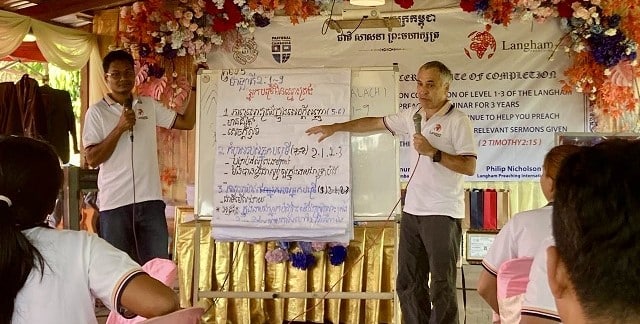
I work with Langham Preaching across East Asia. Langham Preaching was started about twenty years ago by John Stott and Christopher Wright. Along with Langham Partnership’s other ministries—Langham Literature and Langham Scholars—it seeks to equip leadership for the church in the Majority World. Langham Preaching’s mission is to provide training that builds indigenous movements of preachers, particularly focusing in areas where the church lacks resources, is under pressure, or is growing but lacks well-trained leaders—what are often called places of poverty, persecution, and potential. Across the world, this ministry takes place in about eighty nations.
A typical training programme is made up of three workshops lasting four to five days that are spread over a couple of years. The first workshop teaches the fundamentals, while the second and third look at how to preach from the different genres found in the New and Old Testaments. There is an increasing variety of ways in which this is done, be it online or hybrid training, a one-week intensive meeting over two weekends, or on four Saturdays. However, while the details of training vary according to context, they all include the following elements.
1. Training those who preach
The training is for those who already have a preaching ministry, not for seminary students. It can include pastors, lay leaders, student workers, children’s workers, etc. It is on-the-job training for those who already have some experience. It includes people ranging from eighteen to over seventy years of age, those who have preached for less than a year, and those who have been preaching for thirty years or more.
2. Non-academic
Apart from having a preaching ministry, the only prerequisite is the ability to read the Bible. Attendees come from vastly different educational backgrounds, with some not having completed high school, while others are seminary professors. Some have few or no Bible study tools in their own language. All the training is designed with this in mind. Those who have the resources and ability to use them are encouraged to do so. But the goal is that those who lack such tools gain confidence that they can still understand and teach God’s word in their own ministry context.
3. Practical training
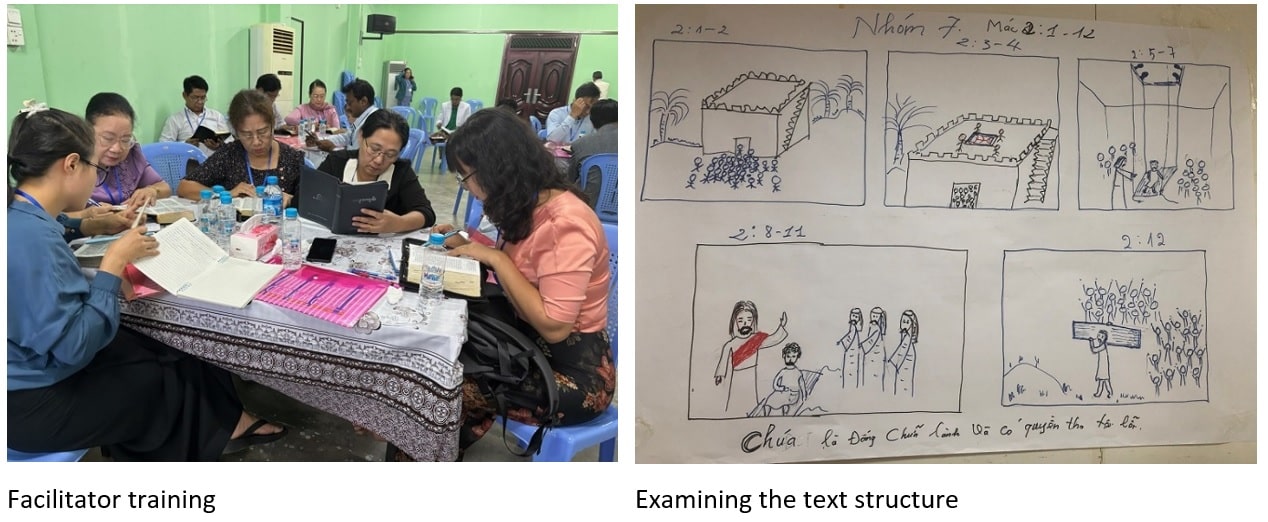
The training involves teaching on how to study the Bible, how to plan a sermon, how to apply and illustrate, etc. It also includes sessions on the character of the preacher and core convictions about preaching God’s word. But it does not aim to be comprehensive. The focus is on the core essential knowledge and skills needed to preach. During a training event, most of the time is spent practicing what is taught. This involves studying the Bible individually and in small groups, preparing sermon outlines, listening to sermons, and critiquing them. Practice and repetition of these steps is key.
4. Learning in community
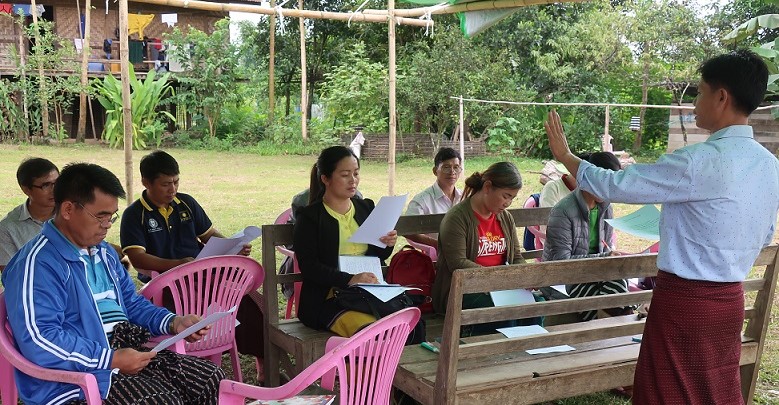
Much of the learning time during workshops is set in the context of small groups where people see the benefits of discussion and learning from one another. Apart from the workshops, participants are expected to form local “preaching clubs” where they continue to meet regularly and practice what they have learned. For many pastors, these can become an important ongoing source of fellowship and encouragement. Involvement in a preaching club is one of the main indicators for improvement in preaching.
5. Training local facilitators
When training begins in a new location, it usually depends on outside facilitators and translation (often from English) into local languages. But the end goal is not just to train local preachers. Rather, it is to train people who are able to facilitate and indigenise the training for their own context. In most countries in East Asia, there are now local leaders who organise and facilitate preaching training with little or no support from outside the country. When this is done successfully, it leads to a number of positive outcomes: the seminars can be taught in local languages[7] without the need for translation; costs are reduced as seminars are run using local facilities rather than people needing to travel to a central location; and the content of the training material can be modified to fit the cultural and educational background of the attendees. Langham Preaching gives local facilitators freedom to adapt their teaching content and methods for each different context. For example, within Indonesia, there are now two sets of training materials. One is used in urban areas amongst more educated attendees. The other is designed for rural areas where people have less education. The level of language, complexity of the material, and illustrations used are designed according to the needs of the learners.
A desire to grow
When Paul instructs Timothy to be devoted to teaching and preaching, he urges him to “Practice these things, immerse yourself in them, so that all may see your progress. Keep a close watch on yourself and on the teaching. Persist in this, for by so doing you will save both yourself and your hearers” (1 Tim 4:15–16).
One of the joys of participating in Langham Preaching is meeting Asian preachers who exemplify this attitude. Many come to the training aware of their limitations but with a desire to grow. Their positive response to the training reveals that biblical preaching is not seen as an unnecessary or unwanted Western model of ministry, but as something needed and relevant for the church across East Asia.
Although the ministry was started by international facilitators, in most countries of East Asia, the bulk of the training is now led by local leaders who are keen to pass on what they have learned. The enthusiasm of the local church leaders to train others shows that they have seen the value of what they have learned for the churches in their context
.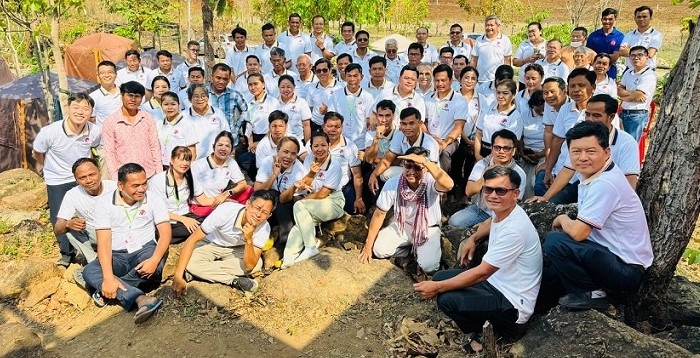
In one creative access nation, local facilitators have led forty five-day training seminars across the country for pastors and lay preachers over the last two years. Each seminar trains about twenty to thirty people. At the conclusion of one training event, the facilitators were asked if they could stay on for another week to provide a second week of training.
In the Philippines, over the last four years, training programmes have been started in four different regions, and many who have been trained have taken the material and are equipping others in their local churches and communities. This pattern of local initiative and enthusiasm is repeated in many places.
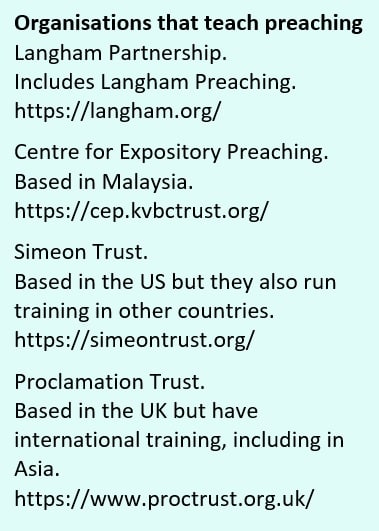 Langham Preaching is just one example of how preachers can be equipped. There are other organisations, some founded in Asia, that provide similar training. And most of this type of training can be done locally within churches, or church networks. Langham’s vision is for a preaching movement, and in places where this has taken off, training is now often done at a local level, independent from any formal connection to Langham Preaching.
I mention this, not to boast in the work of Langham Preaching, but to illustrate the hunger that Asian pastors have to know God’s word and to be better equipped to teach it to their churches. In fact, the Langham Preaching model of training is nothing special. It simply teaches and practices basic Bible study skills and models how to use what is found in the text as the foundation for all that is to be preached. It is built on a confidence that God’s word is powerful and sufficient for God’s church and that this word can be understood and taught even in the absence of formal academic training or an abundance of study tools.
Testimonies
What is most encouraging is hearing the testimonies of those who have been through the training. A few consistent themes arise in these testimonies.
- Participants are committed to spending even more time studying and preparing their messages. Some join the training looking for shortcuts, but usually the result is they are more willing to prioritise studying God’s word for their ministry.
- They report that their messages have stronger biblical foundations. But at the same time, they are more practical and helpful for the church. This is not just the opinion of the preachers themselves, but is reported by congregation members (and by the spouses of the preachers!).
- Many participants take what they have learned and share it with others, either formally as Langham facilitators, or informally in their local networks. There is a desire to not just be good preachers but also to train others (as Paul prescribes in 2 Timothy 2:2).
Here are a few testimonies from East Asia:
“I have learned how to prepare sermon structures that clearly convey the message of the Word from the Bible. I understand the Word of God more deeply and freshly. I get sermon material from the Bible and do not depend on my own ideas.”
“I now model my sermon preparation on observation and making a sermon outline after finding the main idea from the Bible passage. I have joy and enthusiasm and want to preach it! Now my husband enjoys my sermons and even gives me praise. Before he always had a wrinkled forehead and a confused look! Praise the Lord now his forehead is relaxed and a proud smile adorns his lips as the husband of the preacher.”
“The preaching training has greatly helped empower lay preachers in my church. There are currently thirty-one church leaders who can make their own sermons through preparation together in preaching clubs. In our preaching clubs, the preparation is done by those who will be preaching the following week. Many of them are fishermen who are out on other islands and come home at the end of the week. Then on Mondays they come with the results of their observation of a text, and we make a sermon outline together. On Thursdays they come back to deliver their respective sermons. I give feedback to make sure they are faithful to the text, clear, and relevant. On Fridays I offer personal mentoring to those who need it. There is excitement almost every day when they come to my house and ask for corrections. They apologise for disturbing me. It makes me busier now, but later there will be more people who can preach.”
Preaching and our mission today
OMF’s vision statement is: “Through God’s grace, we aim to see an indigenous, biblical church movement in each people group of East Asia, evangelizing their own people and reaching out in mission to other peoples.”
Where does biblical preaching fit into this vision? Apart from evangelism and growing disciples, equipping local church leaders is essential to see this vision come to fruition. And the ability to preach and teach God’s word is a core responsibility of such leaders.
At the present time, I often see a greater interest in preaching amongst Asian pastors than amongst many in the missionary community. For most of us, a key factor in our own spiritual growth has been years of receiving faithful biblical teaching and preaching. We do the Asian church no favors when we neglect the importance of biblical preaching and the need to equip our brothers and sisters to be faithful in this task.
Praise God that missionaries have been key to the work of Langham across East Asia. In some cases, OMF colleagues have been the catalyst to get the training started in a country. Others help play an important role as a cultural bridge between Langham and the local church leaders as they understand the language and church context. Some help to introduce or bring pastors to training events. Some help to lead preaching clubs.
Most of these missionary colleagues have other ministries as church planters, student workers, or in theological education. But they devote some of their time to encouraging the work of training pastors through their ministry connections.
Apart from Langham Preaching, OMF and CIM missionaries have been training preachers since the early days of the fellowship.[8] This has been through teaching in seminaries and Bible schools, running training programmes, or simply walking alongside local preachers and encouraging them. Within CIM/OMF, we have a long history of equipping biblical preachers.
Supporting and promoting good biblical preaching in the churches we serve is one key aspect of how we can help to build the church in East Asia. How can we continue to contribute to this?
Although we are not all preachers or directly involved in church planting, all of us work alongside Asian colleagues, attend churches, and have opportunities to influence our brothers and sisters. How can you encourage preachers you know to make the study and preaching of God’s word a priority in their ministry? How can you provide encouraging feedback on their preaching? Do you have resources that you can share with them? Can you support them to attend preaching training seminars or events? Do you set an example of how to teach and preach God’s word? Do you have opportunities to train or mentor preachers where you are serving?
May God continue to use us to equip Asian church leaders who can faithfully and effectively preach God’s word to God’s people for God’s glory.
___________________________________
[1] Dwi Handayani, “The Formation of a Preacher Part 2: Confident in Conviction,” Langham Publishing Blog, 11 April 2021, https://langhamliterature.org/blog/the-formation-of-a-preacher-part-2-confident-in-conviction (accessed 28 May 2024).
[2] F. F. Bruce, Acts, NICOT (Grand Rapids: Eerdmans, 1966), 131.
[3] John T. Pless, “Martin Luther: Preacher of the Cross,” Concordia Theological Quarterly 51, nos. 2–3 (April-July 1987): 89–90, https://ctsfw.net/media/pdfs/plesspreacherofthecross.pdf (accessed 24 July 2024).
[4] E. C. Dargan, A History of Preaching, Volume 1 (Grand Rapids: Baker, 1974), 366–67.
[5] There is no space for a discussion of the relationship between preaching and teaching. I understand preaching to include elements of teaching, but it also involves the proclamation of the truth and exhortation for people to apply it to their lives. See 1 Timothy 4:13 where Paul links but also distinguishes these two aspects of ministry.
[6] Pastor to Pastor Training Networks’ estimates of the exact figure vary widely. Eighty percent is a fairly conservative estimate, https://www.p2pnetworks.org/the-need/. The following Lausanne article places it at 95 percent: Ramesh Richard, “Training of Pastors: A High Priority for Global Ministry Strategy,” Lausanne Global Analysis, September 2015, https://lausanne.org/global-analysis/training-of-pastors (accessed 24 July 2024).
[7] Initially, this is the national language, but over time training is also offered in regional and tribal languages when the resources are available.
[8] See, for example, John Kuhn’s work teaching Lisu preachers in the short-term Bible schools, and Denis Lane and his Preach the Word training. Denis Lane, Preach the Word (Welwyn: Evangelical Press, 1986).