 Sam Wunderli
After his theological studies at Chrischona (TSC) in Switzerland, and the Intercultural Studies at CIU, USA, Sam joined OMF in 1990. He and his wife Monika with their two daughters became part of the Shan church planting team in North Thailand until 1999. After some regional leadership roles, he served as Mekong Field Leader from 2003 to 2014. In 2015, he joined the International Leadership Team and later served as Assistant General Director. During this time, he completed his DMin studies with Fuller Theological Seminary, USA. He continues to serve in leader development in OMF and the Lausanne Movement.
Mission Round Table 20:2 (May-Aug 2025): 30-37
To read articles in this edition, visit this post on Mission Round Table 20:2.
In their recent book, Teamwork Cross-Culturally, Sherwood G. Lingenfelter and Julie A. Green address the major challenge of missions in the twenty-first century by describing it as a move from “mission to” towards “mission with.”[1] They use the phrase “mission to” to label patterns of cultural dominance in mission practice. In the new polycentric context of missions in the twenty-first century, Lingenfelter advocates for a much more challenging approach that he calls “mission with” as the appropriate response in the light of today’s global church.
Finishing the task as the central challenge
Lingenfelter is not the first to highlight an aspect of missions as the central challenge in the current mission context of the twenty-first century. The “Finishing the Task Coalition” that started in the year 2000 in Amsterdam with 13,000 Christian leaders—following Billy Graham’s invitation to meet in order to consider the final frontiers of missions—was an earlier version of this effort.[2] The systematic follow-up on some 3,600 peoples, many of them in the category of “unengaged unreached people groups (UUPG),” was the special focus from the beginning, as Rick Warren recalls. It resulted in about 1,600 mission agencies, denominations, and churches joining the “Finishing the Task Coalition” in order to see churches established among all these peoples. The various versions of the Great Commission found in the Gospels and in Acts, and the vision given in Revelation 5 and 7 about people from every nation, tribe, and language standing before the throne of God, inspire these efforts at the theological level.
On the practical side, this coalition is driven by the church in North America, which has initiated and provided money to direct the execution of the project. After retiring from the senior pastor position at Saddleback Church, Rick Warren took up leading this coalition. His goal is to establish a church within walking distance of every person on this planet by AD 2033—the 2,000-year anniversary since the death and resurrection of Jesus Christ. The desire to fulfil both the Great Commission and the Great Commandment is at the heart of this effort to “finish the task”. Some critics of the approach complain that it is far too much on the “managerial side” of mission and question to what degree and in what ways people from outside the US can be involved in moving and shaping this effort.
Not a task but local worshipping communities as the core emphasis
In contrast, the question of whether mission qualifies as “a task” is articulated by Paul Bendor-Samuel, Executive Director of the Oxford Centre for Mission Studies in the UK. In an effort to overcome what he sees as the “singular approach” of the so called “Christendom paradigm” rooted in the colonial era, he advocates that we trust God who is already at work even in places without any church. Emphasizing the need to shift from “the command to go” to the “invitation to come”—since “Matt 28 alone is a burden Jesus did not intend us to carry”[3]—he promotes a “polycentric approach” in which “the gospel of the Kingdom is no longer dependent on individual cross-cultural servants but local worshipping communities of disciples.”[4] While it is true that God is at work even before any of his messengers enter a place and while the intertwined point in Bendor-Samuel’s explanations that obedience flows from intimacy with Christ requiring a coming to him first in response to his invitation makes perfect sense, his ultimate questioning the language about “unreached” raise questions that are pending answers.
Bendor-Samuel’s emphasis on a “polycentric approach” in missions aims to take the unparalleled growth and diversity of churches in Latin America, Africa, and Asia seriously in the way we talk and pursue mission in today’s global context.[5] He points out that “mission is God’s,” an insight first articulated in 1934 by the German missiologist Karl Hartenstein, who coined the term missio Dei to distinguish it from the missio ecclesiae, the mission of the church. Yet Bendor-Samuel further states that “God is mission” and “mission is God’s.”[6] The progression to equating God and mission in the statement “God is mission” while also declaring that “mission is not a task” is, in fact, an attempt to redefine things semantically, as the term “task” is frequently used as a synonym for “mission”. While his statement may initially sound sophisticated, upon further reflection, it is rather confusing.
As Piper pointed out, “mission is not first and ultimate; God is. And these are not just words.”[7] According to Piper, “being satisfied with God” is the ultimate, and this is the heart of worship. He thus came to the profound conclusion that “worship is the goal and the fuel of missions: Missions exists because worship doesn’t.”[8] From this perspective, the statement “God is mission” becomes problematic. If God is “ultimate,” and worshiping him, as Piper explains, is the “goal” of mission, mission has a culmination point. Thus, mission will not last forever—as God and worship will—but will one day be finished. That will be the day when “the earth will be filled with the knowledge of the glory of the Lord as the waters cover the sea” (Hab 2:14). Mission, rooted in the Father’s sending of the Son, and the Son’s sending of the Spirit who works through the church to accomplish God’s mission, has therefore all the features of a task with a starting and ending point.[9] It is, first and foremost, God’s task to which he invites all those to participate who have found their satisfaction in him.
Yahweh on a mission
Yahweh, the God of Abraham, set this task in motion when he promised to bless all families on earth through Abraham. This promise shows that Yahweh is on a mission (Gen 12:3). Yahweh again spoke through Isaiah, saying: “I will set a sign among them, and I will send some of those who survive to the nations—to Tarshish, to the Libyans and Lydians, to Tubal and Greece, and to the distant islands that have not heard of my fame or seen my glory. They will proclaim my glory among the nations” (Isa 66:19). The “I will” points to Yahweh as the initiator of world missions. And Yahweh will again make sure that “the full number of Gentiles has come in” (Rom 11:25). He will bring the task to a conclusion. Yet, how will he finish this task? Will he do it through the “Finishing the Task Coalition” under Rick Warren’s lead? Or will he do it, as Bendor-Samuel argues, through the “local worshipping communities of disciples” in which the gospel of the kingdom is no longer dependent on individual cross-cultural servants? Or will he do it somehow differently through his global church, or through his word and visions of Jesus? The amount of effort that has gone into promoting various approaches and priorities indicates that we are not just dealing with rhetorical issues.

Abandoning colonial mission rhetoric as the twenty-first century mandate
The debate about the appropriate focus in missions in the twenty-first century is not just raging in the post-colonial British context but has also been taken up by North American voices like Michael W. Stroope, who outlined a similar perspective in his book Transcending Mission. Since the Latin term “mission” was for the first time extensively used by Jesuits in their venture beyond the bounds of Europe in the sixteenth century when Spain and Portugal emerged as colonial powers, Stroope promotes a move beyond such “mission rhetoric.” He sees “mission” associated with conquest, colonialism, paternalism, and much more. To “live as pilgrims in the way of the kingdom … give[ing] witness to family and friends of the kingdom’s power to confront and transform,” is the terminology Stroope proposes to replace the “mission rhetoric.”[10]
Reflecting on phrases Stroope has promoted, such as “live as pilgrims,” the “way of the kingdom,” and being “a witness to family and friends” in order “to confront and transform,” will make it clear that these words are biblical and meaningful. We should use them. Furthermore, we must live them! But should this new terminology simply replace the similarly biblical concept of “being sent” that is so central to the Bible’s narrative, particularly the Gospel of John? John repeatedly portrays Jesus as the One who was sent by the Father. This culminates in Jesus’ statement that “As the Father has sent me, I am sending you” (John 20:21). Stroope is correct that the Latin-rooted term “mission” is not found in the New Testament text as it was written in Greek. Yet the Greek term αποστέλλω is, in fact, translated “to send,” and thus corresponds to the English term “mission”.
And while Stroope is right to alert us that the Latin-based word “mission” later became associated with many facets that extend beyond the original New Testament meaning, I share Mark Oxbrow’s disappointment in his final assessment:
Stroope takes over 350 pages to demolish the edifice of ‘mission’ rhetoric whilst hinting all along that a much better future awaits those who desire to express God’s purposes for, and work in, our world, but when the time comes, he provides less than 30 pages of argument for his alternative proposal. I found myself saying, yes to the kingdom of God theology, yes to the motif of pilgrimage and an even bigger yes to the recovery of biblical ‘witness’ language but without discovering any secure rhetorical framework which even began to replace the amazing richness of missio Dei theology.[11]
The concept of “being sent” thus remains a core scriptural aspect of our use of the term “mission.” Getting rid of “mission rhetoric” in order to wash our hands of the shadowy parts that sadly later also became linked to Christian mission is a rather questionable strategy. While Stroope did a great job in shedding light on those shadowy aspects, he, at the same time, chose not to mention other equally if not more important facts. For instance, William Carey was forced to leave the British Indian territory in Calcutta because of fears that he might interfere with the practices of the profit-oriented British company.[12] Consequently, he joined the Baptist missionaries in the Danish colony in Serampore, where he started schools for impoverished children. This is just one of the numerous examples Stroope could have mentioned as an instance of “living as pilgrims in the way of the kingdom” from the past three centuries. It is also one that took place in the early stage of Protestant mission in the context of colonialism with all its dark sides. His selective approach results in a book that sounds convincing, but is, in fact, severely out of balance and therefore misleading. Both the many mission highlights and shadowy parts should be remembered.
The critique of reductionism
Going back to Paul Bendor-Samuel’s notion that “Mission is not a task,” we find him raising another question in a different text from his pen followed by a rather rushed conclusion. “When will missions be finished? … Reductionism in different forms arises from seeing missions as task.” As he questions whether mission even exists as a task that can be finished, he portrays efforts like Finishing the Task as “mission by management” that sees mission as something that depends on technique and strategy.[13] As he further explains, this has resulted in a reductionism that has compartmentalized mission into evangelism, church planting, and compassionate service.
The concern voiced is legitimate as these tendencies are real. But whether they simply stem from an emphasis on mission as a task is questionable. A deeper cause is likely found in the fact that all of us tend to focus on what corresponds with our own gifting, personality, training, personal interests, and perspectives, which then finds expression in the kind of task we get involved in. Moreover, those of us who come from an achievement-driven context that sees tasks as the primary focus are prone to put a higher value on completing tasks at the cost of people and relationships. In such situations, “the blessed diversity of multinational teams—the body of Christ in action for God’s mission to the world—implodes when we—in pride about ‘my way’ of life and ‘my certainty’ about how things should be done—insist that partnership and teamwork be done by ‘my authority’ in ‘my ways’,” as Julie Green describes such scenarios so accurately.[14] The case studies in Teamwork Cross-Culturally cover multiple stories which are linked to a quadrant-grid of four socio-cultural frames associated with four biblical images of leadership such as a steadfast apostle, a loving shepherd, faithful steward, and a wise and humble servant. They thus provide practical insights of how Christ-centered solutions can look like.[15]
Elevating what is dear and comes to us naturally as the central aspect happens all too easily. That is why the tendency to use reduced tasks for defining mission is not unique to thrusts like Finishing the Task, but it is equally relevant when stressing the role of the “local worshipping communities of disciples” in any given context. The challenge of learning to function together as the body of Christ with different members who all play a key part is therefore increasingly important in today’s reality.
Beyond that, the idea that each local community within the global church shares in the responsibility that includes their own Jerusalem and cross-cultural Samaria around them, as well as the ends of the earth, as the Lord leads them, is in danger of being reduced to the local context only. This easily becomes another form of reductionism with “missions at the doorstep” becoming both the start and end points. The emphasis on “local worshipping communities of disciples” to replace “individual cross-cultural servants” can even grow into a new form of neocolonialism that prescribes to the rest of the world what doing missions should look like today according to a UK-defined paradigm. Yet again, this danger is not unique to just one party. Whoever believes they know how mission is to be pursued today and comes out with sweeping statements is in danger of creating another form of “managerial mission” by prescribing an approach that might be well suited in some places, but not at all in others. That is why discernment for local contexts beyond recognizing global trends is essential.
Paying attention to “stages of the work” in different contexts
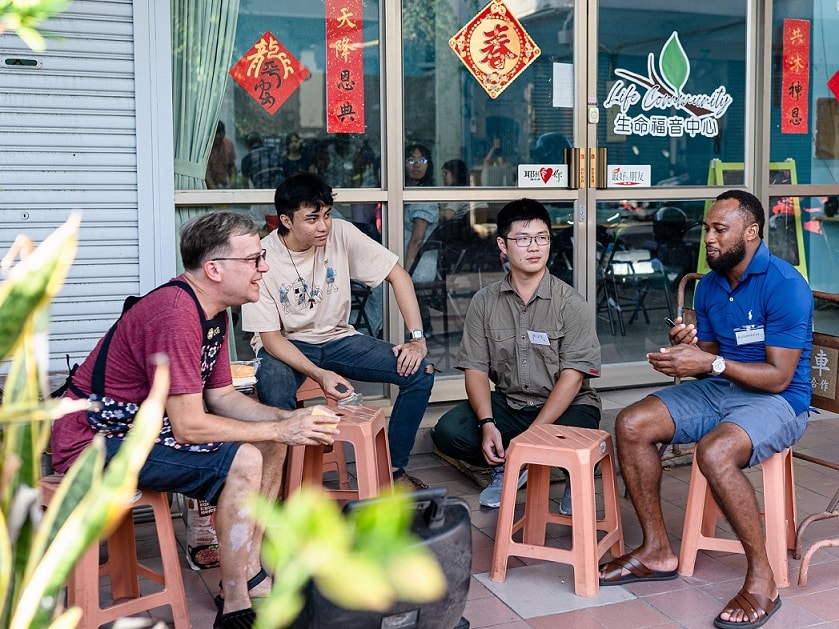
While the recognition of trends in mission is important, paying attention to the “uniqueness of the local” is equally if not even more important, as Paul Bendor-Samuel in fact also recognizes.[16] Regardless of global trends, it is far from true that the spiritual landscape is basically the same across our planet. The fact that today some believers can be found in every country of the world does not mean that everyone has equal accessibility to the gospel. In addition, while in some contexts the good news has been available for centuries, in others, it has never been heard even up to today. Local situations are far from being the same in many ways. That is why paying attention to “stages of the work” with regard to mission is so important, as it helps us gain insight into the kind of contribution and participation that exists in a given context. In recent years, defined “stages of the work” have proven most useful in OMF’s efforts concerning The Task Unfinished. They help to discern what still needs to be done and how to best partner in a given local situation. Insight into the stages of the work also indicates how much cross-cultural involvement for being a viable witness and to disciple receptive people is still needed in a given context.
The significance of the “Macedonia Call”
This prompts some reflections on Paul the apostle, a man from Tarsus in Asia Minor. After parting with Barnabas and choosing Silas to accompany him, he focused his mind on the interior of Asia Minor. Having grown up on the doorstep of this region, Paul, as the apostle to the Gentiles, knew the region intimately and had a natural desire to reach it with the gospel. It took the Spirit of God to hinder him and his team from doing so, as the Spirit redirected them to see the needs beyond Asia Minor (Acts 16:7–10). As a result, the team arrived at Troas where Paul had that nighttime vision of a man from Macedonia begging him to come over and help them. This made them conclude “that God had called us to preach the gospel to them” (Acts 16:10). It is important to note that although the vision included a man from Macedonia begging Paul, it was not a person from Macedonia who invited him and his team to come over. The vision was plainly an act of God calling them. It shows that God had his eyes on people in Macedonia, Achaia, and even Illyricum who were unknown to Paul and his team at that point. The incident indicates that God, through his Spirit, calls his servants out of regions they know and are familiar with to places where he sees a need. It was God calling Paul and his team to Europe, not any European inviting them. God wanted Paul to “neglect” the region he knew and engage neglected places that were beyond his awareness. God still does this today, in many different ways. The time of people receiving a “Macedonian call” is not over. We are well advised to encourage obedience whenever the Lord of mission calls his servants today to move beyond what is just at their doorstep.
The significance of “near-culture believers”
Believers who are culturally and often also geographically close to those who are least reached are at the same time frequently those best suited for sharing the good news in nearby regions. The fact that Paul had Epaphroditus from Philippi join the team, Aristarchus from Thessalonica, and Epaphras from Colossae—to mention just a few among the almost forty local workers of Paul’s network—shows how the Spirit used him to set an example of involving those close to the local context from the very beginning of Christian mission. In many ways, this was the first step toward “mission with,” the concept we will focus on more as we draw toward a conclusion with regard to the reflections in this article. What Paul did after parting ways with Barnabas shows that the “mission with” concept started to sprout at the outset of missions to the Gentiles.
Further, Paul’s unstoppable drive to bring the gospel to Tarshish, a place mentioned in Isaiah (66:19)—as Paul must have been aware—was an effort to bring the gospel to what was the ends of the earth in Paul’s days—the far West.[17] Tarshish represents the “unengaged unreached”. To reach these people, Paul saw the need to enlist those believers in closest proximity to them to engage in this endeavor. Paul envisioned that Christians from Rome would join in this task. That is why he devoted the quiet winter months of AD 56–57 to pen one of the most brilliant texts in the New Testament to those Christians geographically closest to Tarshish. The fact that he had never personally met most of them was likely a key reason for making such an effort to establish a rapport with them by imparting some of what the Lord had given him (Rom 1:11). As a result, they would assist him on his journey to Spain (Rom 15:24). That is why the book of Romans is not first of all a doctrinal letter for personal edification, but a “charter for world missions” as Thomas Schirrmacher compellingly calls it by supporting his perspective with ample evidence.[18]
Initial signs of the “mission with” concept
Yet, Paul does not superimpose himself over the Christians in Rome, but rather aims to connect with them personally as a co-laborer through his most elaborate, carefully crafted writing as he sought to win them to join in his struggles (Rom 15:30) to share the power of God for salvation (Rom 1:16) with those outside the reach of the existing churches.[19] This is another carefully thought and prayed through strategic effort of “mission with,” to use Lingenfelter’s phrase. It is good to remind ourselves that, among the Christians in Rome, those from a Gentile background were particularly strong because of Emperor Claudius’ expulsion of all Jews from Rome from about AD 41–53. This means that Paul was counting on Gentiles—and specifically ones who were not the fruit of his ministry—to join the cause of God’s mission to the ends of the earth. This indeed was a new chapter of “mission with” beyond what was articulated up to this point when Paul wrote the letter to the Christians in Rome in those winter months at Cenchreae near Corinth. Without using terms like “mission with” or “polycentric sending structure,” Paul’s efforts with regard to the Christians in Rome did in fact expand the main mission centers from Jerusalem and Antioch so far to also include Rome. Hence the notion that the concepts of “mission with” as well as “polycentric” in fact strongly surfaces in Romans, a masterpiece of theological writing in which Paul aspired to mobilize the recipients for his mission to Spain.
When we compare the relatively short step of crossing the northeast corner of the Aegean Sea from Troas to Philippi with the geographically much bigger step from Rome to Spain—for which Paul aimed to recruit the believers in Rome to join him in his mission beyond the gospel expansion so far—it becomes apparent that the Lord had to employ multiple means from not allowing Paul to preach in Galatia over weeks, followed by an impressive dream to get Paul moving beyond Asia Minor. It indicates how much it takes to expand the perspective of committed workers beyond regions at their doorstep. Interestingly, the vision for those in regions beyond the reach of the gospel in Spain grew out of theological reflections on the journey of obedience towards God’s guidance in Paul’s life. Having experienced God’s directing beyond what Paul had in mind before, it resulted in the most profound theological reflections in letter form and eventually in a much wider step from Rome in a mission trip to the far West, the farthest known region in those days.
Moving beyond reductionism
Ten years ago, OMF International started a special mobilization thrust under the heading “The Task Unfinished.” Efforts linked to this thrust began in 2015, which marked the 150th anniversary of CIM/OMF. “Facing a task unfinished” is the first phrase of a hymn first published in 1930 by Frank Houghton, who later became CIM’s fourth General Director. Getty Music introduced a revised version of this missions hymn as OMF’s seven-year thrust of The Task Unfinished progressed. Related efforts by OMF resulted in further research with a focus on the least reached, more clarity about the “stage of the work” among different peoples in various places, as well as more intentionality and local collaboration.
Reflection on the arguments raised by Bendor-Samuel and Stroope requires that we ask whether we have been misguided for decades, if not centuries, in our understanding of mission as a “task” to be completed. Or should we decide to join the “Finishing the Task Coalition” in an effort to bring “closure” to the Great Commission?[20] Let’s dare to reflect honestly as we face these questions that touch on the heart of Christian mission and the focus it should have in today’s context.
The earlier reflections affirmed mission to be a task—though God’s task—in which he involves his church, the body of Christ. The notion that this task perspective is the root cause for reductionism was identified as questionable. At the same time, a reductionism of another form was pointed out—one that promotes missions as merely a local activity. Yet, while such regional efforts are key at this stage of the work on a global scale, the responsibility of each community of the global church “to preach the good news to all creation” (Mark 16:15) is still relevant and includes a mandate beyond the local context to the ends of the earth, wherever that is in today’s context.
“Mission with” by working “in Christ” together within his global body
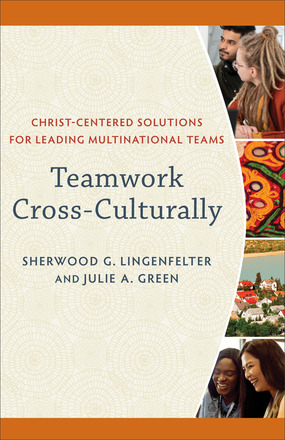 It is most encouraging that God, the originator of missions, calls people from an increasingly diverse number of local contexts to participate in his mission that places them in foreign lands. This creates a new challenge beyond what we have faced so far. It is, at the same time, a new opportunity—an opportunity for “mission with,” as Sherwood Lingenfelter calls it. The “mission with” concept takes both the received commission and the call to be a witness to the ends of the earth, including the last neglected frontiers, very seriously. At the same time, it promotes collaboration in multinational teams so that we learn to act together “in Christ”.
While Lingenfelter and Green had not intended to focus on reductionism in their book, they noted the temptation of the “old colonial option,” as they call it, of “mission within my own sphere of power and influence.”[21] Facing the challenges of cross-cultural communication and decision making with coworkers of different backgrounds, they point out that many have already given up on the concept of “mission with” as they choose to stay within their own national and denominational cultures in the way they participate in missions. A one-sided emphasis on local worshipping communities combined with a discouragement of cross-cultural efforts potentially enhances the avoidance tendencies towards the complex challenges that have become normal within the global church of the twenty-first century. Rather than shrinking back from this challenge, Lingenfelter and Green advocate that we face the “wicked problems” that have become part of the post-modern mission field with participants from everywhere. In doing so, they are borrowing aspects from Keith Grint’s differentiation between “critical problems,” “tame and complex problems,” and finally “wicked problems.” The expression “wicked problem” is originally a technical term. As such, it had nothing to do with problems of evil but is simply intended to describe something that cannot be solved easily.[22] Let’s briefly look at this.
Addressing the challenge of “wicked problems”
Lingenfelter and Green employ Grint’s term but move beyond his use of it by identifying the “struggle … against the powers of this dark world and against the spiritual forces of evil” (Eph 6:12) as the ultimate reason for the great challenge of “wicked problems” in cross-cultural teamwork in missions. Many practical and cultural struggles, of course, are integral to these challenges. Wicked problems tend to have a soft and often spiritual nature combined with cultural blind spots that are linked to the deception we so commonly face in this world. Some are organizational, others interpersonal, such as value conflicts, personal hungers, and spiritual self-deception. In contrast to “critical problems” that can be addressed with a correct answer, or “tame and complex problems” that require a relevant management process to see progress, “wicked problems” are much more challenging as there are no off-the-shelf solutions or processes that render the right outcome. Wicked problems cannot be “solved”. As they resist management solutions, they are labeled “wicked”. “Effective leaders and ‘soft power’ may cobble together temporary ‘clumsy’ solutions that ameliorate internal conflict until the next crisis.”[23] It is the realization of this nature of the problems we face that calls for Christ-filled solutions in cross-cultural teamwork. Learning to act and to respond “in Christ” is really at the heart of what is needed. Lingenfelter thus points out that Paul, in experiencing deep frustration and even anger over what we could label “wicked problems” in his dealing with the Corinthian church, as one example, was led by the Holy Spirit to discover a pathway and power to engage with such a situation and related interpersonal conflicts. It reflects that in Christ “old things” of family and culture have passed away to make space for “the new”—the reconciled ways in Christ (2 Cor 5:17).[24]
Lingenfelter and Green advocate moving beyond reductionism in any form and working in multinational and multidenominational teams regardless of “wicked problems” that commonly challenge such efforts. In doing so and not shrinking back from such a vivid expression of today’s global church in addressing the still unfinished task together, Lingenfelter and Green present cross-cultural teamwork as the core challenge of the twenty-first century. They challenge us to engage in God’s mission—the frequently mentioned “missio Dei”—by following our God of mission and embracing his example. The Father sent the Son. The Son left the familiar territory of heaven and entered a wicked world. The Son and the Father sent the Sprit. The Spirit, who did not back away from dwelling in fallen humans, teamed up with these fallible beings who in so many ways, even as believers, remain incarcerated in their terrestrial local culture with so many blind spots that easily become entry points for the divisive influence of forces opposing God’s mission. Yet despite this, God’s Spirit not only cooperates with those culturally close to us but also with those totally different. He breaks down walls of animosities and brings people together as he did with Jews and Greeks in New Testament times to display the new “in Christ” nature of his people. This is the kind of witness God wants to establish through his mission—the missio Dei. Anything short of this divine goal will be reductionistic in some form.
Acting and responding “in Christ”
It is beyond the scope of this short article to go into the thought-provoking details of how Lingenfelter relates the “prototype social frames of leadership” and the “biblical images of leadership” with practical aspects of “wicked problems” in ministry as relevant in today’s multi-cultural teamwork.[25] Yet, as he reviews multiple case studies and at the same time refers to various passages in Scripture, he shows that dealing with “wicked problems” is possible by conducting ourselves as “worthy of the gospel” (Phil 1:27) and adopting that mindset of being “in Christ” as Paul described in the Christological hymn in Philippians 2:5–11. As Lingenfelter points out, to “self-empty for the sake of others” and act “from a position of weakness,” we ourselves acknowledge that Jesus is Lord and we are his servants. This is the end of “cultural dominance” and the beginning of unity that wholeheartedly embraces diversity. This is, as Rick Warren pointed out in his closing address at the end of the recent Fourth Lausanne Congress in Seoul, the prerequisite for any true unity that is not to be confused with uniformity. “The only way to have unity is to love diversity.”[26] Lingenfelter further completes the picture of this new community in Christ by pointing out that according to Ephesians 4:16, “the role of the ministry leader is not ‘head’, but rather ‘supporting ligament,’ and the work is not about the performance of the leader or the body, but about Christ.”[27] This is what it takes to move to “mission with”, not just at the conceptual level—though it includes that—but also at the very practical level of polycentric mission with participants from many different contexts who go to other even more different contexts.

The starting point is an intentional assumption of a position of meekness and humility “in Christ.” It manifests itself by being a servant of Christ, a steward of the sphere assigned, and a shepherd of those one is entrusted to care for.[28] This is “mission with” each other—not just at an artificial level, but increasingly on a deep spiritual level that will move multinational teams beyond cultural dominance and fractions towards a unity in Christ that is only possible by being transformed into his image. Such “mission with” starts at the doorstep but moves way beyond it by teaming up with those from totally different cultural backgrounds despite the “wicked problems” that will be triggered, moving forward together as new communities in Christ, persevering with him until he completes the task. Such practice of “mission with” enables us to move beyond the cultural dominance of any faction, cultivating cross-cultural teams that display the unity in Christ. Focusing on our “relation in Christ” leads to mutual commitment and shared obedience resulting in the “task of mission” to make disciples not merely remaining a task, but also a “serving and suffering with one another in Christ that … forge[s] teams that … are able to work as multinational teams cross-culturally [so that] God alone brings forth fruit,” to use Lingenfelter’s words.[29]
Conclusion: Mission with, rather than simply going with the Global South
Under the heading “Going with the Global South,” David Mathis writes:
This amazing trend raises the question for some as to whether the West is done sending missionaries. Will it not now be left to the Global South to finish the mission? The clear answer is no. First, don’t discount the power of gospel-advancing partnerships between the West and the Global South. But second, these partnerships should not mean merely sending Western money, but Western people. Going is necessary for discipling.[30]
The call of the hour is to pay attention to the still very different “stages of the work” with regard to discipling the nations. The effort to foster collaboration between local people, near-culture believers, as well as cross-cultural workers from anywhere to work together in humility and love among the least reached is of priority in this context. And while it is a fact that there are still millions of people who have never had a chance to hear the gospel, there are also new generations of “least reached” emerging in increasingly secularized Western contexts. Yahweh, the triune God, is on a mission and is still calling his servants to peoples and places they never thought of before. Yet these places and people are known to God, regardless of whether they have been neglected by his church. He delights in those willing to serve him wherever he guides them. This increasingly includes believers from the Global South being called to serve among agnostic people in the West and other challenging places. However, as Mathis points out, it still includes believers from the West going to the neglected frontiers elsewhere. Simply leaving the going to the Global South is not an option.
In the debate about what should be seen as the priority in missions today, may we not become those who try to discourage what God is still doing—in actually increasing measures as people engage in missions from places that were never “sending contexts” before. Reducing the definition of mission to simply fit our own preferred paradigm might else become one of the latest and worst reductionisms. May we rather engage in the still unfinished task under the guidance of the Lord of the harvest by working in step with people who differ greatly from us. If we do, the world will receive a new vision of what God can do to form a coalition from diverse people who are unified in Christ for his glory and the benefit of the world beyond what has been seen so far. As Jay Mātenga says, “the most effective way for us to strengthen participation in God’s global purposes is to live according to the kenotic attitude of Christ, which Paul explains most clearly in Philippians 2:5–11.”[31] Amen to that! May our work be truly Spirit driven and not simply task driven. Yet let us not presume that the task of mission is already finished but stay engaged and focused as we work with others in multinational teams until the Lord declares the task completed at the end of the age.
[1] Sherwood G. Lingenfelter and Julie A. Green, Teamwork Cross-Culturally: Christ-Centered Solutions for Leading Multinational Teams (Grand Rapids: Baker Academic, 2022), xvi.
[2] Rick Warren, “Finishing the Task,” Biola Missions Conference 2021, Biola University, 29 April 2021. YouTube video, 29:51, https://www.youtube.com/watch?v=Hr2FxfsM_oI (accessed 25 July 2025).
[3] Paul Bendor-Samuel, “Mission Trends and the Unfinished Task in the Post-Covid Era,” keynote address at Lausanne Southeast Asia Regional Forum, online, recorded 21 January 2022, Vimeo video posted 5 May 2022, Wycliffe Global Alliance, 0:22–1:04; 17:21–18:41, 19:16–19:41, https://vimeo.com/706362766 (accessed 30 July 2025).
[4] Paul Bendor-Samuel, “Covid-19, Trends in Global Mission, and Participation in Faithful Witness,” Transformation 37, no. 4 (2020): 260, https://journals.sagepub.com/doi/full/10.1177/0265378820970225 (accessed 25 July 2025).
[5] Paul Bendor-Samuel, “Mission Trends and the Unfinished Task in the Post-Covid Era,” 2:32–3:40; 20:12–20:32.
[6] Paul Bendor-Samuel, “Mission Trends and the Unfinished Task in the Post-Covid Era,” 7:14–7:40.
[7] John Piper, Let the Nations be Glad: The Supremacy of God in Missions, 3rd ed. (Grand Rapids: Baker Academic, 2010), 38.
[8] John Piper, “Missions Exists Because Worship Doesn’t,” Desiring God, 27 October 2012, https://www.desiringgod.org/messages/missions-exists-because-worship-doesnt-a-bethlehem-legacy-inherited-and-bequeathed (accessed 25 July 2025).
[9] Andy Smith lists twenty-four specific Old Testament and New Testament episodes in which God commissioned people to work on and complete a specific ministry task. Yet, missions, straddling epochs, is a God task. Andy Smith, “Biblical Language for Vision, Mission, Goals, etc.,” unpublished paper, 16 June 2022.
[10] Michael W. Stroope, Transcending Mission: The Eclipse of a Modern Tradition (London: Apollos, 2017), 385.
[11] Mark Oxbrow, “Book review: Transcending Mission: The Eclipse of a Modern Tradition,” Transformation 37, no. 1 (12 January 2020): 83–85, https://journals.sagepub.com/doi/full/10.1177/0265378819894020 (accessed 25 July 2025).
[12] See Samuel H. Moffett, A History of Christianity in Asia, vol. 2 (Maryknoll, NY: Orbis, 2005), 255.
[13] Paul Bendor-Samuel, “Epilogue: Called to Undivided Witness,” in Undivided Witness: Jesus Followers, Community Development and Least Reached Communities, ed. David Greenlee, Mark Galpin, and Paul Bendor-Samuel (Oxford: Regnum, 2020), 164–65.
[14] Julie Green in Lingenfelter and Green, Teamwork Cross-Culturally, 43.
[15] Look for a fuller expansion of these key images in Dave Bremner, Images of Leadership: Biblical Portraits of Godly Leaders (George, South Africa: Oasis, 2021) and Sherwood Lingenfelter referring to Dave Bremner in Lingenfelter and Green, Teamwork Cross-Culturally, 162 onwards.
[16] Paul Bendor-Samuel, “Covid-19, Trends in Global Mission, and Participation in Faithful Witness,” 256.
[17] “Paul saw his ministry as the fulfillment of the prophecy of Isaiah 66… .” Michael S. Heiser, The Unseen Realm: Recovering the Supernatural Worldview of the Bible (Bellingham, WA: Lexham, 2015), 305.
[18] Thomas Schirrmacher, “Der Römerbrief wirbt für Mission: Zur Geschichte der ‚Missionsthese‘ [The Book of Romans as a Charter for World Missions],” WEA Bulletin 10 (December 2020): 11, https://www.thomasschirrmacher.net/c-artikel/der-roemerbrief-wirbt-fuer-mission-zur-geschichte-der-missionsthese/ (accessed 25 July 2025).
[19] Schirrmacher, “The Book of Romans as a Charter for World Missions,” 34.
[20] The concept of bringing closure to mission was introduced by Ralph D. Winter more than twenty years ago.
[21] Lingenfelter and Green, Teamwork Cross-Culturally, 6.
[22] In contrast to finding solutions in the context of a default culture in which “elegant solutions” in the sense of an internally coherent response are possible, “wicked problems” go beyond internally coherent approaches and call for “clumsy solutions” that use the skills of any party to pragmatically address these most complex problems. Keith Grint, “Wicked Problems and Clumsy Solutions: The Role of Leadership,” Clinical Leader 1, no. 2 (2008): 54–68, https://www.researchgate.net/publication/281357989_Wicked_problems_and_clumsy_solutions_The_role_of_leadership (accessed 25 July 2025).
[23] Lingenfelter and Green, Teamwork Cross-Culturally, xvii.
[24] See Lingenfelter and Green, Teamwork Cross-Culturally, 174.
[25] Lingenfelter and Green, Teamwork Cross-Culturally, 161–75.
[26] Rick Warren, “Finishing the Task: A Call to Global Mission,” Lausanne Movement, 18 October 2024, Youtube video, 11:57, https://lausanne.org/video/finishing-the-task-a-call-to-global-mission (accessed 25 July 2025).
[27] Lingenfelter and Green, Teamwork Cross-Culturally, 166.
[28] See Dave Bremner, Images of Leadership, 13–17.
[29] Lingenfelter and Green, Teamwork Cross-Culturally, 188.
[30] John Piper and David Mathis, Finish the Mission: Bringing the Gospel to the Unreached and Unengaged (Wheaton: Crossway, 2012), 22.
[31] Jay Mātenga: “Polycentric Missions: An Indigenous Engagement,” World Evangelical Alliance Mission Commission, 2024, https://jaymatenga.com/pdfs/MatengaJ_PolycentricEngagement.pdf (accessed 24 July 2025).