Daniel
Serving with a Dutch mission organization within the Protestant Church in the Netherlands, Daniel is a coordinator and theological trainer in Asia. He is currently working on his PhD in missiology and intercultural studies.
Mission Round Table 20:2 (May-Aug 2025): 22-29
To read articles in this edition, visit this post on Mission Round Table 20:2.
An experience outside of Asia
The first years of my cross-cultural involvement were spent, not in Asia, but in Namibia, in Southern Africa. Its vast desert landscapes and small population—only 2.5 million people—place Namibia among the five least densely populated countries in the world.
If anything characterizes Namibian society, it is that people are very aware of their ethnic and cultural background. It was only in 1990 that Namibia became independent from South Africa and that the politics of apartheid—racial segregation—formally ended. As is the case with many oppressive regimes, the impact of apartheid lasted long after Namibia gained independence. One generation later, the colour of one’s skin still mattered, and the ethnic/racial categories that were used to segregate people still very much functioned below the surface of society. Since Namibia is a predominantly Christian country, this is true in churches as well.
In this context, it was exciting to serve at a relatively small, interdenominational, and intercultural seminary. Among my favourite moments of the year is the annual photoshoot of the entire student body. It is a beautiful sight to see students of various shades—forgive me the language, but this was real!—from deep black to blonde-white—exhibiting all the cultural and historical pain and conflict that these colours represent—standing next to each other, giving their brightest smiles. These moments were great because I knew they were not faked. Throughout their studies, people from different cultural backgrounds would get to know each other personally. Prejudices were tested and often found to be not true. Genuine friendships developed across cultural barriers. People’s self-esteem was changed, and mutual understanding of each other’s past was cultivated. While some issues remained, there was also a genuine sense of unity in Christ. If only churches could be like this!
It was here that I truly came to understand that in Christ not only are we reconciled to God, but also to one another. And in a context like Namibia, a Christian community that embodies this reconciling power is a witness in itself. Local multicultural—also called intercultural—churches are missional in themselves.[1] Or at least, they add an extra dimension to the missional identity that should characterize each local church. This is what I understand to be part of “multicultural ecclesiology”.[2]
As much as the Namibian students appreciated this experience of unity across cultural and ethnic boundaries, they also kept a keen interest in understanding how the gospel relates to their particular culture. Each group had its own story and its own worldview to relate the gospel to. And the question of contextualization—sometimes called inculturation—is as relevant to Christian mission as is multicultural ecclesiology.[3] In fact, for many cross-cultural workers, contextualization may even carry a stronger missional connotation than the idea of a multicultural church.
Multicultural Christian unity and contextualization—opposite directions?
Initially, I felt as if these two missional concepts pointed in two opposite directions in the interaction between gospel and culture. In the process of contextualization, we seek to communicate the gospel in ways that resonate with and transform specific cultural contexts. It emphasizes the value of cultural particularity. Multicultural ecclesiology, on the other hand, calls people from a variety of cultural contexts to come together in one gospel-shaped community. In Christian discourses in the United States, these two positions have been taken to their “extremes” in what is called the “homogenous unit principle” (HUP) of the church growth movement on the one hand, and the so called “multicultural mandate”—partly framed in response to the HUP—on the other.[4]
In fact, both multicultural Christian unity and contextualization reflect biblical principles and practices and can thus be based on strong biblical arguments. Theologians like to bring these two missional directions together in the phrase “Christian unity in cultural diversity.”
If you have ever been involved in a multicultural or multiethnic Christian community, you can probably relate to the question of how to find a good balance between emphasizing Christian unity while at the same time doing justice to the members’ particular cultural backgrounds. How many languages are used in worship? Who are in the church leadership? Is the main worship service the place to give attention to cultural diversity, or should this be done in small groups? How important is culture anyway? Should every church be multicultural or multiethnic, or is there space for monocultural churches as well? The questions can be multiplied.
After spending a number of years researching and being involved in multicultural churches, I have come to see that there is no blueprint—whether based on the Bible or on “best practices”—for being a church that embodies Christian unity in cultural diversity. What then, can guide us in making decisions in being church and the way we interact with cultural diversity? I believe that part of the answer lies in developing a biblical perspective on culture and cultural diversity. My aim in this article is to offer some thoughts in that direction. I hope to do this with enough clarity for you to see how the gaps could be filled, or where to make different choices in interpretation.
Reading the Bible with a missional hermeneutic
First let me clarify my hermeneutical lens in reading Scripture. I understand Scripture—from Genesis to Revelation, from creation to re-creation—to present a meta-narrative of what God is doing in this world. Kevin Vanhoozer introduced the concept of theodrama.[5] I find this a helpful way to understand how the Bible witnesses to God’s actions in and for this world, and at the same time “draws us into” the biblical metanarrative to participate in God’s plan for this world.[6]
God’s actions in and for this world, to which the Bible bears witness, are missional in character. God, from the beginning, wants to be known for who he truly is, and he wants his creation to enjoy knowing him. He thus created the world out of love, and then continued to reach out to this world, and to humanity in particular. God—Father, Son, and Holy Spirit—is, in all the ways in which he relates to the world, a missionary God.[7] The Bible’s witness, then, is missional in character. And our participation in what God is doing is meant to be missional too. To paraphrase a well-known statement: it is not so much that the church has a mission; rather, the mission of God has the church.[8]
What, then, is the character of God’s mission (and, thus, of ours)? Well, God wants to be known for who he truly is. And to know God is to have eternal life (John 17:3). The mission of the Triune God is life-giving. In Jesus’ words: “I came that they may have life and have it abundantly” (John 10:10 ESV). The way he does this is by laying down his own life (John 10:17–18).
We can understand God’s act of creation along the same lines. The mission of God did not begin after the fall. The creation itself—in which God gave life to all that lives—is an essential part of the mission of God.[9] Creation does not just “set the stage” for the rest of the biblical story; it provides a paradigm of God’s intentions for life on earth. Elements of the creation accounts feature throughout Scripture, all the way into the eschatological visions of Revelation 21 and 22. Biblical theology, in my opinion, should include reflection on the God’s plan for creation as we find this in the early chapters of Genesis. As Christians, we do so while reflecting on the unique and central place of Christ in God’s revelation of God-self. In Jesus Christ, creation finds its ultimate purpose and goal (John 1:1–5 and Col 1:15–17).
This is relevant to the current discussion because God has given Adam and Eve—humanity—a specific task and role within his plan for creation. It is here that theologians see the beginning of culture. Following the line of thought so far, we can say that human cultural activity has a missional dimension, which needs to be understood in terms of what is life-giving. But this is to anticipate what is to come.
A working definition of culture
We can only trace aspects of “culture” in the biblical narrative because we have some (basic) assumption of what culture is. “Culture” is notoriously difficult to define with precision because almost every element of human life that is not merely biological can somehow be connected to it. In a very basic sense, culture refers to how people think about and organize their life within a given context. It is a “guide for living”[10] that people follow, which has developed over time and which continuously changes and develops, both through how people in the present make use of its guidance and through the (sometimes violent) interaction with people holding other cultural perceptions.[11]
The British sociologist Bikhu Parekh brings these elements together in this definition: “Culture is a historically created system of beliefs and practices in terms of which a group of human beings understand, regulate and structure their individual and collective lives. It is a way of both understanding and organizing life.”[12] Note that the word “life” occurs twice in this definition—and notice that Parekh includes beliefs. Worldviews and religious beliefs do influence how people think about life and how they find and give meaning to it.
Culture, in short, provides a guide for living for communities in their particular contexts and is at the same time continuously shaped by this actual living in these particular contexts. Cultures are neither static nor monolithic and, within cultural groups, there can be a strong debate about the right interpretation of cultural values—especially in the light of changing circumstances.[13] Individually, people may come to value elements of their culture quite differently than others. And over time, people may begin to identify more strongly with (elements of) other cultures, for example, because of migration. This last point marks a difference between ethnic identity and culture—with the former bearing a stronger primordial connotation.[14] The relation between ethnicity and culture is much more complex than simply stating that “culture X belongs to ethnic group X”, although this statement reflects a basic point of departure for discussions on cultural diversity.
Finding culture in the creation accounts
In line with these preliminary thoughts, what are some of the key elements of a biblical theology of culture and cultural diversity? Let us begin at the beginning, by reading the creation accounts in Genesis 1 and 2.
Since culture is generally understood to be an aspect of human life (in contrast to the non-human world), authors usually begin their discussion of culture in the Bible with a reference to Genesis 1:28—sometimes referred to as the “cultural mandate”.[15] Here, God tells the newly created man and woman to multiply and to fill the earth and to exercise dominion over the animal world and over all the earth. God thus bestows authority on mankind to rule over creation. It is clear that the right context for the use of this authority is in relationship with God. Mankind is created by God and created in God’s image. God bestows his blessing on mankind so they will be able to fulfil their task. And he gives them this specific authority. The human role is to participate in God’s work in creation, not to operate independently from him. This is particularly clear when these words are read in the context of the entire first creation account. For six days, God has been at work filling what was formless and empty (Gen 1:2) with material content and ordering this content. Although mankind’s work is not of the same order—from a biblical perspective, only God creates[16]—it is to resemble God’s work by continuing to fill the earth and to bring its matter to order.[17]
Genesis 2 provides a further explanation of the kind of authority humanity has received when Adam names the animals. In Genesis 1, God names whatever he created. But in the second chapter, Adam is invited to join in God’s work by naming the animals. That is, he is to identify their distinct features—thus ordering them—and describe them accordingly.[18]
One more aspect to be noted here is the communal nature of humanity’s task in God’s creation. The imago Dei is mankind as male and female (Gen 1:27). Together they have received the blessing and the task from God, which includes human procreation. This emphasis is heightened in the second creation account, in Genesis 2, where the activity of naming the animals leads to the conclusion that it is not good that the man should be alone and that the individual man needs a helper (Gen 2:18).

Genesis 2 brings one more insight to the “cultural mandate” by describing the task for which God put the man in the garden of Eden, namely, to “work” and to “keep” it (Gen 2:15 ESV). The immediate literary context seems to connect this task with cultivation of the ground, so as to provide food from the earth (plants and trees). The word “to keep” has a connotation of protecting the garden. In the light of Genesis 3, this can be understood as preventing anything harmful and unclean (sin!) from disturbing the life in the garden. Mankind, thus, has a role in bringing the life-giving potential of the garden to fruition, and to protect life within the garden. For the Hebrew reader of the Torah, these words—“to work” (‘abad) and “to keep” (shamar)—bring to mind the description of the role of the priests and Levites in the tabernacle in Numbers 18, who are called to guard and to serve.[19] The task of working the garden and protecting it is, in a way, priestly.
Mankind thus finds itself alive—created (Gen 1:27); formed and with the breath of life (Gen 2:7, 23)—in a specific context—on earth; in the garden of Eden—addressed by his Creator-God, who is there and living and working in relationship with him. Human life, from the very beginning, exists in a web of relations. The primary relation is to God; then there is the relation with the human other (male-female) as well as with the rest of the created world (plants, animals, ground). Each of these relations defines the way mankind is to perform its task within creation.
Apart from Adam naming the animals, it is only after Genesis 1 and 2 that we read about people working the earth and using its resources for development of human life. In part, these activities carry God’s blessing and thus may be seen as the actual outworking of the cultural mandate. At the same time, these accounts take place after the Fall and are mixed with notions of sin and distortion. It now requires discernment to distinguish the good and sinful in human cultural activity. The first two chapters of Genesis provide us with insights for how to discern the “good” from the sinful in human culture.
What we have seen, in summary, is that human cultural activity is to be guided by God’s intent for his creation. It is aimed at shaping human communal life (including procreation) in its natural environment and at bringing the natural environment to its potential by cultivating it and by protecting it. Human cultural activity, in short, is aimed at enabling and enhancing life—both human and non-human life. This resonates well with the earlier definition of “culture”. It takes place coram deo—in the presence of God and in relationship to him. It is priestly (Gen 2:15) and, in a way, missional—the entire earth is to be filled with people who know God and who live in relationship with him. All of the earth beyond the borders of the Garden is to be patterned and ordered to resemble the perfect Garden.[20] The fact that the first creation account culminates in Sabbath—the day of rest and worship of God (though worship is not limited to Sabbath alone)—provides one more purpose for cultural activity: it is aimed at praising God for his goodness and blessing, and to reflect these in all that humans do.[21]
A key in discerning goodness in human culture, even in our present day, is to see to what extent contemporary cultures enable and enhance life—life as God intended it.
Is cultural diversity part of God’s creation?
But what about cultural differences and the misunderstandings these often cause? Is cultural diversity or plurality part of God’s intent for creation or not? If yes, what is its purpose?
In order to answer these questions, theologians use two lines of argumentation based on Genesis 1 and 2. The first argument builds on the fact that the development of culture is closely related to the natural environment within which people live. Since God gave mankind the explicit command to fill the earth—to expand the borders of the garden until it covers all the earth—people would have come across different geographical contexts, which influence the way communities would shape their life in those contexts.[22] The assumption is that a strong sense of unity would remain—as all pre-Fall human life would be focused on the worship of God—but nonetheless human life would reflect the diversity that is part of the design of God’s creation.
Although this argument makes sense, the fact that it is built on assumption, and given the fact that we can only observe actual cultural diversity after the Fall, it needs to be substantiated by later biblical “clues” on cultural diversity.
A second line of argumentation for cultural diversity focusses on the description of mankind as imago Dei. The text of Genesis does not give a clear definition and as a result the concept has been interpreted in various ways. One line of interpretation, which has gained ground in Protestant theology through Karl Barth, pays particular attention to the relational character of the imago Dei. Mankind, as image of God, exists as a bi-unity (male and female) and in that way reflects the tri-unity of God. This argument often includes a Trinitarian interpretation of the plural “us” in Genesis 1:26.[23] It is based on theological reflection on the nature of the Triune community and the relations between Father, Son, and Spirit. Father, Son, and Spirit neither exist independently of each other nor are subsumed in the other. The one God is Father, Son, and Holy Spirit, who love and completely know each other, and are who they are because of their relationship to each other.
As image of God, human beings also have their own distinct identities, yet these identities are only developed in relation to other human beings and to God. Mankind exists as “unity in diversity”. David Stevens, who developed a biblical theology of multiethnicity in churches and strongly emphasizes this aspect of humanity, writes: “[T]he relational intimacy of the non-homogeneous Creator was reflected in his creation of humanity as the image of himself.”[24] Relationality and being made for community-in-diversity are inherent to the image of God, as it reflects the Triune God’s community in himself.[25] This unity-in-diversity is seen as the starting point of ethnic diversity, and by implication, cultural diversity.[26]
As with the first argument, this interpretation of the imago Dei as “relational unity in diversity” and its consequence for understanding cultural diversity, needs to be “tested” by a further reading of the biblical history. Given the limited space of this article, I can only briefly discuss some key moments in the biblical history.
Reading on in Genesis: cultural diversity as blessing or as punishment?
In Genesis 4 and onwards, we read how mankind shapes its life outside of the Garden. These chapters describe a mixed picture, with people cultivating the earth and developing certain lifestyles and skills, with God’s blessing—people continue to be born!—and with worship of YHWH still present, but also with violence, shameful acts, and bloodshed entering what seem to become “normal” patterns of human life. Human culture is no longer automatically centred around God’s plan for life.
Although the flood erased whatever ethnic diversity existed among the people at that time, it did not erase mankind’s status as image of God. (See God’s confirmation in Gen 9:6.) Neither did it annul God’s command to “be fruitful and multiply, to increase greatly on the earth and multiply in it” (9:7, ESV). The so-called Table of Nations in chapter 10 shows that mankind did multiply, and that the descendants of the sons of Noah did spread out over the earth.
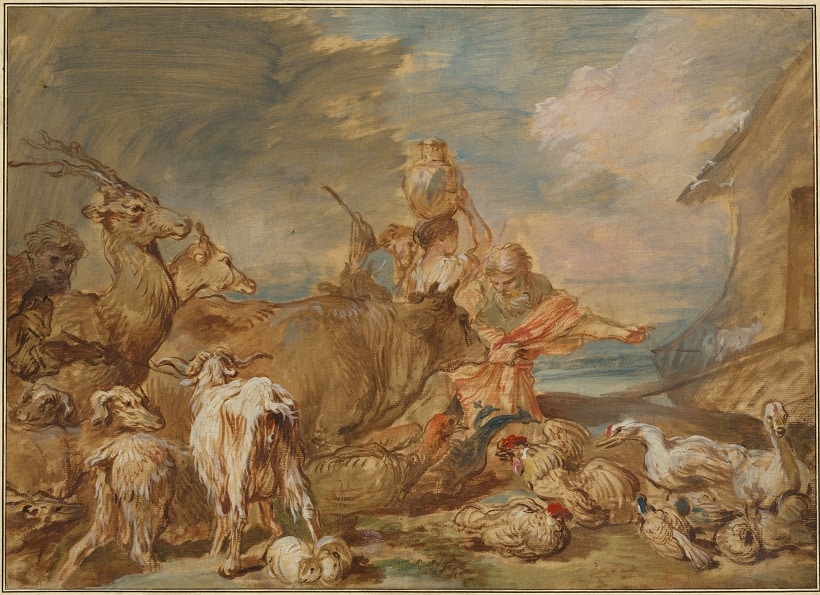
The Table of Nations is not a mere list of descendants; it also emphasizes the variety in living places, languages, and social groupings of the people (Gen 10:4, 20, 31) and reflects, though by implication, ethnic and cultural diversity. One way or the other, God ensures that his plans are carried out! The order in which the narrative unfolds, with the Tower of Babel following on the Table of Nations, provides a theological background for the calling of Abram—and, in him, Israel—out of the nations. The aftermath of Babel is that God now relates to the nations in an immediate way, by means of his relationship with the descendants of Abram.
The narrative about the Tower of Babel in Genesis 11 has been interpreted in various ways, each with consequences for how linguistic (also leading to ethnic and cultural) diversity is regarded. In my own Sunday school days, the confusion of languages was usually explained as a punishment for the human arrogance displayed in building the tower. The implication is that diversity—linguistic, but again, leading to ethnic and cultural plurality—holds a connotation of negativity, as if it was not meant to be like this.
It seems, however, that the issue at hand is not human arrogance as such, but the fact that the people do not want to fill the earth—as God has tasked them to do. The contrast is between God’s vision of humanity spreading out over the earth under his direct authority and in reverence of his name and on mankind’s vision of being united in one place in their own name (see Gen 11:4). God does not take issue with diversity—mankind does. And because God knows that his blessing—the blessing of YHWH—lies in the fulfilment of his intent for creation and humanity in it, he chooses to enforce it on humanity, even if this takes both them and himself on a much longer path to achieve his purposes. The result of the Tower of Babel is that people are now scattered “over the face of the whole earth” (Gen 11:9 NIV).[27]
What is lost after Babel . . .
Something important is lost, however. And this is not just the possibility of easy communication among people groups. In fact, throughout Genesis, there is hardly any issue with linguistic barriers in cross-cultural communication. What is lost is the apparent possibility of direct communication with YHWH for all people. From Genesis 12 onwards, knowing YHWH and communicating with him is no longer a general privilege but is connected to a particular people—Abram and his descendants. It is true that people from other nations do fear YHWH (e.g., Abimelek and Melchizedek), but this now only becomes clear as these people relate to the family of Abram. And the other nations can receive God’s blessing, but this, again, is only as these nations relate to the family of Abram, who was set as an instrument to channel God’s blessing to the nations. On a positive note: in Genesis 12, there is no hint that other nations must leave all of their cultural and ethnic identity behind. Steven Bryan writes:
in the divine vision revealed to Abraham, the peoples are to come together in a community of blessing with God in their midst as the ultimate source of blessing. This “blessing” … is a depiction of every people doing what they are meant to do – living with one another in righteousness and peace, but doing so in a myriad of expressions of the creative stewardship of God’s creation.[28]
In Genesis, there are only a few hints of people having other gods (e.g., Gen 31:31–32).[29] From Exodus onwards, however, it is clear that Israel finds itself in a world in which the various nations each have their gods (e.g., Exod 15:11, 20:3). The nations around Israel have lost their immediate knowledge of God. Their cultural activity—the way they organize and shape their lives—is now guided by beliefs in other “gods”.
David Stevens argues that Deuteronomy 32:8, in the song of Moses (“when the Most High gave to the nations their inheritance, when he divided mankind…” ESV), refers to the scattering of mankind at Babel. The last phrase of this verse reads either “according to the number of the sons of Israel” (NIV) or “according to the number of the sons of God” (ESV). Stevens follows this last reading, and argues that the “sons of God” refer to heavenly powers who belong to the heavenly council of God. In the New Testament, these are referred to as “authorities”, “powers”, “angels”, “rulers”, etc.[30] Stevens interprets Moses’ words as meaning that “following the debacle of the Tower of Babel each nation/ethnicity of the world (with the exception of Israel) was assigned one or more members of the celestial court.”[31] Some of these “sons of God” may have led the nations assigned to them into idolatry and so caused animosity among the nations. The book of Daniel, particularly chapters 9–11, seem to use similar imagery of angelic powers that are behind the actions of various nations and their leaders. Stevens applies this to contemporary cultural and ethnic division among people—“behind the divisions and resultant alienation – and even behind the sociological dynamics that contribute to the dividing walls – are the powers of the heavenly world that exert their malicious influence upon both society and church.”[32]
Even though some of Stevens’ exegesis and interpretation may require more discussion, he points to the important truth that, apart from the people of Israel, the nations generally no longer place the service and worship of YHWH in the centre of their communal life (although the Old Testament does mention representatives of the nations acknowledging YHWH, such as the queen of Sheba). Not only have the relations between nations become tense and often violent, but most important of all, there is no centre that can hold the nations together. Since the nations seek the centre of their focus and worship within themselves (their own gods), the result is cultural pride, ethnocentrism, and the practice of cultural assimilation of those who are less powerful than other nations.[33] When the ultimate point of reference that shapes cultural identity is placed within one’s own group, this identity becomes absolutized. Only those who worship YHWH can find an ultimate point for cultural identity that is located outside their own group. This is just as true today as it was in biblical times, given the nationalistic ideologies and politics in many countries in our own time.
… and what is regained in Christ
Seen along these lines, one of the implications of the gospel is that in Jesus Christ, and through the Spirit, people from all ethnic and cultural backgrounds are called to recentre their identity around their relation to Christ. In Him all things hold together (Col 1:17 ESV). This was as true—and difficult to grasp—for Jewish believers in the first century as it was (and is) for non-Jewish believers. In the sacrifice of Jesus Christ, dividing walls have been broken down (Eph 2:14). Through his resurrection, he has been exalted higher than any other authority or spiritual power (Eph 1:20–21). Further, the church of Christ is the renewed humanity. Jesus Christ is the new man (Eph 2:15), each believer is a “new creation” (2 Cor 5:17) and in possession of a “new self”, “created after the likeness of God” (Eph. 4:24). As the body of Christ, the new man, the church, represents—in unity to Christ—the new humanity, the new imago Dei.[34]
As Paul struggled to place the gospel of grace through faith in Christ at the centre of the proclamation of the early church, he understood that this not only had consequences for people’s personal beliefs, it had socio-cultural consequences as well. When we keep in mind that many of the socio-cultural practices in Paul’s days were deeply embedded in religious beliefs, we can understand why Paul worked so hard to relate these to Christ and to the message of the gospel (see Acts 15; Eph 2:11–22; Gal 3:28).
Although Paul has sometimes been interpreted as diminishing cultural differences to the point where they become irrelevant—no more Greek, no more Jew—this does not do justice to his efforts to present the gospel in ways that would be relevant to his audiences’ worldview as he does, for example, in Acts 17 and in multiple letters.[35] The differences between people, either in gender, status, or culture (see the three pairs in Gal 3:28) are not eradicated; rather, in Christ, they are stripped of their dividing power.[36] The book of Revelation, finally, seems to give at least some space to the worship of God by people in their cultural particularity, although always in the presence of God and those of other cultures and people (Rev 5:9; 7:9; 21:24).[37]
Contours of a theology of culture
I have argued that the development of human culture is part of God’s design for creation and that it signifies the way in which mankind is to participate in God’s plan with his creation. God’s purpose is that he be known for who he truly is. He is the God of life, and to know God is to have full, eternal life. For us human beings, life as God meant it to be means living in a right relation with God, with each other, and with the natural environment. Good living thus requires us to know the other for who he/she truly is, and to acknowledge that our identity is, in part, defined by our relation to the other. It requires us to maintain the integrity of the “other”. This is true in the first place of God. We are to know him for who he truly is, and we need to praise and worship him for who he is. In relation to the human other, we need to appreciate the unique identity of the other, and yet we can joyfully relate to the other and seek to enhance the other’s life. This is true for individuals, but also applies to all levels of human relations. Cultural differences are to be celebrated, as—in right relation to God—each culture reflects God’s character in a unique way, and each culture exercises stewardship over God’s creation in a unique way. In relation to the natural environment, “knowing” means that we appreciate the goodness of each element of creation, and that we use it in the way it is meant to be used so that its beauty comes out in the best way possible and can be used in service of our common life on earth.
Here, then, are some contours of a theological perspective on culture that can help us to think through the implications of the gospel in all areas of life. In our assessment of the cultures and contexts in which we find ourselves living and ministering, we can ask which elements of a certain culture are life-giving, or at least aimed at enabling and enhancing life. What kind of beliefs, or ideology, is behind these practices? Can these be points of connection with the message about Jesus, who has come to give life in its fullness? Which areas of any given culture or context stand in contrast with God’s purposes for life? And how does the gospel address these issues? What would “fullness of life” look like in any given context, and how can and should human cultural activity be transformed to contribute towards this fullness of life?
In relation to the culturally “other”, recognizing each other under the lordship of God and Jesus Christ leads to joined worship. It may lead to reconciliation over wrongdoings of one group against the other. It should lead to repentance over injustices, to actively seeking ways to restore shalom and, when necessary, to repay what was taken unjustly. Mutual cultural enrichment may mean sharing of cultural wisdom in the light of the gospel, remembering that much of the biblical wisdom literature reflects wisdom of other nations! It may also result in the exchange of resources. In contexts—like Namibia—where one’s ethnic or cultural background often indicates their socio-economic status and opportunities in life, those who have may be called to share with those who do not yet have.
In conclusion
It is clear that, as long as we await the coming of our Lord Jesus Christ, human cultures often stand under the influence of sin, since many people still do not follow Christ in their individual and communal lives. I do not envision it as our aim to change all of society, by way of a “Christian revolution”. The social impact of a Christian presence has often been at a local level. Hardly ever have Christian values lovingly been put in place by human governments. We will have to wait for the full revelation of the kingdom of God in glory for all of human life on earth to be placed in right relation to God. What I do believe to be the calling of the church in any cultural context, is to be a firstfruits—to be a culturally relevant sign of the kingdom of God.
In a context like Namibia, a multiethnic and multicultural Christian community is a powerful witness that the powers of racism, violence, and distrust cannot hold ground in the presence of God. It means recognizing the fact that the Spirit of God has reached out to people from so many different cultural backgrounds. It means listening to each other’s stories, both personal and cultural, that are often filled with pain, injustice, and distrust. It means listening to how Christians in each culture have struggled to relate the gospel to the values and beliefs of their own people, and to appreciate the ways in which insights from various cultures could help to better understand the gospel. Multicultural worship in Namibia means giving leadership to various people and giving space to the languages and music styles of the cultures present. I trust you can connect these thoughts to your own ministry contexts, wherever you work.
Although forming such a community or church may not be possible in every context, one thing is certain—my experience of a multiethnic and multicultural Christian community has had a lasting impact on me. In multicultural churches, where unity in diversity is truly valued, I can sense a realization of Paul’s prayer in Ephesians 3:18 that, together with all the saints, we may come to understand all dimensions of the love of Christ—a love that even surpasses knowledge, and a love that means life.
[1] See Safwat Marzouk, Intercultural Church: A Biblical Vision for the Age of Migration (Minneapolis: Fortress, 2019), 10, 172.
[2] For this phrase, see Harvey Kwiyani, Multicultural Kingdom: Ethnic Diversity, Mission and the Church (London: SCM, 2020), 109.
[3] See Timothy C. Tennent, Invitation to World Missions: A Trinitarian Missiology for the Twenty-first Century (Grand Rapids: Kregel, 2010), 326–353.
[4] See Mark DeYmaz, Building a Healthy Multi-Ethnic Church: Mandate, Commitments and Practices of a Diverse Congregation (San Francisco: Jossey-Bass, 2007).
[5] Kevin J. Vanhoozer, The Drama of Doctrine: A Canonical Linguistic Approach to Christian Theology (Louisville: Westminster John Knox, 2005).
[6] Kevin J. Vanhoozer, “A Drama-of-Redemption Model,” in Four Views on Moving Beyond the Bible to Theology, ed. G. T. Meadors (Grand Rapids: Zondervan, 2009), 144.
[7] David J. Bosch, Transforming Mission: Paradigm Shifts in Theology of Mission, 20th anniv. ed. (Maryknoll, NY: Orbis, 2011), 399–400.
[8] See Christopher J. Wright, The Mission of God’s People: A Biblical Theology of the Church’s Mission (Grand Rapids: Zondervan Academic, 2010), 62.
[9] Christian J. Anderson, “Beginning at the Beginning: Reading Missio Dei from the Start of the Bible,” Missiology 45 (2017): 416.
[10] William Edgar, Created and Creating: A Biblical Theology of Culture (Downers Grove: IVP, 2017), 19; Steven M. Bryan, Cultural Identity and the Purposes of God: A Biblical Theology of Ethnicity, Nationality and Race (Wheaton: Crossway, 2022), 22.
[11] See Henning Wrogemann, trans. by Karl Böhmer, Intercultural Hermeneutics: Intercultural Theology Volume One (Downers Grove: IVP Academic, 2016), 85.
[12] Bhikhu Parekh, Rethinking Multiculturalism: Cultural Diversity and Political Theory, 2nd ed. (Basingstoke: Palgrave Macmillan, 2006), 143.
[13] Wrogemann, Intercultural Hermeneutics, 85.
[14] Aaron Kuecker, “Ethnicity and Social Identity,” in J. Brian Tucker and Coleman A. Baker, eds., T&T Clark Handbook to Social Identity in the New Testament (London: Bloomsbury T&T Clark, 2014), 65–66.
[15] Edgar, Created and Creating, 170. The phrase “cultural mandate” finds its origin in Dutch Reformed discourse on the scope of salvation, as it is sought to apply to all areas of life. See e.g. N. Gray Sutanto, “Cultural Mandate and the Image of God: Human Vocation under Creation, Fall and Redemption,” Themelios 48, no. 3 (2023): 592–604.
[16] The Hebrew verb ברא (br’), when used in the sense “to create”, always has God as its subject or implied agent–not human beings. Raymond C. Van Leeuwen, “ברא,” NIDOTTE 1: 728–35.
[17] Christopher Watkin, Thinking Through Creation: Genesis 1 and 2 as Tools of Cultural Critique (Phillipsburg: P&R, 2017), 102–104.
[18] Watkin, Thinking Through Creation, 108–109.
[19] This is only one of multiple indicators that the tabernacle and the temple in Israel were regarded as representing the garden of Genesis 2. See G. K. Beale, The Temple and the Church’s Mission: A Biblical Theology of the Dwelling Place of God, New Studies in Biblical Theology (Downers Grove: IVP, 2004), 66. See also Bryan, Cultural Identity and the Purposes of God, 56–57.
[20] Thanks to Walter McConnell for pointing out to me that human work beyond the borders of the Garden was to make the “non-Garden to become like the Garden.” The Garden thus functions as a God-given “model” after which the earth “beyond the Garden” was to be ordered and patterned by man. See Walter McConnell, “‘And Let them Rule’: Humanity’s Relationship with God and Creation,” in A Dialogue between Now and Eternity: Biblical Studies and Exegesis (Singapore: Singapore Bible College, 2007), 137, https://www.academia.edu/8679020/_And_Let_them_Rule_Humanity_s_Relationship_with_God_and_Creation.
[21] Colin E. Gunton, The One, the Three and the Many: God, Creation and the Culture of Modernity (Cambridge: Cambridge University Press, 1993), 227.
[22] David E. Stevens, God’s New Humanity: A Biblical Theology of Multiethnicity for the Church (Eugene: Wipf & Stock, 2012), 69; Keith Ferdinando, “The Ethnic Enemy – No Greek, or Jew… Barbarian, Scythian: The Gospel and Ethnic Difference,” Themelios 33, no. 2 (2008): 57.
[23] It must be noted that this line of argumentation is influenced by systematic theological reflection on these biblical texts. Some may argue that it carries interpretative “luggage” with it that goes beyond what the immediate literary context suggests. See e.g. John Golgingay, Old Testament Theology Volume One: Israel’s Gospel (Downers Grove: IVP, 2003), 102–105.
[24] Stevens, God’s New Humanity, 51.
[25] Stevens, God’s New Humanity, 56.
[26] Gunton, The One, the Three and the Many, 177.
[27] Edgar, Created and Creating, 189–90.
[28] Bryan, Cultural Identity and the Purposes of God, 102.
[29] Although the text of Genesis does not thematize idolatry/the presence of other gods explicitly, some key texts of Genesis (e.g. the creation account, the narrative of the flood, and the Noah account) are widely considered to be (polemical) corrections to similar accounts from ANE literature in which gods play a role. With reference to the creation account, see Walter McConnell, “You Shall Have No Other Gods Before Me: God and the Gods in the Pentateuch,” Journal of Asian Evangelical Theology 13, no. 1 (2005): 21–22, https://www.researchgate.net/publication/360997633_W_McConnell_-_%27You_shall_have_no_Other_Gods_before_Me%27_God_and_the_Gods_in_the_Pentateuch_-_Journal_of_Asian_Evangelical_Theology_2005_19-46.
[30] Stevens, God’s New Humanity, 81.
[31] Stevens, God’s New Humanity, 85.
[32] Stevens, God’s New Humanity, 90.
[33] Ferdinando, “The Ethnic Enemy,” 58–59.
[34] Stevens, God’s New Humanity, 109,
[35] Dean Flemming, Contextualization in the New Testament: Patterns for Theology and Mission (Leicester: Apollos, 2005), 138–39.
[36] Ronald Fung, The Epistle to the Galatians, New International Commentary on the Old and New Testament (Grand Rapids: Eerdmans, 1988), 175–76; Ferdinando, “The Ethnic Enemy,” 60–61.
[37] Edgar, Created and Creating, 224–31.