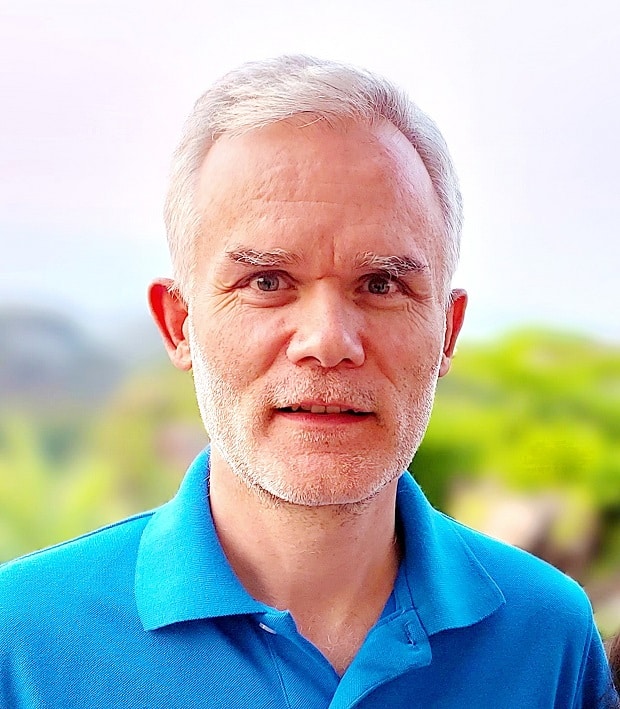
 Ulrich Kohler
Ulrich and Renate Kohler have been ministering with OMF in Thailand since 2001. They have three boys, all born in Thailand, with the youngest in his final few months at high school in Thailand. Initially involved in grassroots church planting, Ulrich and Renate served as regional leaders for the Central region of OMF Thailand from 2007 to 2016. While leading a diverse team, they have closely worked with the Thai Church in Central Thailand in lay-leadership and church planting training. Since 2016, Ulrich and Renate have served as field director for OMF Thailand as well as working with a number of ministries like the Evangelical Fellowship of Thailand, Kanok Publisher, and seminaries like the Bangkok Bible Seminary and the Chiang Mai Theological Seminary.
Mission Round Table 20:1 (Jan-Apr 2025): 17-23
To read articles in this edition, visit this post on Mission Round Table 20:1.
Introduction
Mission agencies from around the world have long recognized the importance of church planting in fulfilling the Great Commission. Yet the phrase “church planting” itself sometimes raises questions—particularly in contexts where people associate mission primarily with social concerns such as anti-trafficking, creation care, or relief and development. These are vital concerns, to be sure. But as OMF Thailand, we see these as facets of a much broader calling: helping people encounter Jesus Christ, come to faith, and grow together as his body—the church.
What follows is an exploration of how OMF Thailand understands church planting, why we believe it lies at the heart of our calling, and how we have attempted to live this out among the Thai people. Along the way, we will ask challenging questions about whether we truly remain focused on planting churches, examine a fresh movement that highlights both the possibilities and dilemmas of explosive growth, and discuss the question everyone always asks: Where is the practical “how-to” model?
In the end, this article will suggest that “models” by themselves seldom solve the deeper issues. The real limiting factors are often who we are, what we champion, and how we live out our calling as an organization. If we are collectively committed to using every gift, ability, and passion for the central purpose of helping people know and follow Christ in local bodies of believers, then church planting happens naturally. Indeed, as we will see, the wide range of OMF Thailand’s ministries—from theological education to social concerns, from student outreach to relief work—becomes profoundly “church-planting ministry” when animated by that central vision.
1. What is church planting?
Scores of books and articles on church planting have been written, covering everything from biblical-theological foundations to practical methodologies and missiological or anthropological insights. One outstanding resource is Global Church Planting: Biblical Principles and Best Practices for Multiplication by Craig Ott and Gene Wilson—a highly recommended “big-picture” introduction for anyone joining OMF.[1] There are also more specialized works, including George Patterson’s Church Multiplication Guide or Alex Smith’s writings on Thai contexts (e.g., คริสตจักรทวีคูณ)—each offering valuable insights.[2]
For OMF Thailand, however, church planting is not confined to any single methodology or narrow activity. We define it simply as:
Using whatever ability, gift, or passion the Lord has given you so that people hear the Good News of Jesus Christ, experience the love of the Lord, come to faith, and become a part of the body of Christ.
We arrived at that phrasing after repeatedly hearing that “church planting” is misunderstood or even off-putting in some mission-mobilization contexts—especially in the West where prospective mission workers are often drawn to social-justice issues but unsure about “church planting.” Our response is not to abandon the term, but rather to clarify its biblical core and broad scope: church planting, when understood rightly, encompasses the multitude of ways in which the body of Christ engages with broken lives and communities, always aiming for spiritual transformation and local churches that reflect God’s redemptive love in Christ.
Transformation through church planting
To clarify further what we mean by church planting, we sometimes point people to our short piece, “Transformation through Church Planting.”[3] It argues that:
- Church planting addresses the broader redemptive mandate God gave his church. Issues like sex trafficking, creation care, or community development, while important, are still only facets of this larger task of making disciples who gather as the body of Christ in their own context.
- As biblical Christians, we want to address every kind of human suffering or injustice—but always in tandem with evangelism and discipleship, not as a standalone project or separate NGO-type focus.
- This comprehensive approach means workers bring their giftings and passions into whatever situation or community they serve—yet their underlying aim is the same: to see people come to faith in Jesus and be knit together as local expressions of his body, the church.
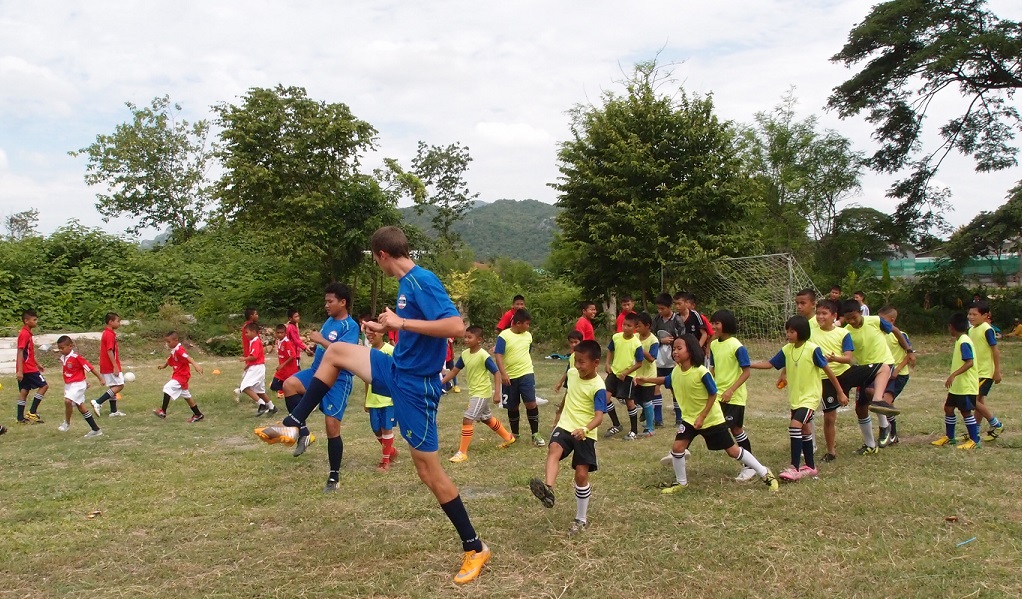
Accordingly, when we say “church planting,” we are talking about “using whatever ability, gift, or passion the Lord has given you so that people hear the Good News of Jesus Christ, experience the Lord’s love, come to faith, and become a part of his body.” Under that umbrella, OMF Thailand members have done 95+ different kinds of ministries: community development, teaching English, biblical training, orality ministries, counseling, sports outreach, social media evangelism, microfinance, theological education, and so on. The list keeps growing whenever new workers with new gifts join us.
This breadth, however, does not mean that we lose our focus on the essential outcome—local believers who form a local church. An authentic, biblical church in turn becomes the life-transforming presence of Christ in its community. Even the shape of Thai society can be transformed, as happened in tribal communities of northern Thailand in the 1980s and 1990s, when the spread of local churches contributed to the decline in the number of girls being sold into prostitution. I am convinced that this lasting social change was at least in part the fruit of indigenous church movements. Hence, we see how “church planting” in a comprehensive sense is about transformation of families, communities, and even entire cultures.
2. Church planting and OMF
If that is how we understand church planting at the field level, how does it fit within OMF’s organizational mission and priorities worldwide?
OMF International’s stated mission is: “We share the good news of Jesus Christ in all its fullness with East Asia’s peoples to the glory of God.”
We summarize our overarching vision as: “An indigenous biblical church movement in each people group of East Asia, evangelizing their own people and reaching out in mission to other peoples.”
That is an inherently church-planting vision. Chapter A of the OMF International Handbook (“Purpose and Principles”) outlines core spiritual commitments—our dependence on God, the lordship of Christ, the authority of Scripture, prayer, incarnational ministry, partnership, and a clear focus on the unreached—and calls us to establish indigenous churches in new areas. Chapter B emphasizes how we organize ourselves, clarifies our ministry priorities (the second of which is “Planting Churches”), and underscores partnership with local believers. We are to work so that local communities of faith can be formed and nurtured to healthy independence, and so that they in turn become sending bodies for further evangelistic outreach. The entire structure of OMF’s values, policies, and strategies aims—when followed!—to keep us aligned with biblical church planting.
Unfortunately, not everyone who joins OMF—whether in Thailand or elsewhere—comes fully aware of, or deeply committed to, that central purpose. Some are drawn to a particular social issue or skill-based ministry. Those passions are wonderful, but unless integrated into an overarching drive to see churches planted or strengthened, we risk drifting from OMF’s God-given distinctives. We want to help every worker see how their ministry—medical, educational, social, whatever—fits into the bigger picture of church planting, so that together we remain faithful to our calling.
3. Are we planting any churches?
A key question for every mission organization that has “church planting” in its official priorities is: Are we actually planting churches? Stated differently, if we have over 1,000 workers worldwide, how many new churches have we helped establish in the last decade? And, proportionally, is it what we might expect, given our size and history?
For OMF Thailand, the answer is somewhat mixed. Yes, we are planting churches. Yet if we tally up the number of new churches established over, say, the last ten years and relate that to our total number of workers, many of us feel that the total is fewer than we would hope. This is due to limitations from two sides, which we might call “positive limitations” and “negative limitations.”
One of the “positive limitations” is that not all our people serve at grassroots “pioneer evangelism” levels, and rightly so. We have many who serve in theological education, leadership training, student ministry, community development, children’s ministry, or administrative roles. All of these ministries remain deeply valid under OMF’s second (Church Planting) and third (Perfecting and Discipling) priorities. These still “feed into” the formation of healthy, reproducing churches and provide a crucial background foundation to a growing, national church. But these ministries do not directly result in new churches planted that we could claim as direct fruit of OMF church planting. Some would argue that this is the direction OMF should be taking anyway: since Thailand already has a national church, foreign missionaries should not be involved in pioneer church planting at all and instead concentrate solely on leadership development or theological training. In OMF Thailand, we see both as necessary. While established Thai churches do exist, there are still entire regions with minimal gospel presence, and grassroots ministry in these areas remains critical. Moreover, any meaningful training of church planters and leaders requires first-hand, lived experience in Thai culture and language. A new worker who has never engaged in evangelism, discipleship, or community outreach at ground level has limited credibility when later instructing others to do so. By serving in real-life, on-the-ground ministry, our missionaries gain insights, relationships, and cultural fluency that form a solid basis for more specialized roles—such as theological education, leadership coaching, or other vital ministries that empower the national church.
Yet alongside these “positive” reasons for fewer direct church plants, we also see more challenging issues—what we might call “negative limitations.” They are not unique to new workers alone; all of us can be affected. In some cases, people come primarily wanting to run a specific project or type of ministry or are hesitant to invest in the long, painstaking process of learning Thai language and culture deeply. Others may simply lose sight of how their ministry connects to church planting or the focus of their ministry becomes fragmented due to the demands of our digital world. It is also true that much of the Western church—still OMF’s main sending base—no longer emphasizes personal discipline or perseverance or a robust theology of suffering. As “children of our time,” we in OMF can easily absorb these cultural mindsets as well. Frankly, we have sometimes been too quick to accommodate personal preferences rather than guiding and challenging workers toward broader gospel ends. Addressing these realities requires ongoing reflection, honest self-assessment, and renewed commitment at every level, ensuring that whatever gifts or passions people bring are intentionally woven into the larger tapestry of planting and strengthening the local church.
I believe OMF has a particular, God-given role to play in his wider kingdom. We are part of his global effort to form and strengthen local churches among unreached peoples of East Asia. If someone only wants to focus on, for example, “feeding the poor,” without maintaining a vision for “people coming to faith in Jesus, growing in him, and forming new churches,” we might gently suggest that they might be able to more effectively do that through organizations that do purely relief work. For OMF, even feeding the poor is best done by workers whose driving purpose is to see people come to faith and be integrated into a local fellowship. That is the calling we must steward faithfully.
We need a new generation of church planters—in the broad, biblical sense—who do many different kinds of ministry but keep this single, sharp focus: “so that people hear the Good News of Jesus Christ, experience the love of the Lord, come to faith, and become part of the body of Christ.” When that focus pervades our mobilization and shapes our conversations, OMF’s actual church-planting activity and impact upon the Thai church will expand.
4. Church planting in Thailand
“What should church planting in Thailand look like?” The short answer is, “It depends.” It depends on the organization’s core ethos (we have discussed OMF’s) and on the local context. OMF’s core values of trusting God in prayerful dependence, being passionate to reach the unreached, ministering incarnationally, working in partnership, and leading from the ministry context all point us to adapt humbly to Thai realities.
4.1. OMF Thailand’s framework
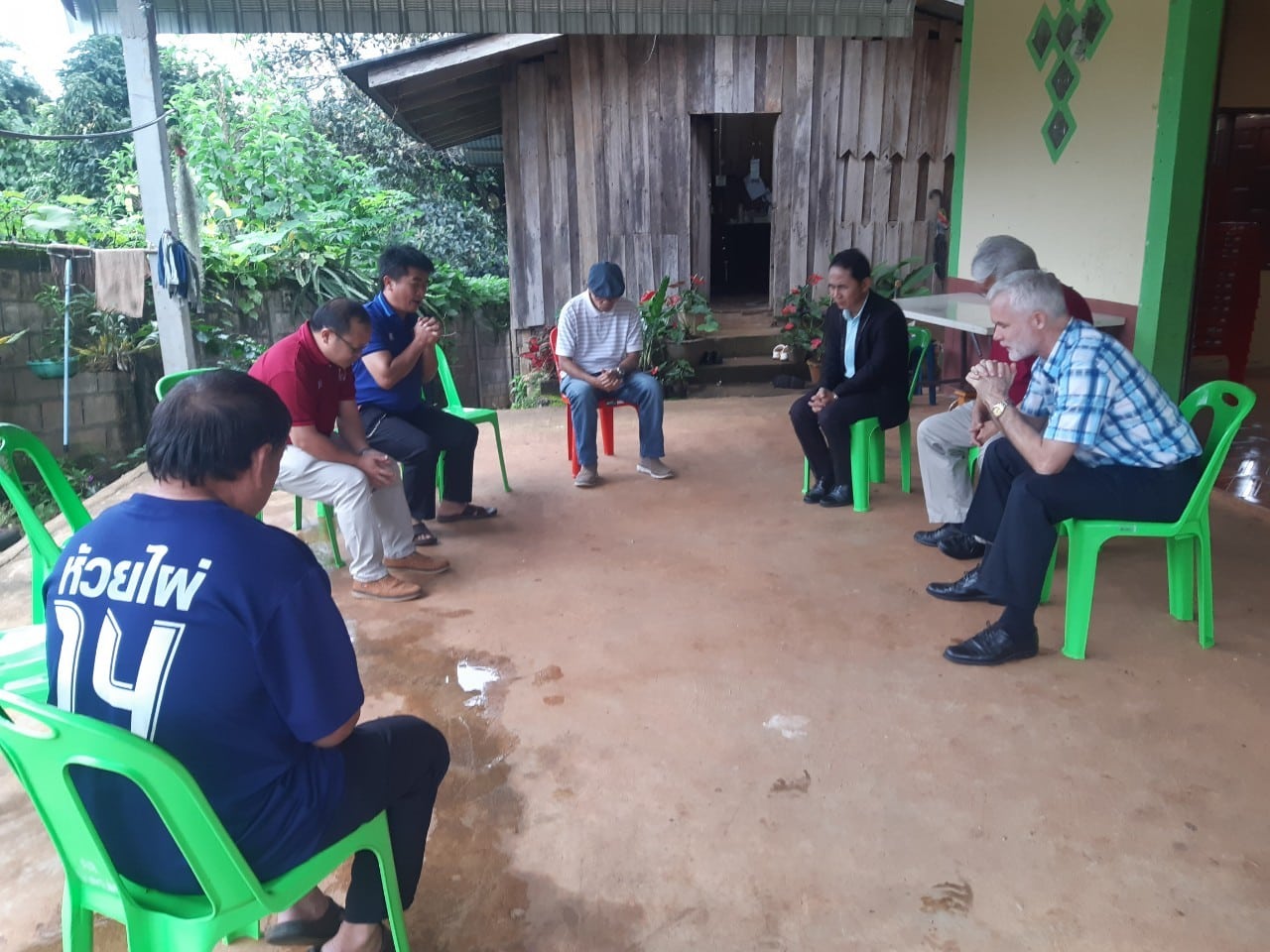
At the field level, OMF Thailand’s own Handbook clarifies that our target is the Thai Buddhists—who make up the vast majority of the population. We express our strategy as comprehensive church planting—that is, we do not see “evangelism and church planting” as something simplistic. Instead, we encourage all manner of relevant sub-ministries (internet outreach, sports, theological training, relief work, children’s ministry, community development, etc.) if they arise naturally within a bigger framework of establishing local churches. Our policy statements also emphasize:
- Working primarily through the Associated Churches in Thailand (ACT): This is the denomination we have partnered with historically. We have a lengthy, trusting relationship with them and have found strategic advantages in focusing on a single network.
- Encouraging the reproducibility of any methods or resources we use so that Thai believers themselves can maintain and replicate them.
- Empowering local lay leaders from the start.
- Avoiding making buildings or paid workers a “must” for new congregations.
- Holding firmly to the authority of Scripture in shaping both life and doctrine.
- Ensuring that evangelism remains ongoing and not a one-off event.
- Respecting existing Thai organizations that OMF helped start (e.g., the Evangelical Fellowship of Thailand, Bangkok Bible Seminary, Chiang Mai Theological Seminary, etc.) and cooperating with them as appropriate, in light of our vision for seeing churches established or strengthened.
OMF Thailand organizes its work in several regions across the country, each adapting to the unique challenges and opportunities of its local setting. In areas where Christians are scarce—sometimes under 0.2 percent of the population—teams often concentrate on saturating unreached districts with reproducible methods, while regions with stronger existing churches may focus on deepening discipleship or training local leaders. Urban centers like Bangkok require creative approaches for finding “hidden” communities within sprawling neighborhoods, whereas coastal or more rural provinces present very different realities, such as interactions with neighboring populations who follow different religions or long travel distances between scattered villages. Despite these local variations, all OMF Thailand teams share the same overarching priorities: partnering with local Thai believers, investing in lay and pastoral leadership development, and committing ourselves to see new churches planted or strengthened. In each location, our role is not to take over but to encourage, equip, and empower Thai Christians to fulfill the Great Commission in ways best suited to their particular context.
4.2. Learning from history: Mark Leighton’s “lessons”
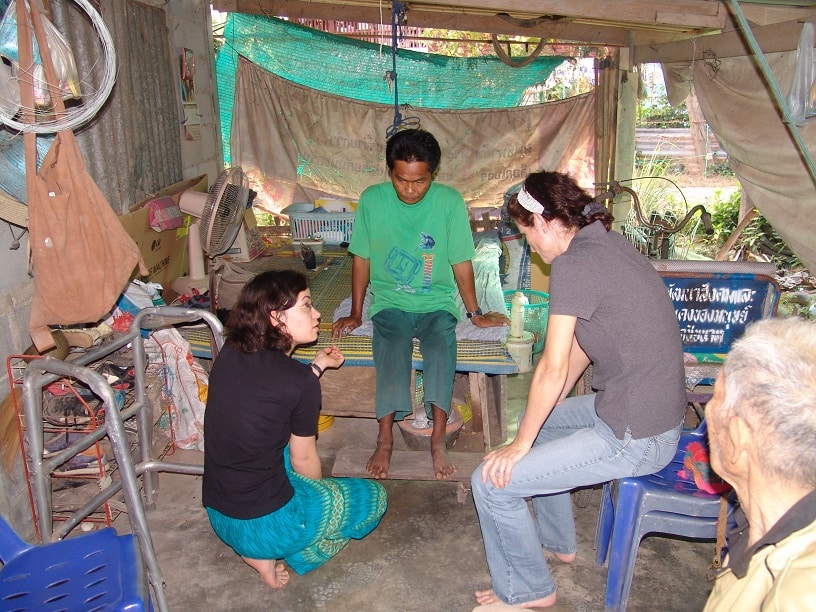
An excellent summary of some key insights for evangelizing Thai Buddhists comes from one of our former Field Directors, Mark Leighton. He distilled decades of missionary experiences and research into four lessons:[4]
- It is costly to reach Thai Buddhists, but possible.
Mission history in Thailand shows that real breakthroughs do happen, but they require perseverance, prayer, sacrifice, and love. There are no easy “magic keys.” - Truth and love are keys to reaching Thai Buddhists.
Historically, Thai people opened themselves to the gospel when they witnessed both faithful biblical proclamation—truth—and compassionate service—love. - The Thai family as the avenue for gospel spread.
“To be Thai is to be Buddhist” is a powerful identity marker, but many have come to Christ through family networks—especially when the gospel is shared respectfully with heads of households and older relatives. As Mark writes, “Relatives and family are the single most significant factor for conversion.” - Addressing vulnerability
Thai Buddhists often become more open to Jesus when confronted with personal vulnerability—health crises, spiritual oppression, social struggles, or bereavement. Christian ministries that engage these vulnerabilities with biblical truth and prayer see many responding.
These insights remind us that familiar models—medical outreach, community compassion, personal evangelism, friendship, consistent discipleship—remain surprisingly fruitful when combined with patient perseverance and family-oriented approaches.
4.3. A Thai-led movement: Association of Free Churches in Thailand (AFT)
In recent years, one of the most striking developments in Thai church growth is the Association of Free Churches in Thailand (AFT), a dynamic network reporting enormous numbers of new churches across multiple provinces. As of early 2025, AFT statistics cite:
- 7,068 churches with an average attendance of about 5
- 38,821 members
- 94,431 people who responded to evangelistic efforts, of whom 27,325 have been baptized.[5]
No other Thai denomination has reported growth that approaches this explosive rate of planting churches. None is even close. When one encounters such impressive data, the natural question that arises pertains to its reliability. In this instance, I find no reason to question the validity of the data. Having personal knowledge of the individual responsible for monitoring and recording it, I am confident that the statistics are as accurate as one can reasonably expect.
4.3.1. Strengths and controversies
Nevertheless, questions about AFT abound:
- Theological concerns: The AFT practice of baptizing only “in the name of Jesus”—rather than the Triune name—raises suspicions of a “Jesus-only” or “Oneness” theology. AFT leaders deny non-Trinitarian doctrine, but skepticism persists—especially since they parted ways with the Evangelical Fellowship of Thailand (EFT) after refusing to adopt Trinitarian baptismal wording.
- Depth of discipleship: Some wonder whether new believers’ understanding is superficial, or if they add “PhraYesu” alongside many other local deities and then drift away. The movement uses an emphatic “power-encounter” approach that draws many to pray for miracles. Critics worry that if their prayers later remain unanswered, they might abandon the faith. (On the other hand, earlier studies among more “traditional” churches also showed discouraging retention rates, so this question applies widely.)
- Future stability: Will these small house churches survive and grow in depth? Can they integrate to become a sustainable network and maintain fellowship, discipline, and leadership development?
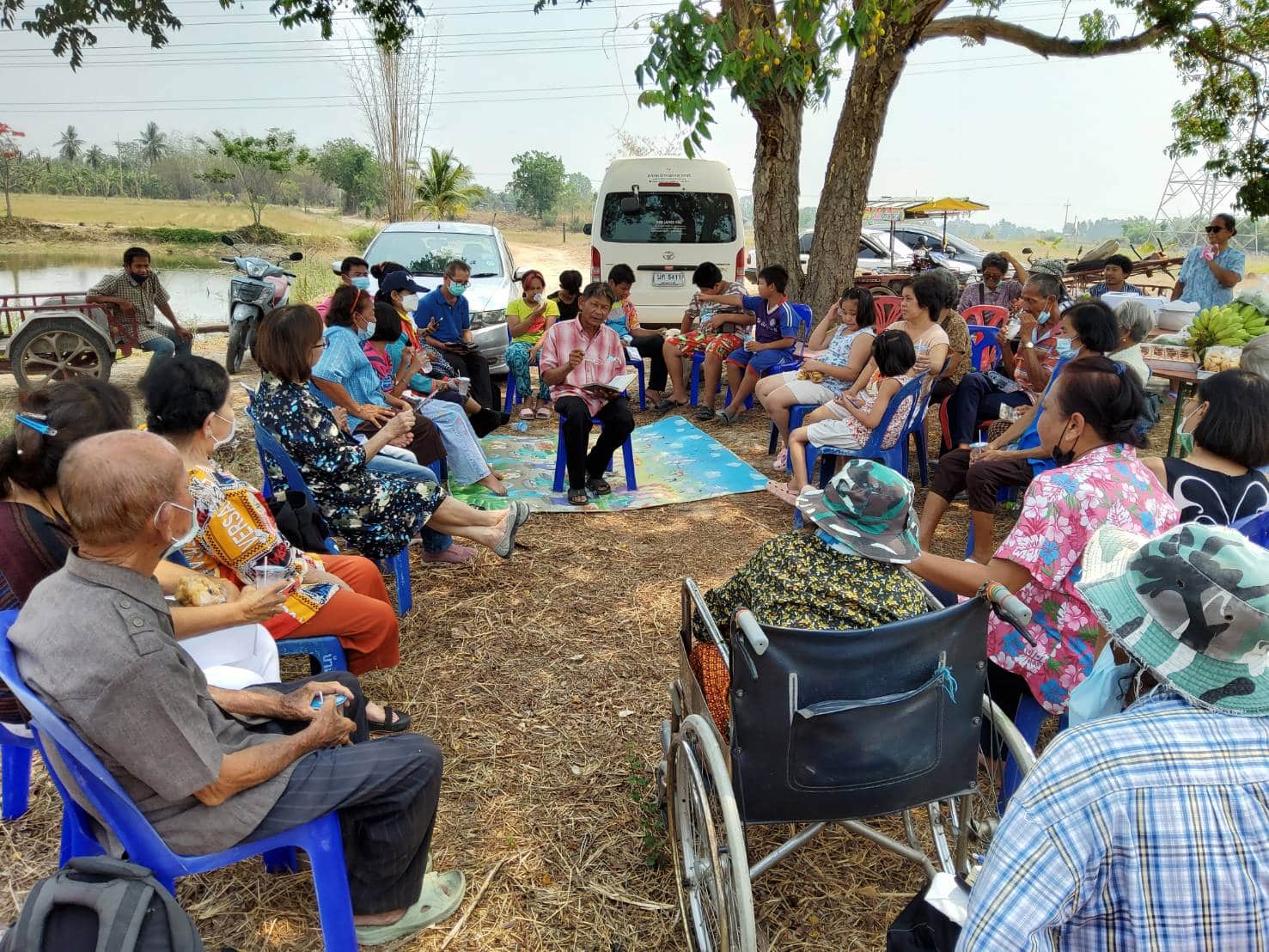
All that said, AFT’s outreach does appear to be bearing fruit. And from an OMF perspective, it is instructive. On the surface, they do not use radically new techniques. They employ well-known Thai evangelistic posters, straightforward gospel presentations, and they do intense systematic visiting of every village. They simply do it, and keep doing it, saturating entire districts. In short, they practice relentless evangelism and immediate follow-up, establishing small groups that begin meeting and then connecting them to a district church as soon as enough house groups emerge.
As a previous Field Director once said, “Where there is frequent and consistent evangelism, Thai people will come to Christ.” One can debate theological nuances, but the phenomenon underscores how intensely a single-minded group can reach thousands.
4.4. OMF’s place in the larger landscape
OMF is not linked with AFT, but we certainly desire to learn, and we have gleaned lessons from the movement. Beyond the theological concerns, it is also possible that not every context will see the same dramatic harvest. We know of certain pastors in Central Thailand who likewise do frequent, faithful evangelism but have so far seen much less “breakthrough”.
Still, the AFT experience challenges us:
- Are we saturating our regions with as much consistent evangelistic follow-up as possible?
- Do we at times rationalize meager results by attributing them to “resistance” or “spiritual hardness,” when perhaps we are not truly engaging families and communities persistently enough?
- Or do we assume that “pioneering” or “frontline evangelism” is no longer needed, when in fact, large pockets of the country remain under 0.5 percent Christian?
In sum, no single approach fits all contexts. Nonetheless, persistent, consistent evangelism coupled with personal discipling is the abiding principle we should never neglect.
5. But where is the practical model to follow?
By this point, some readers might be wondering: “Where is the step-by-step method I can use to plant a church in Thailand?” This is exactly the question we often hear. Yet our conviction is that simply handing out “models” is rarely the key to more effective church planting. We already have an abundance of “how-to” guides—e.g., “Four Fields,” “T4T,” “Discovery Bible Studies,” “CPM methodology,” “DMM approach,” “Orality-based discipleship,” etc. Additionally, in the Thai context, Alex Smith’s Strategy to Multiply Rural Churches or Dwight Martin’s “Biblical Church Planting Methodology” (used widely by AFT) outline highly workable frameworks.[6]
The real roadblock, at least for OMF, is often ourselves:
- Do we truly champion the cause of seeing local churches formed? Or do we talk about everything else?
- Are we mobilizing people who share this heart for church planting or who at least are eager to integrate their specialized ministry into a bigger church-planting vision?
- Are we humbly learning language and culture deeply enough to share the gospel meaningfully and persuasively with families in a community?
- Are we busy with so many organizational demands or other worthy pursuits that we do not actually spend enough time evangelizing or nurturing new believers?
If our vision, daily priorities, and mobilization are shaped around “planting, strengthening, and multiplying local churches,” then whichever workable approach we choose will bear fruit. Conversely, if we are not living, teaching, or allocating resources in ways that focus on seeing new believers gathered into new churches, all the “best models” in the world will not significantly boost church planting.
5.1. Alex Smith’s “7E strategy”
For those who do want a concise strategic outline, we often commend Alex Smith’s Strategy to Multiply Rural Churches, known for its “7 Es”:[7]
- Explore widely for responsive – The church must cast a wide net in evangelism, strategically identifying communities and individuals most open to the gospel for effective discipleship and church planting.
- Evangelize the receptive intensely – Once receptive individuals and communities are identified, the church should prioritize concentrated evangelistic efforts to ensure sustained gospel exposure and deeper commitment.
- Establish churches immediately – New believers should be swiftly integrated into functioning churches, ensuring that worship, teaching, and fellowship are established early to prevent isolation and stagnation.
- Edify members continually – Ongoing spiritual growth is essential, achieved through prayer, worship, Bible study, and discipleship, fostering strong, mature believers who actively participate in evangelism and church life.
- Evolve local pastors speedily – Indigenous leaders should be rapidly trained and appointed as pastors to provide spiritual guidance, ensuring church stability and facilitating further multiplication.
- Extend churches persistently – Churches should maintain a vision for multiplication, continuously planting new congregations beyond their immediate reach to fulfill the Great Commission.
- Evaluate the program constantly – Regular assessment of church-planting efforts is crucial, allowing for the refinement of strategies and the reinforcement of effective practices to sustain long-term growth.
Though originally written in the 1970s for rural Central Thailand, the biblical logic still resonates. Just adapt it to your local context, whether rural or urban.
5.2. Dwight Martin’s “Biblical Church Planting Methodology” (AFT)
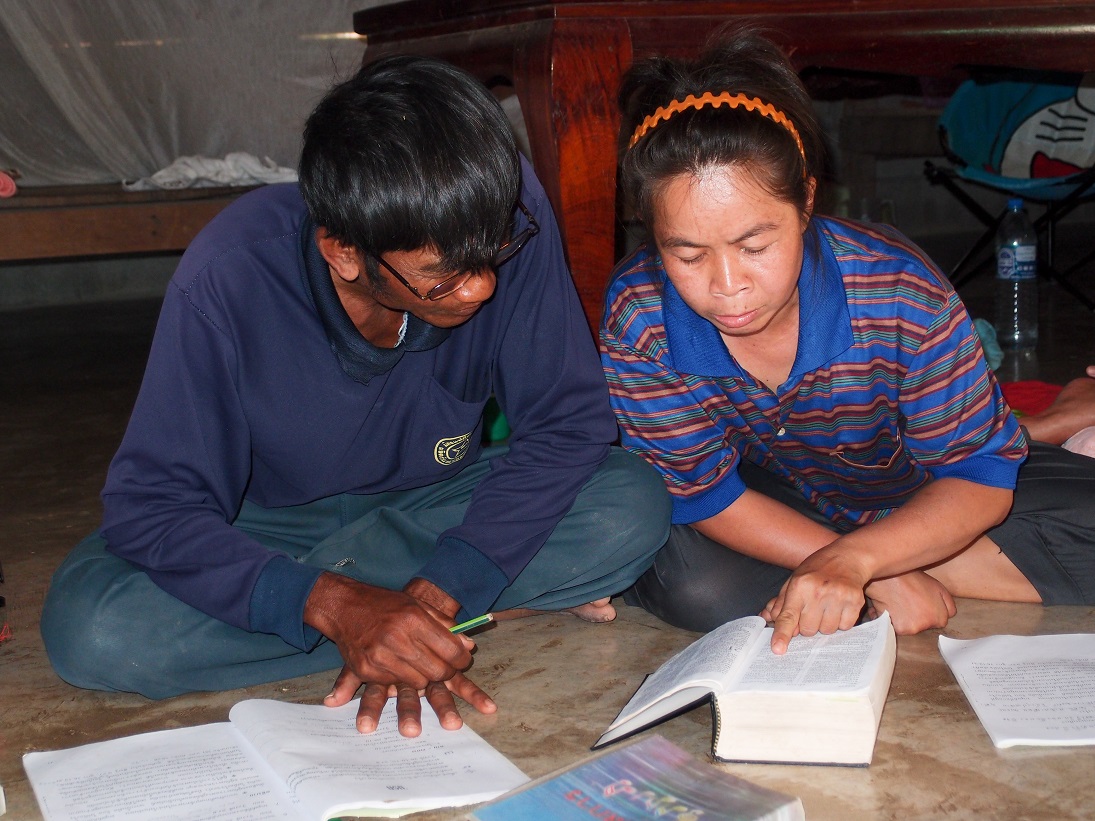
Dwight Martin’s short paper for the AFT also offers a practical outline: intentionally visiting every village in a district, meeting people, sharing a gospel presentation focusing not on sin as the initial key point but rather on Jesus as the answer to life problems, collecting contact information for consistent follow-up, returning weekly to do basic discipleship, establishing small “house churches,” then eventually launching a district-level “mother church.” This method is direct and unapologetically evangelistic, and it appears to work—especially in a shame/fear context like Thailand—if done with repeated teaching so that new believers keep growing.
5.3. The hard part: Actually doing it
We have no shortage of “methods”. The challenge is whether we do them day in and day out with genuine focus. And that is precisely where we want to keep calling OMF workers—and indeed all who share our burden for Thailand—to live out that definition: “Church planting means using whatever ability, gift, or passion the Lord has given you so that people hear the Good News of Jesus Christ, experience the love of the Lord, come to faith, and become part of the body of Christ.” If we embody that in humble partnership with Thai believers, and if we shape everything we do—from training, to social ministry, to theological education—so that it leads to local expressions of the church, then we will see new churches planted.
Conclusion
Church planting does not require a narrow skill set. It has a holistic orientation: all of us, together, using every ability and opportunity the Lord provides so that people might experience Christ and become part of a local fellowship of believers. That is the heart of OMF’s calling in Thailand and beyond. Of course, the day has long passed when foreign missionaries can or should “do it all themselves.” It is essential to work in genuine partnership with national Christians whose deep understanding of their own culture, language, and networks is indispensable to effective gospel witness. For us, that typically means collaboration with ACT or other Thai churches. We see ourselves as 3E workers alongside them: Encourage, Equip, Empower.
In practice, this can look messy as it might include short-termers helping with relief projects, a doctor offering weekly village clinics, a theological educator training future pastors, or an art specialist doing creative evangelistic programs. All of those ministries remain anchored in the bigger aim: the proclamation of the good news, disciples being made, and communities of believers being formed. That is church planting.
Yes, we still have plenty of areas where we can improve. We need to sharpen our communication when mobilizing new workers so that prospective members see that OMF is not just another NGO—we are a church-planting mission. We need to keep exploring the spiritual readiness of towns and villages. We need to saturate receptive pockets with the gospel, evaluate the fruit, and then repeat—always following the Holy Spirit’s leading. We must overcome complacency and use the wide variety of proven strategies—whether it is Alex Smith’s “7E” or what Dwight Martin outlines in his “Biblical Church Planting Methodology”—and simply and faithfully do it. Our hope is that the next decade will see a significantly greater number of new congregations spread across Thailand, each one reflecting Thai culture in a biblical, Christ-centered way and shining the light of the gospel into unreached communities.
At its core, church planting is not merely a set of techniques or a line item in a mission handbook; it is the outworking of the Spirit’s purpose in forming “one body” (Eph 4:4) out of those who have come to faith. May this purpose—people encountering the risen Christ and gathering as local expressions of his body—continue to shape OMF’s ministry here in Thailand, for the joy of Thai believers and for the glory of God among all peoples.
Note: All organizational statements, and references to OMF Handbook and policies are summarized or paraphrased from internal OMF documents. Alex Smith’s “7E Strategy” and Dwight Martin’s “Biblical Church Planting Methodology” are referenced for illustrative purposes.
Bibliography for background and deeper insight
Bennett, Averil, and David Sheahan. Beyond Ourselves: OMF in Thailand the First 60 Years. Bangkok: Kanok Bannasan, 2016.
Boonyarit, Sinchai. ตั้งคริสตจักร ซคุณสมบัติของผู้ตั้งคริสตจักร (Establishing Churches: Qualifications of Church Planters). Bangkok: Institute of Christian Education and Church Development, 2003.
Dale, Felicity. เริ่มตั้งคริสตจักรตามบ้าน (Starting House Churches). Bangkok: Church Education and Development, 2005.
Hesselgrave, David. Planting Churches Cross-Culturally: North America and Beyond. Grand Rapids: Baker, 1997.
Martin, Dwight. “Biblical Church Planting Methodology.” Association of Free Churches in Thailand. 2 October 2022.
Leighton, Mark. “OMF History Reaching Thai Buddhists.” Paper presented at the SEANET 2019 Conference, Chiang Mai, Thailand, 7–11 January 2019.
O’Connor, Patrick. Reproducible Pastoral Training: Church Planting Guidelines from the Teachings of George Patterson. Pasadena, CA: William Carey, 2006.
Patterson, George, and Richard Scoggins. Church Multiplication Guide Revised: The Miracle of Church Reproduction. Pasadena, CA: William Carey, 2013.
Schwarz, Christian A. Natural Church Development: A Guide to Eight Essential Qualities of Healthy Churches. Carol Stream, IL: ChurchSmart Resources, 1998.
Shank, Nathan, and Kari Shank. Four Fields of Kingdom Growth. Revised ed., 2014. Available for download from https://churchplantingmovements.com/free-booklets.
Shin, Hong-Shik. Principles of Church Planting as Illustrated in Thai Theravada Buddhist Context. Bangkok: Kanok Bannasan, 1989.
Smith, Alex G. Siamese Gold: A History of Church Growth in Thailand 1816–1982. Bangkok: Kanok Bannasan, 1981.
Smith, Alex G. Strategy to Multiply Rural Churches: A Central Thailand Case Study. Bangkok: Kanok Bannasan, 1977.
Visser, Marten. Conversion Growth of Protestant Churches in Thailand. Zoetermeer, Netherlands: Uitgeverij Boekencentrum, 2008.
Ware, Anthony. “Analysis and Development of a Church Structure to Facilitate Saturation Church Planting in Bangkok.” Thesis, Asia Pacific Theological Seminary, 2002.
[1] Craig Ott and Gene Wilson, Global Church Planting: Biblical Principles and Best Practices for Multiplication (Grand Rapids: Baker Academic, 2011).
[2] George Patterson and Richard Scoggins, Church Multiplication Guide: Helping Churches to Reproduce Locally and Abroad (Pasadena, CA: William Carey, 1994), and Alex G. Smith, Siamese Gold: A History of Church Growth in Thailand 1816–1982 (Bangkok: Kanok Bannasan, 1981) and Strategy to Multiply Rural Churches: A Central Thailand Case Study (Bangkok: Kanok Bannasan, 1977). Strategy to Multiply Rural Churches can be downloaded from https://e.pcloud.link/publink/show?code=XZflOKZhE6LG52dUEVkgU0ELxYHMFab3QwV (accessed 11 February 2025).
[3] OMF Thailand, “Transformation Through Church Planting,” https://e.pcloud.link/publink/show?code=XZ2wOKZ3rHMj8ga6TSljr21C0fmCuM5rL2k (accessed 11 February 2025).
[4] Mark Leighton, “OMF History Reaching Thai Buddhists.” Paper presented at the SEANET 2019 Conference, Chiang Mai, Thailand, 2019, https://e.pcloud.link/publink/show?code=XZ3KOKZbvw0z6dsNYuqRDfapLdDnLCfTVb7 (accessed 11 February 2025).
[5] Statistics provided under the “Baptism” tab at https://estar.ws/AFT (accessed 10 February 2025).
[6] Dwight Martin, “Biblical Church Planting Methodology,” Association of Free Churches in Thailand, 2 October 2022, https://e.pcloud.link/publink/show?code=XZzlOKZ3sU7jJV2yKpwNgA5X6ci0JB59FYV (accessed 10 February 2025).
[7] Smith, Strategy to Multiply Rural Churches, 197 (140 in the PDF of the book).