Reviewed by Nathan Keller
Mission Round Table 20:2 (May-Aug 2025): 47
To read articles in this edition, visit this post on Mission Round Table 20:2
Beginning with William Carey’s arrival in India in 1793, the modern mission movement was greatly used by God to bring the life-changing message of the gospel from the West to the Asian continent, where it has taken root in the lives of generations of Asian disciples of Jesus Christ.
Honestly reflecting on the spread of the gospel into Asia, Jonathan D. James boldly writes, “I have formed the opinion that the expansion and establishment of Christianity in Asia has been too Eurocentric” (1). He then seeks to “introduce and then define the term ‘Asianization’ as a possible corrective in the church’s missionary outreach” (1).
This book is divided into three separate sections, with each chapter written by a different Asian theologian. Section One (chapters 1–4) explores the theological constructs that inform the topics of contextualization and indigenization. Section Two (chapters 5–12) is a collection of case studies and useful information related to evangelism and church planting in selected Asian contexts. Section Three (chapters 13–17) explores how training and discipleship occur in various Asian settings.
In the concluding chapter, James proposes a new model of mission. This model delineates the five rubrics of people, principles, structures, scope, and praxis. In this concluding chapter, James lays this out in a simple table that compares this new model to the old one (341).
One strength of this book is the numerous and varied case studies and illustrations taken from a vast number of Asian contexts. Ministry contexts explored include Myanmar, Nepal, India, Indonesia, Thailand, China, Singapore, The Philippines, and other countries in Southeast Asia. In reading through these chapters, one gets a good sample of what God has been doing to establish his church and make disciples of Jesus in this culturally and religiously diverse and vast area.
Another strength of this book is the variety of contributors, all fourteen of whom are themselves Asian. They understand the complexities of the ministry contexts in which they grew up and where they now serve. Each one has a different writing style, a feature that invites the reader to listen carefully to what and how each cultural insider conveys his or her intended message.
Another strength is the honest, yet critical reflection that the contributors give regarding the complex history of mission work in Asia. The spread of the gospel often happened at the same time as colonial expansion, a reality that brought many unhelpful practices to Christian mission. The authors directly engage with this issue and help us evaluate this and move toward more healthy mission practices.
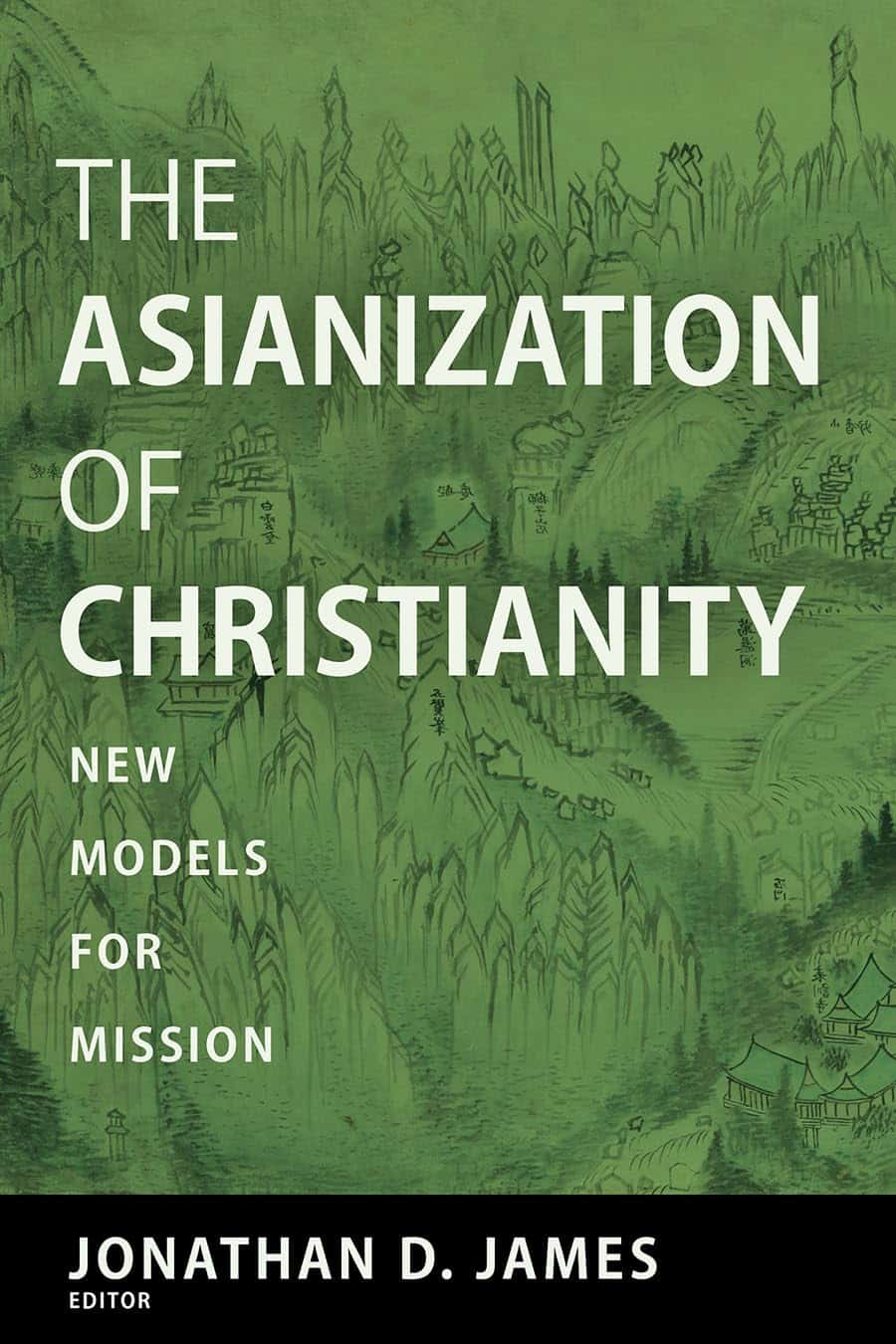
One natural limitation to a one-volume work titled The Asianization of Christianity is that not every Asian context is represented. Both the regions of West Asia and North Asia of the continent are not focused on at all, with the exception of notes about mission history and general statements about religious groups. Church leaders and missionaries working in these regions of Asia might be drawn to the book by its title, learn about other contexts, but then be discouraged by the unmet expectation of wanting to learn something about their own ministry context.
In the concluding chapter, James reinforces his purpose for editing this book. He writes, “the call to Asianization is a call for loving, respectful, contextualized expressions within the diversity of Asia’s cultures so that the gospel is understood” (339). As reflective practitioners of mission, this purpose should be ours as well, along with the added focus of helping people in our ministry contexts to live lives that are transformed by the gospel in a way that witnesses faithfully to others. It is for this reason that I strongly recommend reading this book, reflecting on its contents, and humbly asking the Lord to help us communicate the gospel in a way that stimulates understanding and obedience in those who are becoming disciples of Jesus.