Reviewed by Nathan Keller
Mission Round Table 19:1 (Jan-Apr 2024): 44
To read articles in this edition, visit this post on Mission Round Table 19:1.
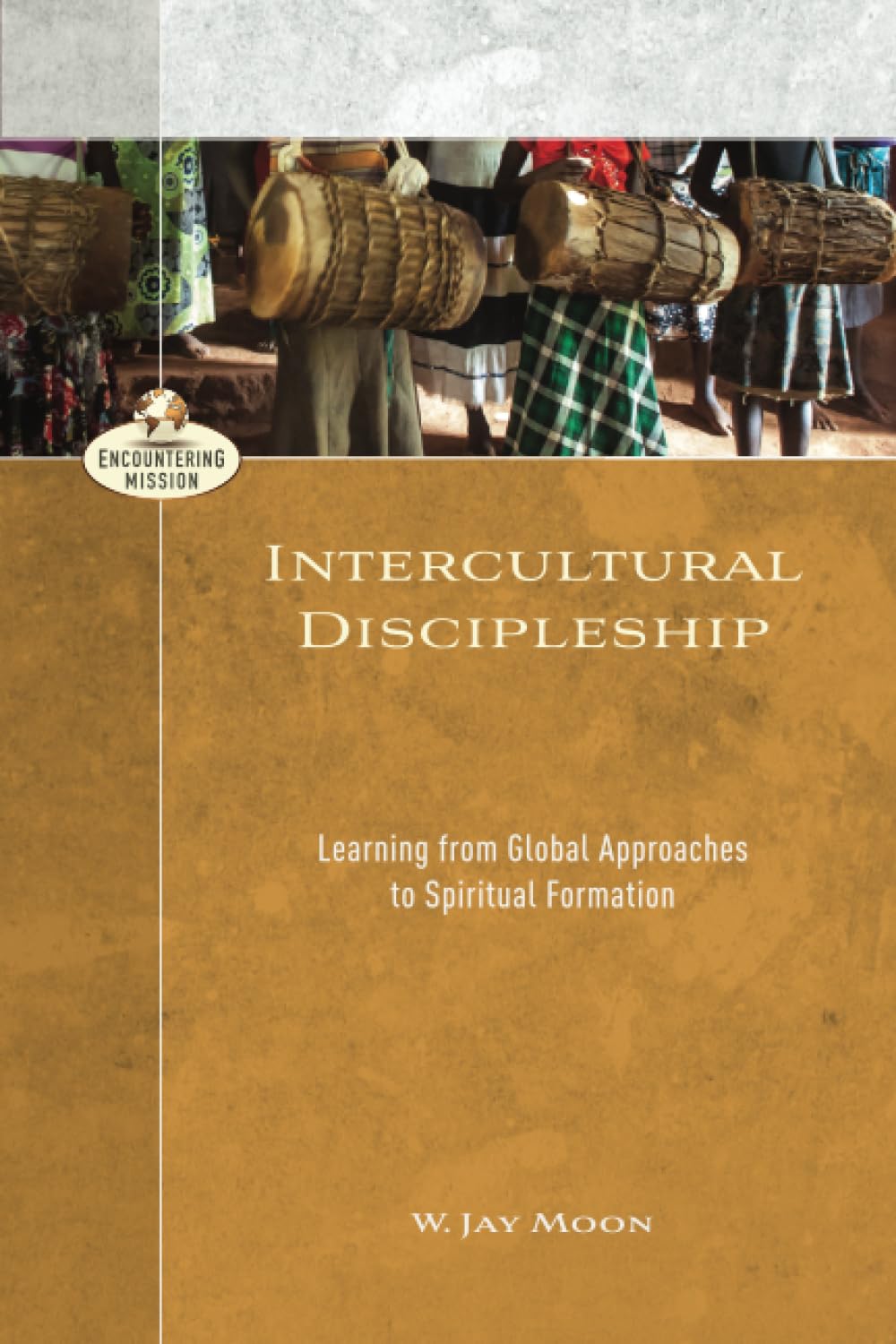
Whenever the gospel enters a new culture, it brings with it the power of transformation. It also brings with it the difficult challenge of how to represent this life-changing message of transformation in a way that is both consistent with biblical revelation and culturally relevant to the people. This is the goal of the intercultural discipler.
Moon defines intercultural discipleship as “the process of worldview transformation whereby Jesus followers center their lives on the kingdom of God (Matt. 6:33) and obey Christ’s commands in culture (Matt. 28:19–20), utilizing culturally available genres” (53).
Moon warns cross-cultural disciple makers of two extreme errors that can occur when the gospel is not contextualized well. Split-level Christianity happens when there is a clear distinction between the spiritual and secular life of a Christian disciple. Syncretism happens when there is a mixing of non-Christian beliefs and practices with Christian teaching and discipleship.
In order to prevent these two negative extremes of split-level Christianity and syncretism, Moon, building upon Paul Hiebert’s “Flaw of the Excluded Middle,” takes the reader on a journey of understanding how to identify, challenge, and transform the excluded middle issues in a disciple’s life that, when not adequately addressed, can potentially lead to unhealthy discipleship manifested in one of the two negative extremes.
Drawing again upon Hiebert, Moon encourages disciplers to apply the four-step process of critical contextualization (phenomenological study, ontological critique, critical evaluation, and missiological transformation) to various cultural items. The critical contextualization process of cultural symbols, rituals, stories, proverbs, music, dance, and drama can open doors to effective communication of the gospel that can lead to worldview transformation and growth in discipleship. Moon touches on each of these cultural items individually throughout the book. As he writes, “For intercultural disciplers to transform worldviews … they must identify existing forms in the culture into which they can instill a Christian meaning in order to shape a Christian worldview” (116).
This book is richly illustrated with practical examples. The author, having served as a missionary in Africa, draws upon many of his personal experiences and those of local pastors with whom he served to help readers understand how theory relates to practice. Every chapter includes sidebars that further illustrate and enrich the missiological theories or practices discussed and ends with a succinct summary of the content discussed, followed by suggested activities that can be done with those being discipled. This includes case studies that help readers think through and critically apply what has been learned.
While some readers and practitioners of mission will greatly appreciate and benefit from the wisdom of this book, others may find fault with the strong reliance upon Hiebert’s “excluded middle” theory and model. Once ground-breaking and significant in missiological studies, Hiebert’s understanding of the “excluded middle” is not without critique. Many missiologists today argue that the “flaw of the excluded middle” is too simplistic and is a misrepresentation of the theology and practice of Western Christians who have a biblical view of the spirit world that is not tainted by Enlightenment thinking.
Though this critique is warranted, it does not detract from the fact that any person being discipled has deep spiritual needs that should be identified, challenged, and transformed as they grow in their discipleship to Jesus. The one who is privileged to do the discipling needs to understand how to engage those being discipled with God’s truth in a way that speaks to them at their deepest sense of identity. For this reason, I warmly recommend this book to those who want to be reflective makers of disciples of Jesus Christ.